
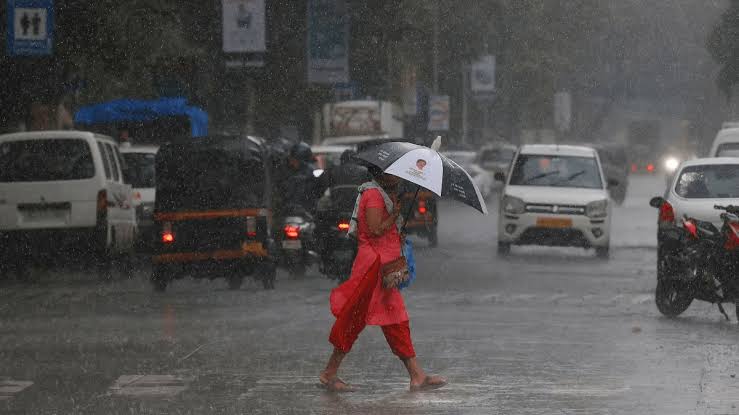
The monsoon in India 2026 has shown an unusual and slow progression this year, with weather experts noting a significant delay in its advancement across central and northern parts of the country. Normally, the monsoon covers a large portion of India by mid-June, but this time its movement has been weaker than expected.
The monsoon in India is now creating an uneven weather pattern, where some regions are facing intense heatwaves while others are experiencing heavy rainfall, leading to a sharp climatic imbalance.
Delhi-NCR Continues to Face Severe Heat
In Delhi and surrounding regions, the monsoon in India 2026 has failed to bring timely relief from rising temperatures. The India Meteorological Department (IMD) has predicted temperatures between 40°C and 42°C over the coming days.
The monsoon in India has resulted in prolonged heat and humidity, with only temporary relief expected through dust storms or light rainfall.
Water Concerns Rise in Mumbai
In Mumbai, the monsoon in India 2026 has raised concerns over water availability as rainfall has remained weaker than expected. The Brihanmumbai Municipal Corporation (BMC) has already begun monitoring water reserves closely.
Also read : Rahul Gandhi Launches ‘Chhatron Ki Goonj’ Campaign to Highlight Student and Job Aspirant Issues
The monsoon in India situation has prompted officials to warn of possible water restrictions if rainfall does not improve in the coming weeks.
Flood Alerts in Eastern and Northeastern States
While northern and central India struggle with heat, the monsoon in India 2026 is bringing heavy to very heavy rainfall in parts of Assam, Meghalaya, and West Bengal. Several areas are on alert due to risks of flooding and landslides.
The monsoon in India continues to show extreme contrast, with some regions flooded while others remain dry.
Monsoon in India 2026 : Meteorologists Explain the Delay
Experts say the monsoon in India 2026 has slowed due to weak moisture flow from the Arabian Sea, lack of strong low-pressure systems, and unfavorable atmospheric conditions such as weak cross-equatorial winds and inactive MJO phases.
These factors together have disrupted the normal pace of the monsoon in India across the subcontinent.
The monsoon in India 2026 is currently marked by uneven rainfall distribution, delayed progress, and extreme weather variations. Experts believe that only the formation of stronger weather systems over the Arabian Sea and Bay of Bengal can restore normal monsoon activity in the coming weeks.