
Bengal Finally Moves to Implement the Waqf Amendment Act, 2025
The West Bengal government has accepted the Waqf Act, 2025 after months of resistance. The move marks a major shift from the state’s earlier stand, as Chief Minister Mamata Banerjee had repeatedly opposed the law. However, officials now confirm that the process to upload all waqf property data on the Centre’s UMEED portal has begun.
According to The Indian Express, the state Minority Development Department has directed all district magistrates to upload details of 82,000 waqf properties by December 5, which is the national deadline under Section 3B of the amended Act. Moreover, the letter issued on Thursday by Department Secretary PB Salim stresses strict compliance across all districts.
The development comes after months of political friction. Earlier, the state government argued that the new Act interfered with state powers. However, the Centre maintained that the amendment aims to ensure greater transparency and prevent misuse of waqf properties nationwide.
Shift from Mamata Banerjee’s Earlier Stand Sparks Political Debate
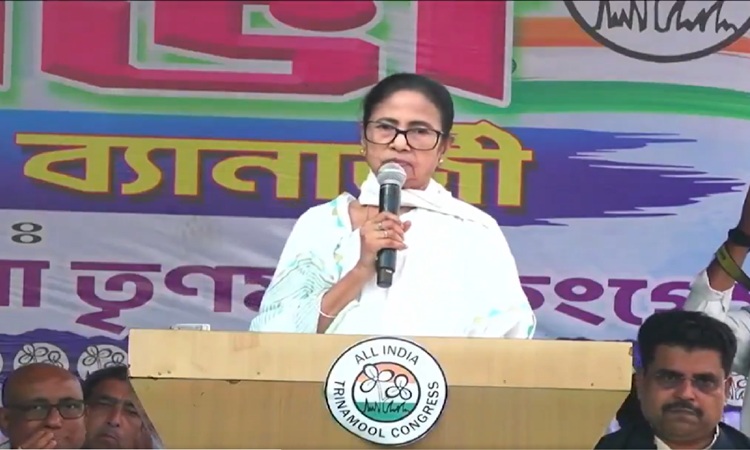
The decision raises sharp political reactions because Mamata Banerjee had openly rejected the amended Act in April. While addressing an event on April 9, she said she would never allow the implementation of the law in Bengal. She added that the Act followed a “divide-and-rule agenda.”
She said, “I will not allow the Waqf Amendment Act to come into effect in Bengal. I will not allow them to divide and rule.” She also highlighted that 33% of Bengal’s population is Muslim, and she saw it as her duty to protect their rights.
However, the passage of the Bill in both Houses of Parliament by April 4 and the subsequent notification on April 8 made the Act legally binding across India. Consequently, the West Bengal government had limited room to continue resisting the law.
Additionally, protests broke out in several parts of Bengal after the Bill was introduced. Many community groups claimed that the new provisions could affect local control over waqf assets. Meanwhile, supporters of the Act argued that central oversight was long overdue.
Implementation Begins as Districts Rush to Meet December 5 Deadline
Under Section 3B of the amended Act, all mutawallis must upload property details to the national database by December 5. Therefore, the Bengal government has now instructed district authorities to collect and upload data without delay.
The state’s order covers all 82,000 registered waqf properties, including mosques, graveyards, educational trusts, and community-run institutions. Additionally, each district must verify records before uploading them to avoid duplication or disputes.
Officials said that the UMEED portal will act as a unified platform for all waqf-related entries across India. The Centre claims the system improves transparency, reduces fraud, and supports fair management of religious assets. Although critics remain suspicious, many scholars believe that digitisation may reduce long-standing disputes over land.
Moreover, officials add that the portal will soon allow public access to basic property information. This feature could create stronger accountability, especially in states where waqf land disputes are frequent.
The Bengal government has also asked mutawallis to stay in close contact with district offices so that data entry can be completed smoothly. Since the Act fixes personal responsibility on mutawallis for incorrect data, many managers are preparing updated documents.
Political Reactions and What Comes Next
The change in Bengal’s approach has triggered sharp reactions from opposition parties. BJP leaders claim that the Trinamool Congress had stalled implementation for political reasons. However, TMC leaders argue that they have only complied after legal clarity and central pressure.
Moreover, legal experts say the amended Waqf Act could change the management structure of thousands of religious properties. They predict more transparency but also more disputes as old records come under review.
For now, the Bengal government’s priority is to meet the December 5 deadline. After that, a state-level review may be conducted to check whether all properties have been correctly documented.
The next phase will likely see training sessions for district officials, along with public awareness drives for mutawallis. Although political debate may continue, the digitisation process now appears irreversible.