
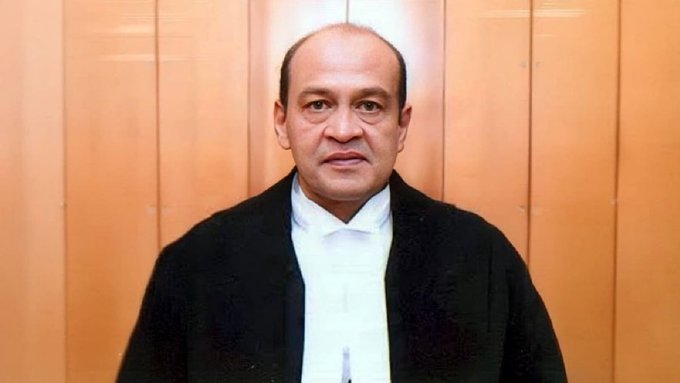
Justice Yashwant Varma Faces Impeachment Over Unaccounted Cash at Delhi Residence
New Delhi : The Centre is preparing to initiate an impeachment motion against Justice Yashwant Varma of the Allahabad High Court, weeks after a Supreme Court-appointed in-house committee found him guilty of possessing unaccounted cash at his official residence in Delhi.
The move is likely to take place during the upcoming Monsoon Session of Parliament, set to begin in mid-July, according to sources cited by news agency PTI.
Background: Supreme Court Panel Finds Judge Guilty
The controversy began after a fire incident during Holi at Justice Varma’s government residence in Delhi reportedly led to the discovery of a large amount of unaccounted cash, allegedly burnt in the blaze.
In response, the Supreme Court established an in-house panel to investigate the matter. After an internal inquiry, the panel concluded that Justice Varma was in possession of unexplained cash, triggering serious questions about judicial integrity and accountability.
Following the findings, the Supreme Court asked Justice Varma to voluntarily resign. However, he refused to step down, asserting that the money did not belong to him and maintaining his innocence throughout the controversy.
CJI’s Recommendation and Presidential Referral
In light of Justice Varma’s refusal to resign, the then Chief Justice of India, Sanjiv Khanna, forwarded the in-house committee’s report to President Droupadi Murmu, formally recommending the initiation of impeachment proceedings.
This recommendation, though not binding, carries substantial weight and is considered a serious step in the rarely used process of judicial impeachment in India.
Impeachment Process: A Rare but Serious Step
The Indian Constitution provides for the removal of judges of the High Courts and the Supreme Court through impeachment, under Article 124(4) and Article 217, but the process is intentionally stringent.
To impeach a judge, both Houses of Parliament must pass a motion with a two-thirds majority, based on proven misbehavior or incapacity.
Historically, only a handful of impeachment attempts have reached the Parliament floor. The most notable was against Justice V. Ramaswami in 1993, which ultimately failed in the Lok Sabha due to abstentions despite serious charges.
Justice Varma Maintains Innocence
In his defence, Justice Yashwant Varma has categorically denied wrongdoing. He claimed the cash did not belong to him, and that he was being wrongfully implicated following the Holi fire incident.
Legal experts say the onus will be on Parliament to decide whether the findings of the Supreme Court’s in-house panel and the circumstances of the cash discovery meet the threshold for “proved misbehavior”, as required for impeachment.
Government’s Next Steps
Sources suggest that the Union Law Ministry is currently assessing procedural details to table the motion. If finalized, the notice of motion would require the support of at least 100 Lok Sabha MPs or 50 Rajya Sabha MPs to be admitted.
Once admitted, an inquiry committee comprising a Supreme Court judge, a High Court Chief Justice, and a distinguished jurist will be appointed to verify the charges. Only if this panel confirms the allegations can Parliament vote on the motion.
Implications for Judicial Integrity
The case has reignited national discourse around judicial accountability and transparency within the higher judiciary. Legal observers say that the decision to pursue impeachment, rare as it may be, underscores the judiciary’s commitment to maintaining public trust.