
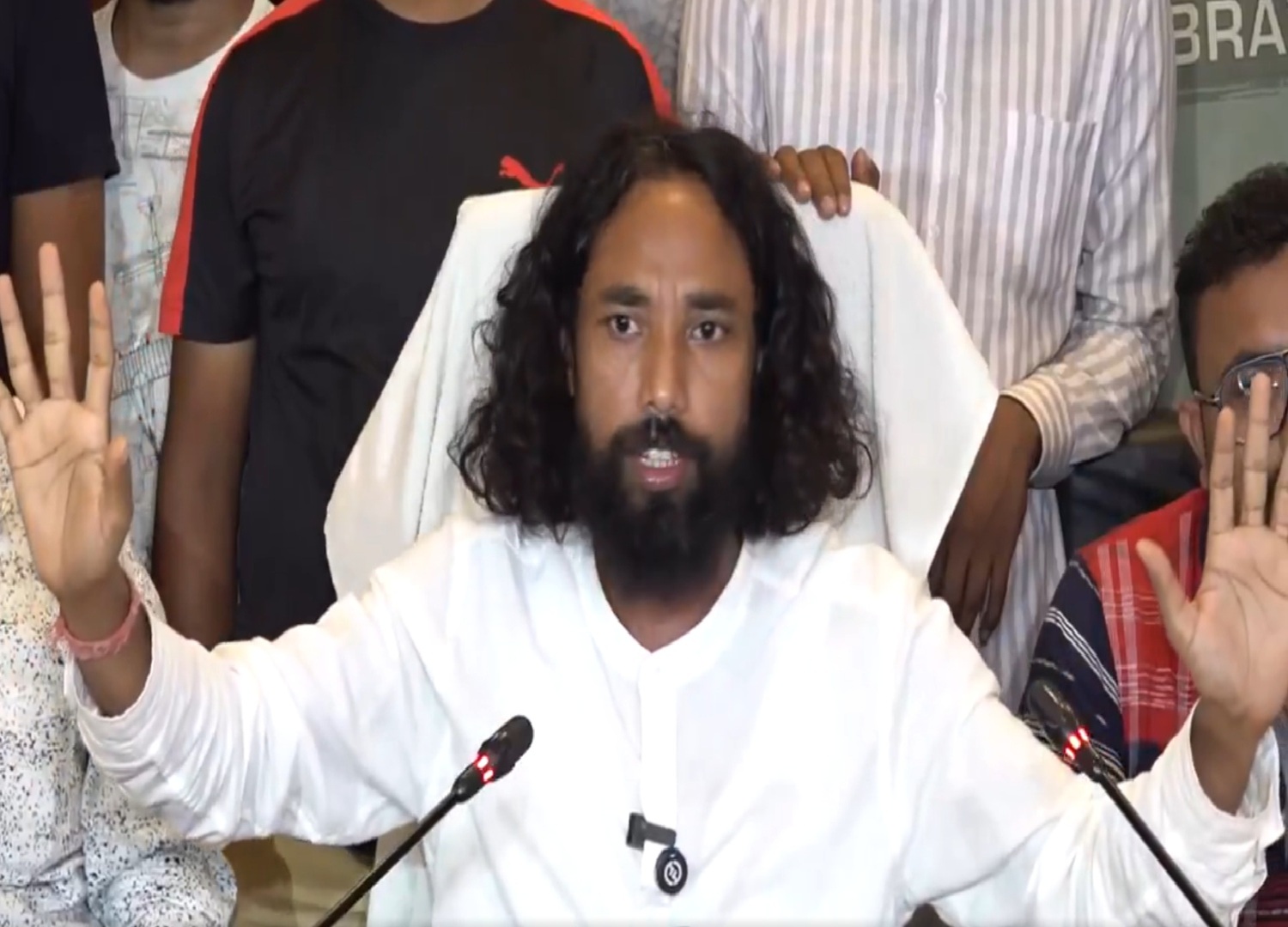
RANCHI : In a major escalation, the Jharkhand student protest entered its second phase on Saturday, August 22, 2026. Student leaders announced a comprehensive agitation schedule targeting alleged recruitment irregularities in competitive examinations.
Furthermore, student activists revealed plans for a statewide march named the ‘Bharti Vyavastha Sudhar Yatra.’ The foot march begins on August 24 from Nemra in Ramgarh district.
Notably, Nemra serves as the birthplace of veteran leader Dishom Gurum Shibu Soren. Protesters intend to cover all 24 districts across the state to expose administrative recruitment failures.
High-Stakes Legal Battle and Escalating Demands
Student leader Devendra Mahto, representing the ‘JPSC JSSC Nyay Manch,’ addressed journalists regarding the upcoming campaign. He affirmed that job aspirants will not compromise on transparency standards.
Additionally, Mahto expressed deep disappointment over state legal representation during recent High Court proceedings. Recent judicial orders stayed government notifications that previously cancelled contested exam rounds.
Consequently, student leaders allege the state government failed to present their case strongly in court. They urged officials to submit comprehensive Special Investigation Team reports to safeguard candidate interests.
[ JPSC-JSSC Recruitment Disparities ]
│
▼
[ ‘Bharti Vyavastha Sudhar Yatra’ ]
(August 24 – Statewide Foot March from Nemra)
│
▼
[ High Court Hearing Benchmark ]
(September 15 Deadline for Government Defense)
│
▼
[ Escalation Protocols ]
(CM Residence Gherao & Economic Blockade)
Moreover, the Jharkhand student protest leadership issued a firm ultimatum to state officials. If the administration fails to defend student rights effectively by September 15, protesters will launch an immediate siege.
Specifically, candidates plan to lay siege to Chief Minister Hemant Soren’s residence in Ranchi. Furthermore, activists warned of a total ‘chakka jam’ and subsequent economic blockades statewide.
Also Read : Jharkhand Student Protest Escalates as Police Action and CID Arrest Shift Momentum
Core Demands Focusing on Accountability and Transparency
At its core, the Jharkhand student protest seeks total systemic overhauls within state selection commissions. Agitating aspirants insist that institutional accountability must be fixed regarding recent JSSC CGL recruitment decisions.
Furthermore, student representatives demanded justice for innocent candidates whose career trajectories faced severe delays. They urged strict legal proceedings against officials proven guilty of administrative misconduct or paper leaks.
However, Devendra Mahto emphasized that the movement seeks protection rather than harm for genuine candidates. He reiterated that the ongoing Jharkhand student protest has evolved beyond simple exam disputes.
Instead, the campaign represents a broader struggle for transparent governance and institutional integrity. Therefore, students insist that clear, concrete policy decisions must take immediate priority.
Opposition Support and Rising Political Friction
The intensifying Jharkhand student protest continues to create significant political friction across the state capital. Opposition parties, including senior BJP leaders, voiced strong support for the agitating students.
For instance, opposition figures accused the ruling alliance of mishandling student welfare and employment promises. They urged Chief Minister Hemant Soren to engage directly with student delegates without administrative delays.
In response, state officials maintained that government agencies remain committed to fair recruitment systems. Chief Minister Hemant Soren previously stated that official inquiries into exam anomalies will remain completely impartial.
Additionally, the administration proposed implementing secure digital testing methods and published answer keys. Nevertheless, protesting aspirants maintain that demonstrations will continue until concrete structural guarantees materialize.
Mobilization Plans Heading Toward the Capital
As preparations for the march conclude, the Jharkhand student protest draws widespread youth participation. Mobilization teams report growing support from student groups, job aspirants, and local civil society outfits.
Moreover, organizers plan to organize public meetings in every district during the march. These rallies aim to build momentum leading up to the critical High Court hearing on September 15.
In conclusion, the Jharkhand student protest highlights deep-seated frustration regarding public sector recruitment mechanisms. The upcoming statewide Yatra signals a pivotal moment for youth advocacy across eastern India.
Consequently, civic observers continue monitoring developments as student leaders navigate both court rooms and public streets.