
Indian Army Holds Major Combat Exercise in Uttarakhand
The Indian Army warns Pakistan after a major month-long combat exercise carried out by the Western Command. The drill involved more than 20,000 troops and showcased high-level ground and air combat readiness. Moreover, the exercise simulated offensive operations across the Pakistan border in Punjab.
The training, held near Haridwar, was the first of its kind in Uttarakhand. The area was selected due to its similarity to Punjab’s riverine terrain. Additionally, senior officers said that the conditions helped troops prepare for large-scale operations across varied landscapes.
The exercise, titled ‘Ram Prahar’, was conducted by the Ram Division of the Kharga Corps. Though the drill took place in a region that usually falls under Central Command, the Western Command used the location to match Punjab-like conditions. This helped sharpen real-time responses to likely cross-border threats.
Furthermore, the exercise included fighter jets, reconnaissance aircraft, Apache attack helicopters, tanks, armoured vehicles, drones and night paratrooper drops. The Army said that the drill focused on multi-domain operations involving land, air and cyber components.
Lt Gen Katiyar Issues Strong Warning to Pakistan
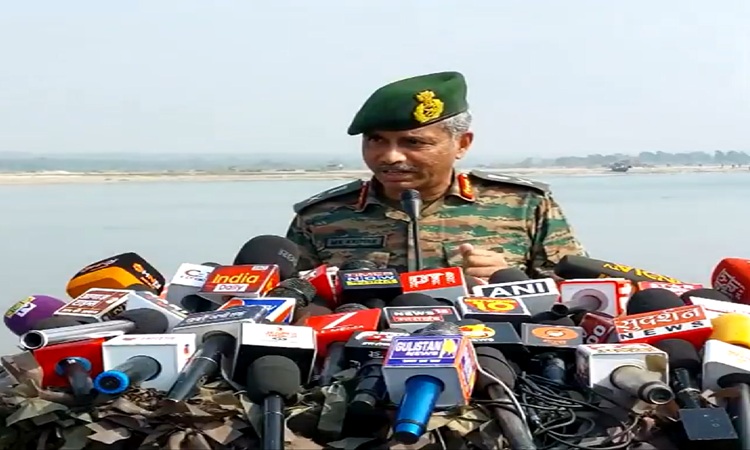
Western Command chief Lt Gen Manoj Kumar Katiyar inspected the final phase of the exercise. He said the Army is ready to deliver a stronger response if Pakistan attempts any provocation. His comments came after the recent Operation Sindoor, where India inflicted heavy damage on Pakistani positions.
Lt Gen Katiyar said that Pakistan had not shown signs of learning from its earlier setbacks. Moreover, he stressed that the Army will use greater force if provoked again. He also added that India is prepared to enter Pakistan from the Punjab sector if required.
The commander highlighted that the drill helped troops rehearse responses to major threats. Additionally, he said the terrain allowed soldiers to practice crossing river obstacles similar to those in Punjab.
He emphasised that the Army conducts exercises in multiple sectors to maintain peak readiness. These cross-command drills help improve coordination and speed during real operations.
Officers Say the Drill Boosted Multi-Domain Capabilities
A senior Army officer involved in the exercise said that the drill tested agility and coordination. He added that the troops trained for cyber, air and ground operations at the same time. The officer said this approach helps the Army prepare for modern hybrid warfare.
Moreover, the use of drones and surveillance systems helped boost real-time intelligence. Night jumps by paratroopers also improved rapid response capabilities. Officers said such drills create synergy between different arms of the Army.
Defence analysts believe that the scale and intensity of the exercise reflect India’s elevated security posture. They also said the Army wants to stay ahead of both conventional and hybrid threats emerging along the western border.
Experts Say Drill Enhances Preparedness for Punjab Sector
Lt Gen Mohan Bhandari (retired), a former senior military operations officer during the Kargil War, said that the exercise was vital. He noted that Pakistan has built numerous defensive canals in Punjab to slow down Indian mechanised units. Moreover, drills that simulate such terrain improve the Army’s chances of success in real conflict.
Lt Gen Bhandari said that actual victory depends on the infantry advancing into enemy territory. He added that exercises like Ram Prahar give units the confidence and skill to overcome obstacles built by Pakistan.
Experts also said that training in varied terrain helps troops prepare for unpredictable conditions. Furthermore, multi-domain drills help create better inter-service coordination, which is essential during large-scale operations.