
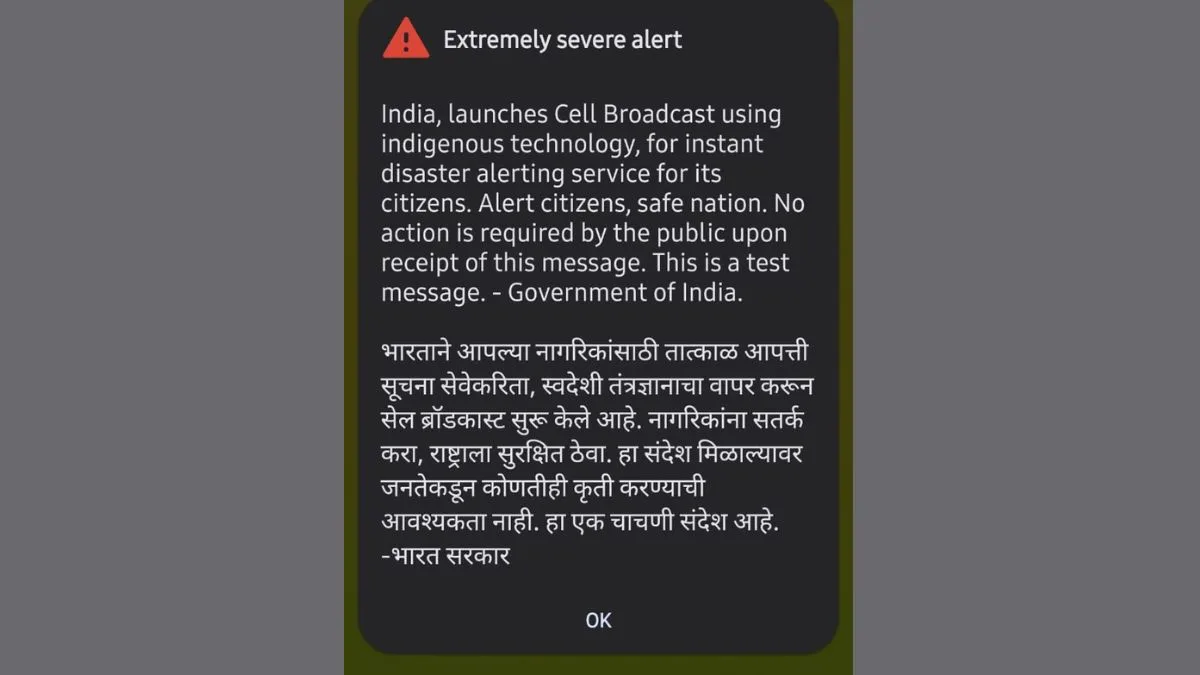
If your phone buzzed with an urgent government alert today, there was no cause for alarm. Millions of users across the country received a test message on Saturday as India officially rolled out its cell broadcast alert system, a new emergency communication technology designed to warn citizens during disasters.
The message, marked “Extremely Severe Alert,” clarified that it was only a test and no action was required. The rollout of the cell broadcast alert system marks a major step in strengthening India’s disaster preparedness and public safety infrastructure.
According to an official statement, the system was launched on May 2, 2026, by Union Home Minister Amit Shah along with Union Communications Minister Jyotiraditya Scindia. At the core of this initiative is the SACHET platform (Integrated Alert System), developed by Centre for Development of Telematics, a leading R&D centre under the Department of Telecommunications.
Cell Broadcast Alert System Goes Nationwide Across 36 States and UTs Under Global Standards
Built using the Common Alerting Protocol recommended by the International Telecommunication Union, the cell broadcast alert system is now operational across all 36 states and union territories in India.
So far, disaster management authorities have relied on SMS alerts, sending over 134 billion messages in more than 19 Indian languages for weather warnings, cyclones, and other emergencies. However, the cell broadcast alert system represents a significant upgrade over traditional SMS technology.
Also read : IMD Rain Alert Issued for 15 States, Heavy Showers and Storms Expected Till May 4
Unlike standard text messages, this system is designed to grab immediate attention. Alerts override normal phone settings, triggering a loud alarm and displaying a prominent message on-screen—even if the device is on silent or do-not-disturb mode. This ensures that critical warnings reach users instantly.
The cell broadcast alert system is aimed at delivering life-saving information during natural disasters such as earthquakes, tsunamis, and lightning strikes, as well as man-made emergencies like gas leaks and chemical hazards.
Once fully operational, the system will broadcast alerts to all mobile devices within a specific area, regardless of network congestion or user settings. Authorities believe this will ensure faster, wider, and more reliable communication during emergencies, significantly enhancing public safety across the country.