
A Historic Milestone for Sustainable Indian Transit
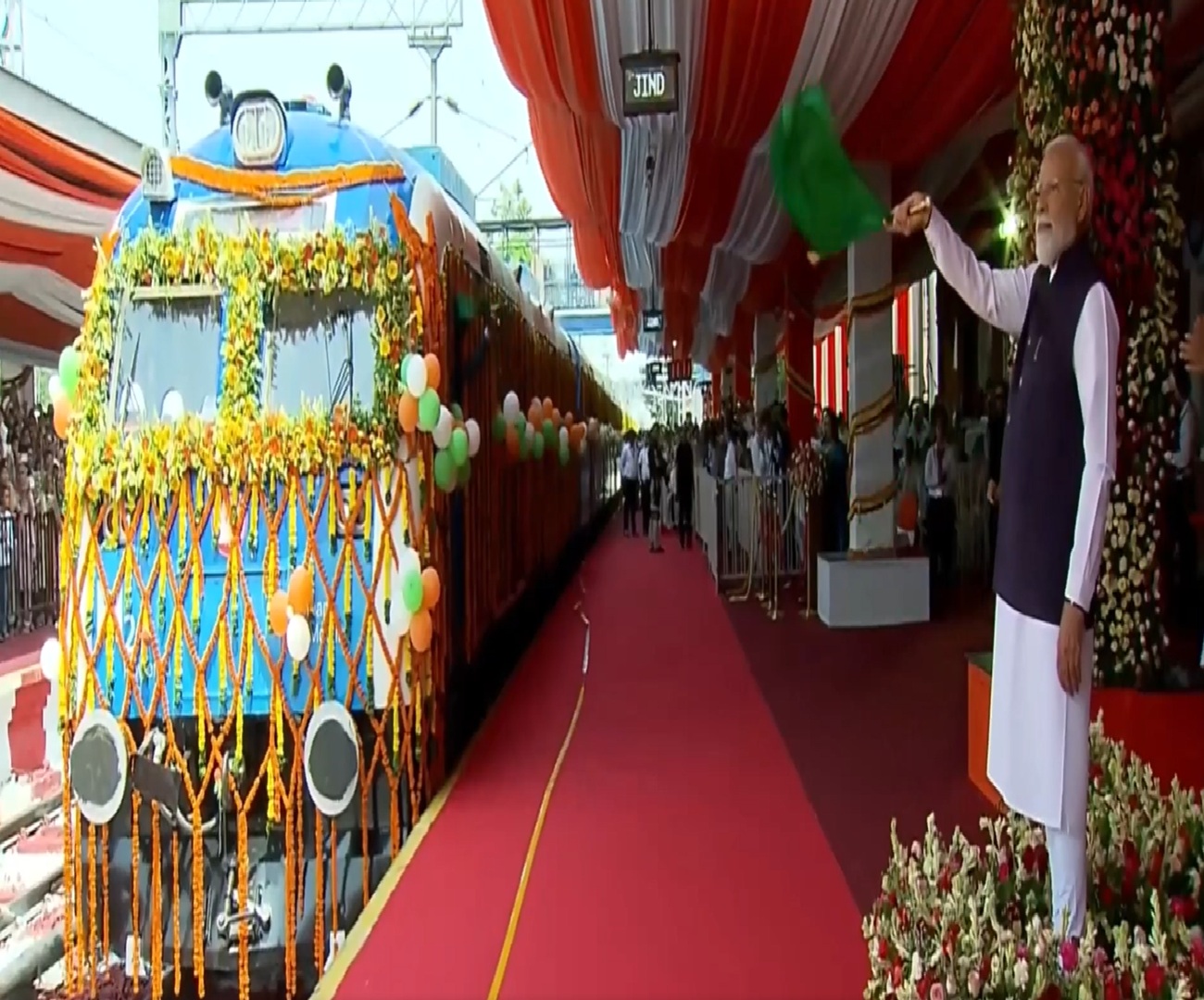
The domestic transportation landscape achieved a monumental environmental victory as the central leadership inaugurated a clean energy transportation model. Prime Minister Narendra Modi officially flagged off India first hydrogen-powered train at an elite state ceremony at the Jind railway station. This highly anticipated structural rollout introduces an eco-friendly propulsion system into the regional passenger network. By utilizing advanced, locally engineered technology, the country actively demonstrates its capacity to construct zero-emission machinery.
Prime Minister @narendramodi flags off India’s first Hydrogen train between Jind and Sonipat at Jind railway station#HydrogenTrain #भारत_की_पहली_हाइड्रोजन_ट्रेन @RailMinIndia
Watch: ⬇️ pic.twitter.com/j1lJCliqRs
— PIB India (@PIB_India) July 17, 2026
The modern trainset immediately commenced its initial passenger run on the critical 89-kilometer Jind-Sonipat dedicated corridor. The inaugural journey carried many excited local school children alongside high-ranking federal delegates. Prominent dignitaries attending the ceremony included Union Railways Minister Ashwini Vaishnaw and Haryana Chief Minister Nayab Singh Saini. The executive leadership highlighted that the landmark project permanently anchors Haryana within the history of international railway transformation.
Also Read : PM Modi Leads Tributes on K Kamaraj Birth Anniversary,…
Through this deployment, the government targets the complete elimination of operational carbon footprints on regional passenger corridors. The successful development proves that heavy infrastructure can scale up effectively without harming localized ecosystem health. This pioneering trial route establishes the practical framework required to expand clean energy mass transit systems nationwide.
Technical Specifications of the Indigenous Powerhouse
Unlike conventional electric systems, India first hydrogen-powered train requires no extensive overhead electrification wires. The advanced rolling stock generates its tractive electricity onboard via integrated Proton Exchange Membrane Fuel Cells. This electrochemical process combines onboard high-pressure hydrogen gas with atmospheric oxygen to drive high-performance electric motors. The only direct operational by-product released into the atmosphere is harmless water vapor.
This strict technical breakdown proves the incredible scalability of domestic engineering designs. The unique ten-coach configuration positions the vehicle among the longest operating hydrogen passenger trainsets worldwide. A robust 3,200 horsepower system delivers massive acceleration capabilities matching conventional diesel-electric multiple units. Furthermore, the custom configuration incorporates lithium iron phosphate batteries to store surplus electrical energy during deceleration cycles.
Seamless Commuter Schedule and Dedicated Local Stoppages
The official operational timetable provides reliable daily regional connectivity for hundreds of rural and semi-urban commuters. The service operates under Northern Railways as train number 74010, starting daily from Jind at 7:40 AM. The train completes the entire transit corridor to Sonipat in precisely two hours. The return journey, operating as train number 74009, departs from Sonipat at 10:40 AM every afternoon.
To maximize local socioeconomic benefits, India first hydrogen-powered train services twelve intermediate community stations. Key designated stoppages include Jind City, Pandu Pindara, Gohana Junction, Lalit Khera, and Barwasni. The distributed transit plan ensures that localized workforces gain affordable access to green travel alternatives daily.
[Jind Junction] ──► [Jind City] ──► [Pandu Pindara] ──► [Gohana] ──► [Sonipat]
(Departs 7:40 AM) (Arrives 9:40 AM)
To support these daily runs, technicians built a massive hydrogen infrastructure facility right at the Jind station. This dedicated fueling station safely stores up to 3,000 kilograms of compressed hydrogen gas. The specialized facility features integrated chiller systems that cool the gas to ensure quick, stable refueling operations.
Layered Safety Frameworks Secure High-Pressure Systems
Because hydrogen gas is highly flammable, developers prioritized multi-layered safety mechanisms across all passenger coaches. The rolling stock features advanced optical flame sensors and automated hydrogen leak detectors that scan continuous operations. If any sensor detects trace anomalies, the automated control system instantly cuts off fuel valves. Continuous mechanical ventilation systems prevent any gas accumulation inside the vehicle structure.
The implementation of India first hydrogen-powered train advances the country’s strategic target of achieving net-zero emissions. The Ministry of Railways intends to evaluate this initial pilot performance thoroughly before launching additional trainsets. Future expansion plans focus heavily on introducing similar eco-friendly models across delicate heritage mountain loops like the Kalka-Shimla route. By successfully launching this clean energy initiative, the nation establishes a sustainable pathway for regional public transport