
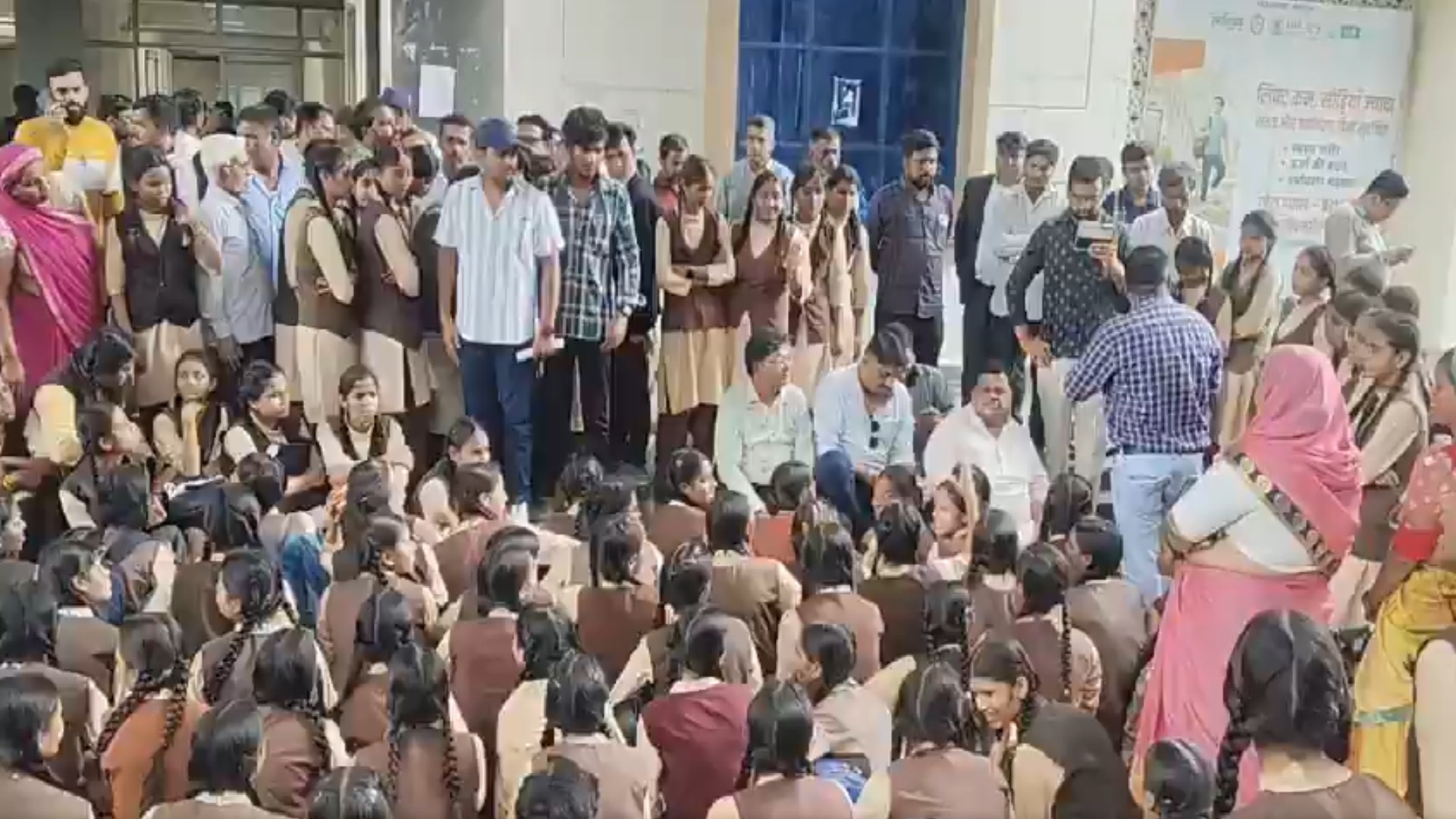
NEW DELHI — A remarkable wave of Gen Alpha protests India has erupted across several states this week. Following the momentum generated by Gen Z over the NEET paper leak issue at New Delhi’s Jantar Mantar, younger students are now taking charge. Children born between 2010 and 2024 are standing firm before local administrative offices to demand fundamental rights in their daily education.
From Uttar Pradesh to Rajasthan and Madhya Pradesh, students are demanding basic amenities like functional fans, proper roads, qualified teachers, and safe school buildings. Consequently, regional authorities are scrambling to address these sudden public demonstrations led by young citizens.
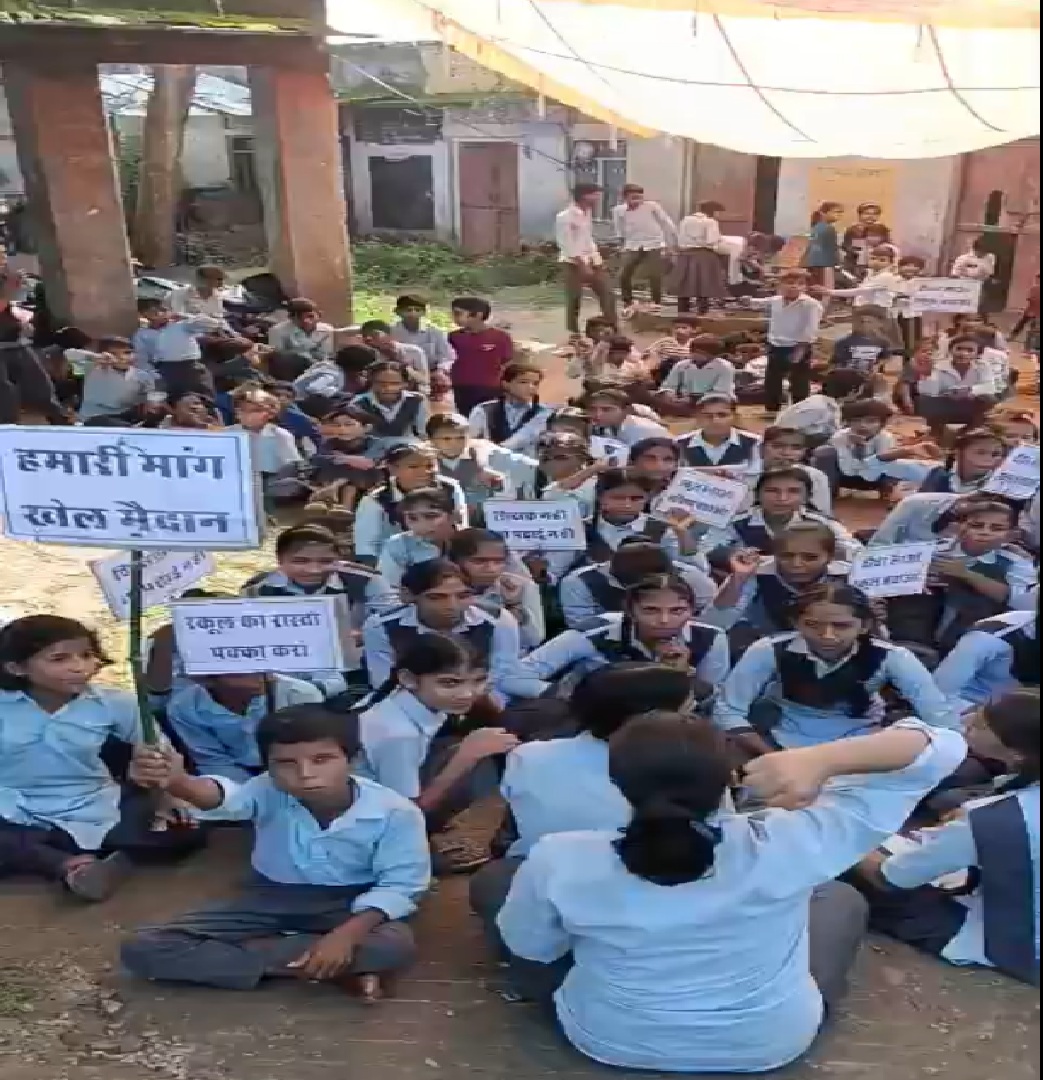
Protest in Alwar Rajasthan
| Protest Location | Primary Issue Reported | Administrative Response |
| Hamirpur (Uttar Pradesh) | Dilapidated village road blocking school access | Collectorate promised immediate road construction |
| Alwar (Rajasthan) | Partial roof collapse in school building | SDM and DEO visited site to assess safety |
| Lucknow (Uttar Pradesh) | Severe shortage of permanent teachers | Social Welfare Minister ordered immediate recruitment |
| Kannauj (Uttar Pradesh) | Substandard mess food quality in hostel | District Magistrate ordered official inquiry |
| Ujjain (Madhya Pradesh) | Relocation of school 12–15 km away | Emergency medical aid sent; bus demands reviewed |
Inspiration From Gen Z Movements at Jantar Mantar
The emergence of Gen Alpha protests India stems directly from recent youth mobilization tactics observed nationwide. Earlier, the Cockroach Janta Party (CJP)-led Gen-G protests at Jantar Mantar pressured the government to accept key student demands regarding competitive exams.
That successful movement demonstrated to younger students that peaceful street demonstrations yield concrete results. Furthermore, political groups like the CJP are now actively offering solidarity to primary and secondary school children demanding institutional accountability.
“Gen Z showed that raising your voice works,” noted a senior education advocate. “Now, Gen Alpha realizes they do not have to endure unsafe classrooms or missing teachers in silence.”
| Generational Cohort | Birth Year Range | Current Age Range | Core Activism Focus |
| Gen Z (Gen-G) | 1997 – 2009 | 17 – 29 years | Exam integrity, employment, government policy reforms |
| Gen Alpha | 2010 – 2024 | 2 – 16 years | Basic classroom infrastructure, safe transport, food quality |
Tears and Tricolours: The Fight for Roads in Hamirpur
As the nation marked its 80th Independence Day on August 15, 2026, emotional scenes unfolded in Hamirpur, Uttar Pradesh. Children from grades 1 to 12 marched to the Collectorate office alongside their parents. Holding national flags with tears in their eyes, they demanded a paved road to reach their school safely.
During monsoon rains, the village’s ruined dirt pathway turns into dangerous mud pits, forcing children to miss classes entirely. Consequently, the young protestors confronted district officials directly to explain their struggle.
“Sir, we also want to become something through education,” pleaded a protesting student outside the Collectorate. “However, the village’s dilapidated road is the biggest obstacle to our future.”
District officials responded swiftly to the emotional plea. They assured the children that road construction would begin promptly to secure their daily commute.
School Roof Collapses Trigger Protests in Alwar
Meanwhile, in Rajasthan’s Alwar district, students staged a two-day protest after a structural failure at the Government Higher Secondary School in Jodhawas. Authorities had declared the main building dilapidated last year, restricting classes to just three remaining rooms.
However, a heavy section of the roof collapsed on Wednesday. Fortunately, no children were inside the classroom at that moment. Following the incident, students boycotted classes, drawing direct support from CJP teams led by Ashutosh.
“We cannot risk children’s lives in crumbling classrooms,” stated District Education Officer Manoj Sharma upon reaching the site alongside SDM Thanagazi. “We are relocating classes immediately to ensure complete safety.”
| Incident Factor | Structural Status |
| Facility Status | Declared dilapidated in 2025; main wing closed |
| Trigger Event | Roof slab collapse inside active school zone |
| Immediate Action | Joint inspection by SDM and District Education Officer |
Classroom Blockades and Food Boycotts across Uttar Pradesh
In Lucknow, students of Jai Narayan School blocked a major traffic intersection carrying placards and textbooks. They protested against severe teacher shortages that left their academic syllabus incomplete just weeks before examinations.
Passage by Uttar Pradesh Social Welfare Minister Aseem Arun brought immediate relief. Minister Arun stopped his convoy, called top education officials on the spot, and guaranteed permanent teacher appointments. Satisfied with his firm assurance, students ended their road blockades.
“Our exams are approaching, but our course is not even half complete,” stated a protesting Lucknow student. “We complained repeatedly to the administration, yet no one listened until today.”
Simultaneously, in Kannauj, students at Jawahar Navodaya Vidyalaya launched a food strike over poor meal quality. Students in grades 10, 11, and 12 locked themselves in hostel rooms after mess authorities ignored repeated hygiene complaints. District Magistrate Ashutosh Mohan Agnihotri subsequently launched a formal investigation into the catering contractors.
Relocation Protests Turn Critical in Ujjain
Another intense demonstration occurred in Ujjain, Madhya Pradesh, over the shifting of Sarafa School to Daudkhedi. The relocation forced young students to travel an extra 12 to 15 kilometers daily, posing severe safety and commuting challenges.
During the protest, two students fainted from heat exhaustion and required immediate hospitalization. Crying before media personnel, students pleaded with authorities not to ruin their educational prospects and requested dedicated bus services.
“Traveling 15 kilometers extra every single day creates huge safety risks for young girls,” expressed a crying student during the Ujjain rally. “We simply need affordable transportation to continue our studies.”
Ultimately, the widespread Gen Alpha protests India reflect a significant societal change. Young students are actively holding administrative systems accountable for basic educational rights.