
Internal Bureaucratic Disagreements Surface via RTI Disclosure
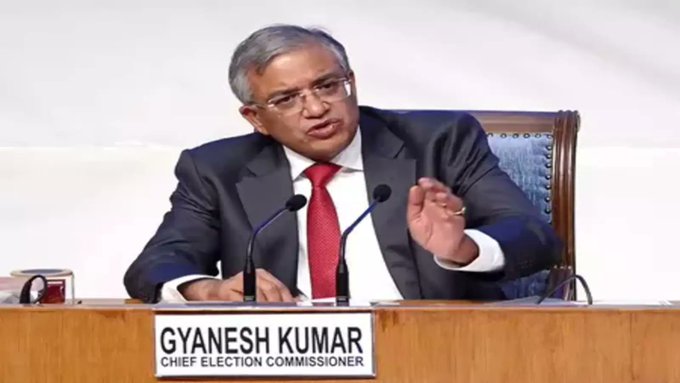
New official disclosures show that the Cabinet Secretariat sent election commissioners letters directly to Chief Election Commissioner Gyanesh Kumar. The forwarded documents detail growing internal administrative friction inside India’s premier electoral body.
These revelations came to light after transparency activist Commodore Lokesh Batra (Retd.) submitted a formal Right to Information query on September 24. He sought specific details regarding government steps taken on confidential internal complaints.
The released records confirm that top executive authorities avoided launching an independent administrative inquiry. Instead, officials routed the sensitive complaints straight to the head of the Election Commission. This approach allowed the government to process official inputs while carefully avoiding executive interference in an independent constitutional body.
Understanding the Internal Work Allocation Dispute
The controversy stems from confidential submissions written by Election Commissioners Sukhbir Singh Sandhu and Vivek Joshi. Both commissioners sent nearly identical letters to Cabinet Secretary T.V. Somanathan on July 29.
Their complaints highlighted actions taken by Senior Deputy Election Commissioner Maneesh Garg. Garg assumed temporary charge of the Administration Division on July 28 while Deputy Election Commissioner Bhanu Prakash Yeturu was away on leave until August 9.
Within hours of taking charge, Garg issued a major work-allocation order. The order covered officers senior and equivalent to him across key internal divisions. Sandhu attached a copy of this July 28 work order to his complaint.
Also Read : https://indiathisweek.in/india/pm-modi-polish-pm-donald-tusk-bilateral-summit-delhi/
Both commissioners noted that administrative staff never consulted them before issuing the directive. They pointed out that this unilateral action bypassed established administrative norms. They specifically cited Sections 18(1) and 18(2) of the 2023 Chief Election Commissioner and Other Election Commissioners Act. Commissioner Joshi also reported that administrative staff failed to provide a specific file he requested from the Administration Division.
IT Department File Routing and System Access Scrutiny
A central driver behind why the Cabinet Secretariat sent election commissioners letters involves internal control over Information Technology files. Garg’s disputed order changed file routing procedures for Director General (IT) Seema Khanna.
Under the revised order, IT department files were redirected to Garg himself. Previously, these strategic files moved directly to Deputy Election Commissioner Sanjay Kumar.
This file rerouting gained wide public attention following media reports about changes to electoral database software. Investigations revealed that new IT systems implemented under Khanna restricted database access for local Electoral Registration Officials.
These local officials hold statutory duties to add or delete voter names from official rolls. The structural changes generated intense debate over software centralization and administrative authority within the commission.
Official Secretariat Process and Constitutional Safeguards
The official notes clarify the exact process followed when the Cabinet Secretariat sent election commissioners letters to commission leadership. A secretariat note dated August 3 initially suggested asking Chief Election Commissioner Gyanesh Kumar for his official opinion on the matters raised.
A subsequent note on August 4 analyzed the legal nature of the communications. It observed that the letters came from Sandhu and Joshi in their individual capacity. They did not represent a formal collective decision from the Election Commission of India.
Crucially, the August 4 internal note emphasized that taking direct executive action could be construed as improper government interference in an independent constitutional institution. The secretariat recommended placing the matter on record with the Department of Personnel and Training for future administrative reference regarding Garg.
The Cabinet Secretariat issued formal written acknowledgments to both commissioners on August 5. Officials sent copies of these acknowledgments to the Department of Personnel and Training Secretary, the Establishment Officer, and the Principal Private Secretary to Chief Election Commissioner Gyanesh Kumar.
Election Commission Stand and Official Clarifications
Media reports previously suggested persistent policy disagreements between individual election commissioners and Chief Election Commissioner Gyanesh Kumar. In response, official spokespersons for the Election Commission denied any ongoing administrative breakdown or systemic deadlock.
The commission clarified that its leadership operates through collaborative and transparent procedures. Representatives stated that all policy decisions, administrative updates, and procedural changes are finalized either unanimously or by majority vote under statutory rules.
Commission sources also indicated that the disputed work-allocation order issued in late July was not implemented operationally. Furthermore, officials assured the public that electoral roll management databases remain fully secure, operational, and accessible to authorized field officers nationwide.
Long-Term Impact on Constitutional Governance
The decision where the Cabinet Secretariat sent election commissioners letters to the Chief Election Commissioner highlights how top departments manage sensitive internal complaints. By directing individual grievances back to the constitutional head, the government maintained essential boundaries between executive oversight and judicial or electoral independence.
The records released under the RTI Act demonstrate how internal administrative orders can trigger broader discussions on institutional authority. As electoral management systems rely more on centralized digital infrastructure, maintaining clear administrative rules and collaborative decision-making remains vital for public trust.
This disclosure provides transparency regarding internal operations, reassuring citizens that established administrative channels handle procedural disagreements effectively.