
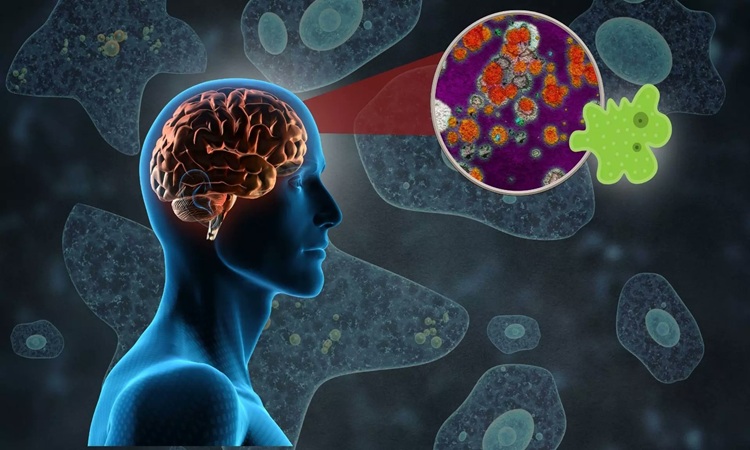
Kerala has reported a worrying rise in cases linked to Naegleria fowleri, commonly known as the “brain-eating amoeba.” The rare but deadly infection has sparked concern among health officials and the public, particularly as the state battles seasonal monsoon rains and waterlogging.
What is the Brain-Eating Amoeba?
Naegleria fowleri is a microscopic organism that thrives in warm freshwater bodies such as lakes, ponds, and poorly maintained swimming pools. It enters the human body through the nose and travels to the brain, causing a severe infection called primary amebic meningoencephalitis (PAM).
This condition destroys brain tissue and progresses rapidly. Symptoms usually appear within one to nine days of exposure and include fever, headache, nausea, stiff neck, confusion, and seizures. In most cases, the disease proves fatal despite medical treatment.
Why Cases Are Rising in Kerala
Experts attribute the surge in cases to rising temperatures, poor water management, and increased exposure to contaminated freshwater sources. Kerala’s humid climate and stagnant water during the monsoon create an ideal environment for the amoeba.
Public health officials have urged citizens to avoid bathing or swimming in stagnant or unchlorinated water. They also recommend using boiled or distilled water for nasal rinsing, a common practice in the region, to prevent accidental infection.
The state health department has issued advisories to hospitals to remain alert for suspected cases. Early diagnosis is critical, though doctors admit that confirming the disease is challenging due to its rapid progression and similarities with bacterial meningitis.
Global Context and Fatality Rate
Naegleria fowleri infections are rare worldwide, with only a few hundred documented cases. However, the mortality rate is above 95%, making prevention the most effective defense. Countries such as the United States, Pakistan, and India have reported scattered outbreaks over the past decade.
In Kerala, health authorities stress that while the number of cases remains low compared to other diseases, the high fatality rate demands urgent awareness. Officials are working on awareness campaigns in schools and local communities to spread accurate information.
Preventive Measures and Public Awareness
Doctors emphasize that the amoeba cannot spread from person to person and is not present in seawater or properly treated chlorinated pools. Preventive measures include:
- Avoiding swimming in stagnant freshwater.
- Ensuring swimming pools are well chlorinated.
- Using boiled or distilled water for nasal irrigation.
- Wearing nose clips when swimming in natural water bodies.
Public awareness is crucial. Kerala’s health ministry has also considered collaborations with local governing bodies to improve water sanitation and prevent conditions where the amoeba thrives.
Government Response and Health Advisory
The Kerala government has asked local administrations to inspect water sources, swimming pools, and recreational areas. Emergency response teams have been set up to track and document suspected cases. Hospitals have been advised to maintain high alert levels and improve diagnostic protocols.
Health Minister officials reassured the public that while the infection is deadly, it remains rare. They emphasized that panic should be avoided, and preventive measures can significantly reduce risk.
Outlook for Kerala
As Kerala continues to tackle seasonal health challenges, the appearance of Naegleria fowleri serves as a reminder of the importance of water safety and public awareness. With coordinated action and preventive care, health experts believe the risks can be controlled effectively.