
SIT Files Chargesheet in High-Profile Zubeen Garg Death Case
The Assam Police Special Investigation Team has filed a detailed chargesheet in the Zubeen Garg death case, marking a major breakthrough in the high-profile investigation. The chargesheet was submitted before a competent court on Wednesday. It invokes serious criminal provisions under the Bharatiya Nyaya Sanhita. Addressing the media, Special Director General of Police M.P. Gupta confirmed that murder charges have been framed against four accused. He said the SIT reached its conclusions after an extensive and evidence-based probe into the circumstances surrounding the artist’s death.
The four accused named under Section 103(1) of BNSS include Zubeen Garg’s manager Siddhartha Sarma, festival organiser Shyamkanu Mahanta, bandmate Sekhar Jyoti Goswami, and co-singer Amritprava Mahanta. According to the SIT, the accused acted with common intention and knowledge. Investigators allege that they were part of a criminal conspiracy that ultimately led to the singer’s death. The chargesheet reportedly details the motive, sequence of events, and the specific role played by each accused in the case.
Criminal Conspiracy, Common Intention Alleged
In addition to murder charges, the SIT has invoked Section 61(2) of BNSS, which deals with criminal conspiracy. Sections 3(6), 3(7), and 3(8) have also been applied, covering common knowledge, intention, and cooperation among the accused. Officials said the charges are supported by forensic findings, digital records, witness statements, and other corroborative material. Gupta stated that the SIT placed a clear and consistent evidentiary narrative before the court, leaving little scope for ambiguity at this stage of proceedings.
The chargesheet also names Zubeen Garg’s cousin Sandipan Garg, who has been booked under Section 105 of BNSS for culpable homicide not amounting to murder. According to investigators, his role emerged during the course of the probe, leading to the inclusion of separate charges. The SIT maintained that each accused has been booked strictly on the basis of evidence and legal provisions.
Police Personnel, Organiser Face Separate Charges
Two police security officers, Paresh Baishya and Nandeshwar Bora, have also been chargesheeted in the case. They were deployed as personal security officers. The SIT has charged them under Section 316(5) of BNSS for criminal breach of trust. Conspiracy charges under Section 61(2) have also been added. Investigators allege that the officers failed in their duty and misused the trust placed in them, raising serious questions about security protocol lapses.
Festival organiser Shyamkanu Mahanta faces additional charges beyond murder and conspiracy. The SIT has invoked Section 308(2) of BNSS for extortion and Section 318(4) for cheating. He has also been charged under Section 238 for destruction of evidence. Officials allege that deliberate attempts were made to tamper with or conceal material evidence, which they say was aimed at obstructing the investigation.
Chargesheet Runs Into Thousands of Pages
Special DGP Gupta revealed that the main chargesheet runs into more than 2,500 pages. With annexed evidence, exhibits, and supporting documents, the total documentation exceeds 12,000 pages. The material includes forensic reports, call detail records, financial data, and digital evidence. According to officials, the volume reflects the depth and complexity of the investigation. Gupta said the SIT ensured that all relevant material was placed on record to support the prosecution’s case.
Court Proceedings to Follow Amid Public Attention
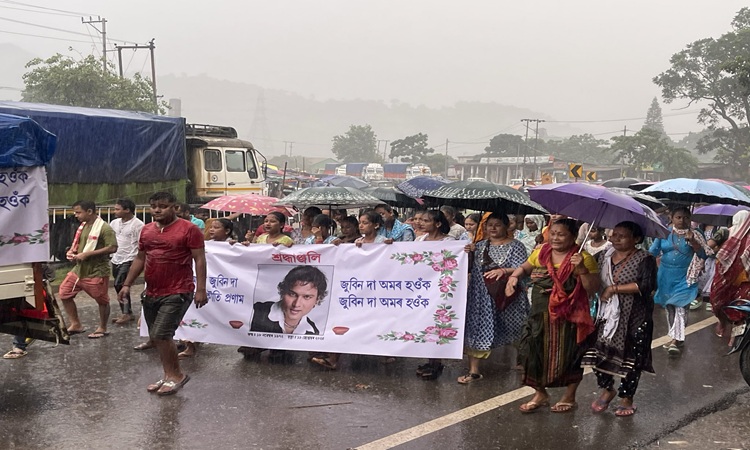
The filing of the chargesheet marks a critical stage in the Zubeen Garg death case. The court is now expected to take cognisance of the charges. Further legal proceedings will follow as per due process. The case has drawn widespread public attention across Assam, given Zubeen Garg’s stature as a cultural icon. His death had triggered public outrage and sustained demands for accountability. Officials reiterated that the accused would face trial under the law and that the investigation was conducted without bias.