
98
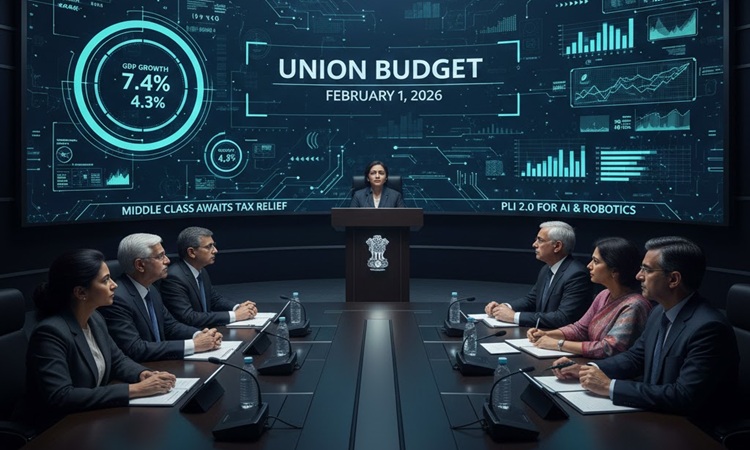
NEW DELHI – As the countdown to the Union Budget 2026 enters its final hours, all eyes are on Finance Minister Nirmala Sitharaman. She will present the budget on February 1, 2026, at 11:00 AM. Following the landmark reforms of 2025, which made income up to ₹12 lakh effectively tax-free, expectations for this year remain high. The middle class is particularly hopeful for measures that will put more disposable income into their pockets.
The primary focus for millions of salaried employees is the standard deduction. Currently, this deduction stands at ₹75,000 under the new tax regime. However, experts and taxpayers are urging the government to increase this limit to ₹1,00,000. Such a move would reflect the rising cost of living and urban inflation. If approved, this change could make a gross salary of up to ₹13.5 lakh virtually tax-free under the New Tax Regime.
Strategic Tweaks to the New Tax Regime
Experts anticipate “fine-tuning” of middle-income tax brackets rather than a total overhaul.
While a massive restructuring of tax slabs is unlikely this year, “fine-tuning” is a strong possibility. Industry analysts suggest a review of the 30% tax slab, which currently kicks in for income above ₹24 lakh. Many argue this threshold should be raised to align with current wage growth. Additionally, there is a persistent demand to allow Section 80D health insurance deductions under the new regime. This would encourage essential savings while keeping the tax structure simple.
The government remains committed to its goal of making the New Tax Regime the primary choice for Indians. Reports indicate that over 72% of taxpayers have already migrated to this simplified system. To further boost adoption, the budget may introduce limited investment-linked incentives. For instance, allowing self-contributions to the National Pension System (NPS) could satisfy long-term savers without complicating the filing process.
Bridging the Gap: The New Income Tax Act 2025
Reforms aim for faster refunds and simpler compliance starting April 1, 2026.
Budget 2026 serves as a critical bridge toward the implementation of the Income Tax Act, 2025. This new law, which goes into effect on April 1, 2026, aims to halve the complexity of the current tax code. Taxpayers are looking for “digital-first” filing enhancements and a smoother Tax Deducted at Source (TDS) process. Currently, overlapping provisions often lead to excess deductions, forcing many to wait months for refunds.
(Note: Investors are not advised to invest basis on this report. Consult experts before taking any financial decision. ITW will not be responsible for any financial loss arising of it)