
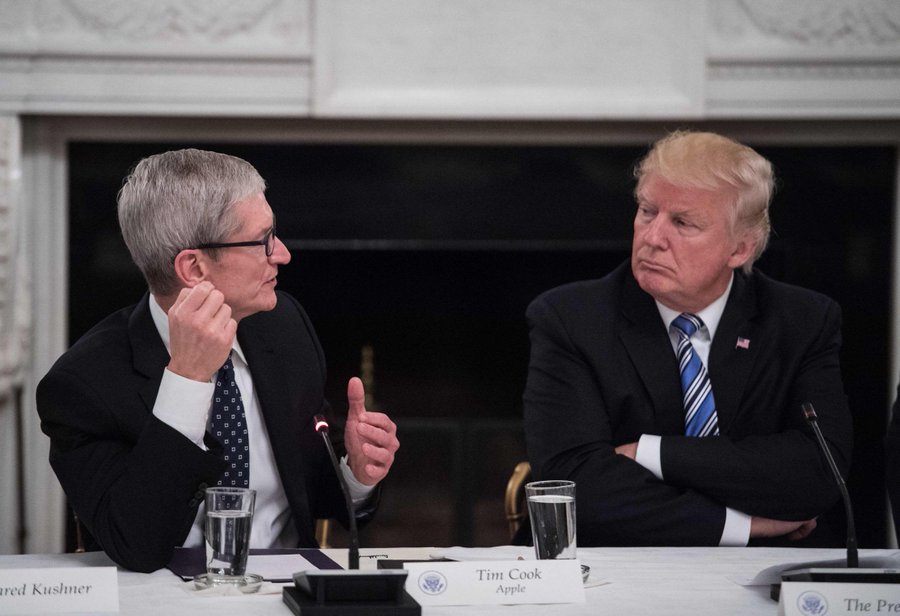
Trump Warns Apple CEO Tim Cook: ‘Don’t Build iPhones in India’
A Controversial Statement Amid Ongoing US-India Trade Tensions
Former US President Donald Trump has sparked controversy once again with his latest remarks targeting Apple’s growing operations in India. Speaking at a press conference in Doha, Qatar, Trump revealed that he had directly asked Apple CEO Tim Cook to limit the tech giant’s manufacturing expansion in India, citing high tariffs and alleged trade imbalances.
“I had a little problem with Tim Cook yesterday,” Trump said. “I said to him, my friend, I am treating you very good. You are coming up with $500 billion, but now I hear you are building all over India. I don’t want you building in India.”
Trump’s statement comes as Apple accelerates its production shift from China to India, a move largely motivated by rising geopolitical risks and the US-China trade war.
Apple’s Expanding Footprint in India
Apple has significantly increased its manufacturing capacity in India, aiming to reduce its dependency on China amid the ongoing global supply chain realignments. In the fiscal year ending March 2025, Apple produced iPhones worth $22 billion in India — a 60% surge from the previous year.
Currently, Apple’s key production hubs in India are located in Tamil Nadu and Karnataka, with major contracts held by Foxconn and the Tata Group. These facilities produced an estimated 40–45 million iPhones in 2024, accounting for 18–20% of Apple’s global output.
Out of these units:
- 15 million iPhones were exported to the United States.
- 13 million were shipped to international markets.
- 12 million were sold in the Indian domestic market.
This rapid expansion positions India as a crucial player in Apple’s global manufacturing strategy.
Record Sales Fuel Apple’s Confidence in India
Apple has not only ramped up production but also seen unprecedented success in the Indian market. In 2024, the company reported record-breaking iPhone sales worth $10 billion, making India its fourth-largest market after the US, China, and Japan.
The tech giant marked its 11th consecutive quarter of revenue growth in India, a clear sign that Apple is strategically betting big on the South Asian nation.
A Strategic Pivot from China to India
Apple’s production shift to India is part of a broader strategy to mitigate risks from the China-US trade war. The company recently announced that all iPhones destined for the US market would be manufactured in India instead of China.
This decision was prompted by a period of escalating tariffs between the world’s two largest economies. However, a temporary thaw came last month when both sides agreed to reduce tariffs for 90 days:
- The US lowered tariffs on Chinese imports to approximately 30%.
- China reduced tariffs on American goods by 115%, down to around 10%.
Despite this temporary reprieve, industry analysts remain skeptical about the long-term sustainability of this tariff détente. Apple, in response, is diversifying its supply chain to minimize future disruptions.
Trump’s Comment: Protectionism or Political Posturing?
Trump’s warning to Tim Cook is being interpreted by many observers as part of his ongoing protectionist rhetoric, especially as the US heads toward the 2024 presidential elections. His call for American companies to “build at home” reflects his long-standing position against outsourcing jobs and manufacturing to countries with high tariff barriers like India.
However, critics argue that such statements risk undermining US corporate interests abroad, especially at a time when global companies are looking to India as a reliable alternative to China.
What’s Next for Apple and India?
Despite Trump’s remarks, Apple is unlikely to scale back its India operations. The Indian government, led by Prime Minister Narendra Modi, continues to roll out incentives under the Production Linked Incentive (PLI) scheme to attract global manufacturers. Apple’s suppliers — including Foxconn, Pegatron, and Tata Electronics — have already committed billions of dollars in investment toward India’s electronics ecosystem.
The controversy may, however, add pressure on US-India diplomatic relations, especially as Washington weighs its interests in South Asia amid China’s growing influence.