
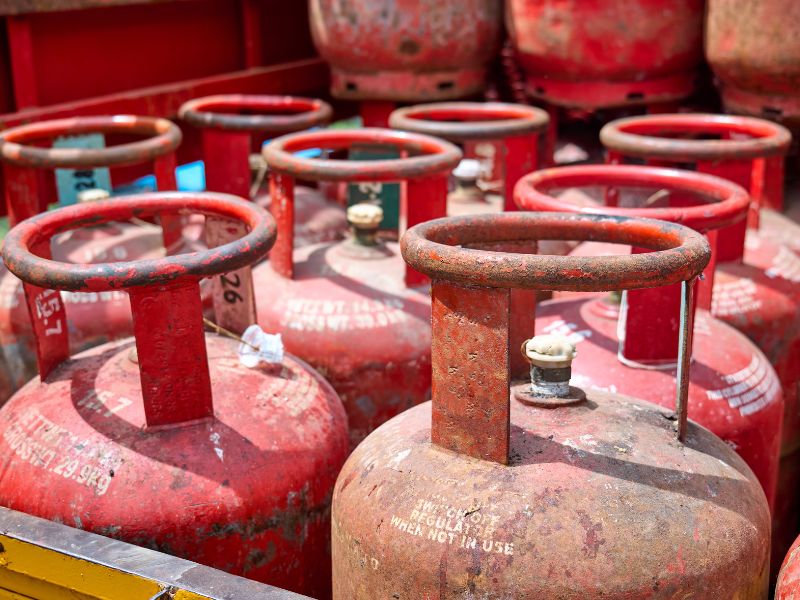
LPG Price Hike Announced: ₹50 Increase Per Cylinder for Ujjwala and Non-Ujjwala Beneficiaries
LPG Price Hike of ₹50 per Cylinder: New Rates Set to Take Effect on April 8
In a recent announcement, Petroleum and Natural Gas Minister Hardeep Singh Puri confirmed that the government will implement an LPG price hike of ₹50 per cylinder for both Pradhan Mantri Ujjwala Yojana (PMUY) beneficiaries and general users. The new rates will come into effect on the morning of April 8, 2025, adding to the financial burden of households already grappling with inflation.
The price increase is significant, with the cost of a 14.2 kg LPG cylinder for PMUY beneficiaries rising from ₹500 to ₹550. Meanwhile, non-Ujjwala users will see their LPG prices go up from ₹803 to ₹853 per cylinder. This hike is part of the government’s ongoing efforts to balance oil marketing companies’ financial sustainability with the public’s access to affordable energy.
Reasons Behind the LPG Price Hike
Minister Puri addressed the reason for the price increase during a press conference, explaining that the rise was necessary to compensate oil marketing companies for their ₹43,000 crore losses on the gas part of their operations. The loss primarily stems from fluctuations in international fuel prices and the high subsidy burden borne by the government to maintain affordable LPG rates for consumers, especially those in the Ujjwala Yojana.
The minister emphasized that the LPG price hike would be closely reviewed over the coming weeks. According to Puri, the government monitors these changes every 2-3 weeks to ensure that they are in line with global market trends and the needs of consumers. While price hikes can often trigger backlash, Puri assured that the increase is not related to excise duties on petrol and diesel, which are a separate issue.
The Pradhan Mantri Ujjwala Yojana (PMUY) Impact
The PMUY, launched by the government to provide free LPG connections to poor households, will feel the brunt of this price hike, with beneficiaries facing an increase of ₹50 per cylinder. Despite the increase, the government continues to subsidize these consumers, who were initially offered free LPG connections and subsidized refills to promote cleaner cooking fuel.
For many of the 8 crore PMUY beneficiaries, LPG was an affordable and cleaner alternative to traditional fuels like firewood and kerosene. However, with the rise in prices, these families could see their monthly expenses increase, potentially causing hardship for those already struggling with financial constraints. The government’s commitment to this scheme remains strong, but these regular price hikes could challenge its long-term success.
A Look at Global Fuel Price Trends and Domestic Impact
While the price of LPG has been rising in India, global crude oil prices have been experiencing a downward trend. This is due to factors such as fears of a global trade war and ongoing geopolitical tensions. Despite this, the Indian government faces significant fiscal pressure due to rising import costs and subsidies provided to domestic consumers. The balance between maintaining affordability and ensuring the sustainability of domestic oil companies is a delicate one, with frequent price adjustments.
The recent excise duty increase, announced alongside the LPG price hike, is also seen as a measure to mitigate losses and stabilize the market. However, consumers may still find themselves questioning why gas prices are rising when crude oil prices are decreasing globally.
Government’s Efforts to Ensure Continued Access to LPG
The price hike is likely to spark debates about the affordability of cooking gas, especially for vulnerable populations. To offset some of the impact of rising prices, the government continues to roll out initiatives aimed at ensuring better access to LPG, including the ongoing expansion of the Ujjwala Yojana and efforts to make LPG more affordable in rural and underserved areas.
Additionally, Minister Puri reassured citizens that the government regularly reviews prices to prevent drastic hikes. While some price increases are inevitable due to global market factors, the government aims to minimize their impact on low-income households.
The Road Ahead: How Consumers Can Navigate the Price Rise
As the LPG price hike takes effect, consumers are advised to explore ways to reduce their usage or take advantage of government initiatives designed to provide financial relief. Some state governments offer subsidies and schemes to help households manage fuel costs. Additionally, people can consider opting for refills during off-peak months to take advantage of lower prices or bulk refill discounts.
For many households, the price hike will put a strain on already tight budgets, but with continued government intervention, the hope is that LPG remains a viable, cleaner energy option for Indian families.
Final Thoughts
The announcement of an LPG price hike may be met with frustration by consumers, particularly low-income families who rely on the Pradhan Mantri Ujjwala Yojana. However, the government’s commitment to monitoring the situation and providing subsidies for those in need is expected to help mitigate the impact. As India continues to adjust to global fuel market changes, balancing affordability with sustainability will remain a key challenge for policymakers.