
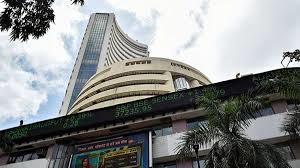
Indian Stock Market Faces Severe Losses as Global Selloff, Trade War Fears Intensify
Indian Stock Market Suffers Sharp Losses Amid Global Selloff and Rising Recession Fears
Indian benchmark indices, Sensex and Nifty, witnessed a dramatic plunge on Monday, following a global selloff sparked by escalating trade tensions and rising recession concerns in the United States. At 9:16 AM, the BSE Sensex crashed 3,072 points, or 4.09%, to 72,296, while the Nifty50 tumbled 1,146 points, or 5%, to 21,758, marking its steepest drop since early June.
The market capitalisation of all listed companies on the Bombay Stock Exchange (BSE) shrank by Rs 19.4 lakh crore to Rs 383.95 lakh crore. All major sectors were in the red, with the Nifty Metal index plunging 8%, while Nifty IT fell over 7%. Other sectors like Auto, Realty, and Oil & Gas also saw significant declines of more than 5% each. In the broader market, small-cap and mid-cap indices dropped by 10% and 7.3%, respectively.
This market chaos is largely due to a combination of global and domestic factors that have spooked investors, from escalating trade tensions between the U.S. and China to fears of a global recession. Here’s a closer look at the key reasons behind the sharp market decline.
- Nasdaq Enters Bear Market
One of the primary catalysts behind the global market turmoil is the entry of the Nasdaq index into a bear market. The Nasdaq fell more than 20% from its recent peak, a sharp decline that followed U.S. President Donald Trump’s announcement of sweeping tariffs earlier in the week. These tariffs, which took many investors by surprise, sparked fears of a global economic slowdown, prompting a massive selloff across major global markets.
Federal Reserve Chair Jerome Powell warned that the tariffs were “larger than expected” and could significantly impact inflation and economic growth. This uncertainty about the U.S. economic outlook has contributed to a broader loss of confidence in global markets, including India.
- Global Selloff Hits Indian Equities
Indian equities mirrored the sharp declines across global markets. Major Asian indices plunged on Monday morning, with Japan’s Nikkei down 7%, South Korea’s Kospi losing 5%, and China’s blue-chip index dropping nearly 7%. The Hong Kong Hang Seng index saw a staggering loss of over 10.5%.
Futures for U.S. indices also extended losses, with Nasdaq futures down 4% and S&P 500 futures falling by 3.1%. European futures also traded deep in the red, contributing to the global pessimism that bled into Indian markets. As global trade tensions and economic concerns escalate, investors worldwide are pulling back from riskier assets, leading to widespread declines in equity markets.
- Recession Fears Overwhelm Inflation Worries
Investors have begun to worry that recession concerns are overshadowing short-term inflation risks. While the U.S. Consumer Price Index (CPI) data, due later this week, is expected to show a modest 0.3% increase for March, many analysts are now fearing that rising tariffs will drive up costs significantly.
This could affect everything from food prices to automobiles, squeezing corporate profit margins and exacerbating the economic slowdown. With earnings season starting soon, approximately 87% of U.S. companies are set to report their results between April 11 and May 9, and many investors are bracing for disappointing numbers. These concerns have created a perfect storm for global markets, including Indian equities.
- Sharp Decline in Global Commodity Prices
As fears of a weakening global economy mount, commodity prices have taken a sharp dive. Brent crude oil dropped 6.5%, and WTI crude oil fell by 7.4%. Gold saw a 2.4% decrease, while silver plunged 7.3%. Base metals such as copper, zinc, and aluminium also suffered significant losses, with copper falling by 6.5% and zinc losing 2%.
These commodity price declines are seen as a reflection of waning demand and concerns about an impending economic slowdown. For emerging economies like India, this slump further heightens concerns about the stability of global markets and the potential for rising inflation and slower growth.
- Investors Seek Safe Havens
Amid growing concerns of a global recession, investors have rushed to safer assets, which further pressured equity markets. The yield on the 10-year U.S. Treasury fell by 8 basis points to 3.916%, reflecting increased demand for government bonds. Fed funds futures also spiked, with markets now pricing in a 25-basis-point rate cut by the U.S. Federal Reserve later this year.
This “flight to safety” sentiment is evident in the sharp sell-off across global stock markets, including India, as investors look to protect their portfolios from increasing economic uncertainty.
- Escalating Global Trade War
The trade war between the U.S. and China has reached new heights, with China retaliating by imposing tariffs on a broad range of U.S. goods. This tit-for-tat escalation has created significant concern over the future of global trade and economic growth.
Investors are worried that prolonged trade tensions could disrupt global supply chains, dampen corporate earnings, and weaken already fragile global demand. These fears have contributed to the sharp declines in equity markets worldwide, including India’s Sensex and Nifty indices.
Conclusion
The Indian stock market’s sharp decline reflects a broader global selloff triggered by escalating trade tensions, fears of an impending recession, and falling commodity prices. As investors move away from equities to safer assets, the volatility is expected to persist in the short term. For Indian investors, this signals a need for caution and careful evaluation of market conditions in the coming weeks.
While the global economic landscape remains uncertain, the Indian government and market regulators will likely continue to monitor these developments closely. With earnings season approaching and trade tensions still unresolved, the market’s recovery will depend heavily on how these global issues unfold.