
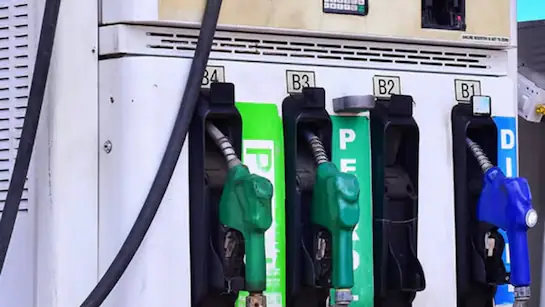
State-run oil marketing companies (OMCs) implemented a significant fuel price hike in India on Friday, impacting industrial diesel and premium petrol, as global crude prices surged due to ongoing West Asia conflicts. While normal petrol and diesel prices remain unchanged for everyday consumers, this marks the first substantial increase in retail fuel rates of any category since March 2024.
Industrial diesel, primarily sold in bulk to commercial establishments, saw a sharp rise of ₹21.92 per litre — a 25% jump — taking prices in Delhi from ₹87.67 to ₹109.59. Premium petrol was increased by ₹2 per litre, moving from ₹99.89 to ₹101.89 in the capital. Normal petrol and diesel, which make up the majority of daily fuel consumption, remain frozen at ₹94.77 and ₹87.67 per litre respectively.
OMCs Cite Global Crude Surge as Reason Behind Fuel Price Hike in India
An executive from one of the OMCs, speaking on condition of anonymity, said, “The hike is done because of surging international crude oil prices.” Sujata Sharma, joint secretary in the Ministry of Petroleum, clarified that auto fuels are deregulated products whose prices are set by OMCs. She added, “There is no increase in the price of normal petrol. The increase affects a premium category, which is only 2–4% of total petrol sold daily. Ordinary consumers are largely unaffected by this fuel price hike in India.”
Also read : RBSE Class 10 Result 2026: Board Confirms Delay, Official Date to Be Announced Soon
Although petrol and diesel are formally deregulated, the government exercises indirect control through its three state-run OMCs, which dominate about 90% of the retail fuel market. This system shields consumers from international oil price volatility but places significant pressure on OMC margins. Several petrol pump dealers confirmed that credit facilities from OMCs have been withdrawn, enforcing a strict cash-and-carry arrangement.
Rising Global Crude Prices Drive Latest Fuel Price Hike in India Despite OMC Profits
India’s OMCs reported a total net profit of ₹57,810.37 crore during the nine months of 2025-26, a 192% annualized increase, even as international crude prices were previously lower than when retail rates were last adjusted. Brent crude surged to $119.5 per barrel on March 9 — the highest in 45 months — following US-Israeli-Iran tensions. Prices have since stabilized above $100 per barrel but remain elevated, contributing to the latest fuel price hike in India.
Despite global supply pressures, India has maintained fuel availability through diversification. Refineries are running at full capacity with adequate crude and LPG stocks, ensuring normal deliveries. Commercial LPG supplies are being rationed to safeguard household consumers, while ongoing diversification efforts aim to reduce reliance on West Asian imports, particularly Qatar, whose Ras Laffan energy infrastructure was recently targeted in retaliation for regional strikes.
As the situation evolves, authorities continue monitoring the market closely, balancing global price pressures with domestic fuel security. This latest fuel price hike in India underscores the delicate challenge of managing retail prices while maintaining energy stability for millions of consumers.