
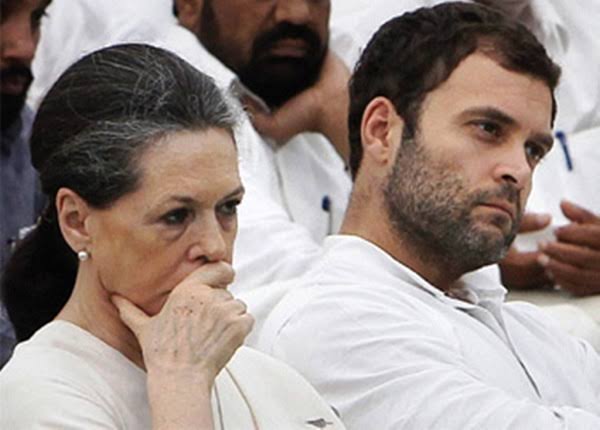
ED Charges Sonia and Rahul Gandhi in National Herald Money Laundering Case
ED Charges Sonia and Rahul Gandhi in National Herald Money Laundering Case
In a significant development, the Enforcement Directorate (ED) has filed a chargesheet accusing Congress leaders Sonia Gandhi and Rahul Gandhi of orchestrating a criminal conspiracy to misappropriate assets worth ₹2,000 crore from Associated Journals Ltd (AJL), the publisher of the National Herald newspaper. The ED alleges that the Gandhis, through their company Young Indian Pvt Ltd, acquired nearly all of AJL’s shares for just ₹50 lakh, thereby gaining control over its valuable properties.
The Alleged Conspiracy
According to the ED, in 2010, AJL, burdened with a debt of ₹90.21 crore owed to the All India Congress Committee (AICC), transferred this debt to Young Indian Pvt Ltd for a mere ₹50 lakh. Subsequently, Young Indian converted this loan into equity, acquiring 99% of AJL’s shares. The ED claims that this transaction was a deliberate move to gain control over AJL’s assets, which include prime properties in Delhi, Mumbai, and Lucknow.
The ED’s chargesheet names Sonia Gandhi as accused number one and Rahul Gandhi as accused number two. It also highlights the role of other Congress leaders, including Sam Pitroda and Suman Dubey, who are allegedly involved in the conspiracy. The ED asserts that the same individuals held key positions in both AJL and Young Indian, facilitating the alleged misappropriation.
Allegations of Money Laundering
The ED has identified the “proceeds of crime” in this case as ₹988 crore, encompassing the market value of AJL’s properties and the equity shares acquired by Young Indian. The agency contends that these assets were obtained through fraudulent means, constituting money laundering under the Prevention of Money Laundering Act (PMLA).
In November 2023, the ED attached assets worth ₹751.9 crore linked to this case, including properties in Delhi, Mumbai, and Lucknow, as well as shares of Young Indian. The agency argues that these assets are proceeds of crime and should be confiscated.
Legal Proceedings and Political Reactions
A special court in New Delhi is scheduled to decide on taking cognizance of the chargesheet on April 25, 2025. If the court accepts the charges, Sonia and Rahul Gandhi could face legal consequences under PMLA, which stipulates imprisonment for up to seven years for money laundering offenses.
The Congress party has vehemently denied the allegations, labeling them as politically motivated. Party spokesperson Jairam Ramesh accused the Modi government of using the ED as a tool for vendetta politics. The Gandhis have previously stated that they were unaware of the financial dealings involving Young Indian and AJL, asserting that they did not personally benefit from the transactions.
Broader Implications
This case has drawn significant attention due to the involvement of prominent political figures and the substantial value of the assets in question. It underscores the ED’s increasing scrutiny of financial transactions involving political entities and raises questions about the transparency of such dealings.
As the legal proceedings unfold, the case is expected to have far-reaching implications for political accountability and the regulation of financial transactions within political organizations. The outcome could set a precedent for future cases involving alleged financial improprieties by public figures.
Conclusion:
The Enforcement Directorate’s charges against Sonia and Rahul Gandhi in the National Herald money laundering case mark a significant development in Indian politics. As the legal proceedings progress, the case is likely to remain a focal point of public and political discourse, with potential implications for the future of the Congress party and the regulation of political finances in India.