
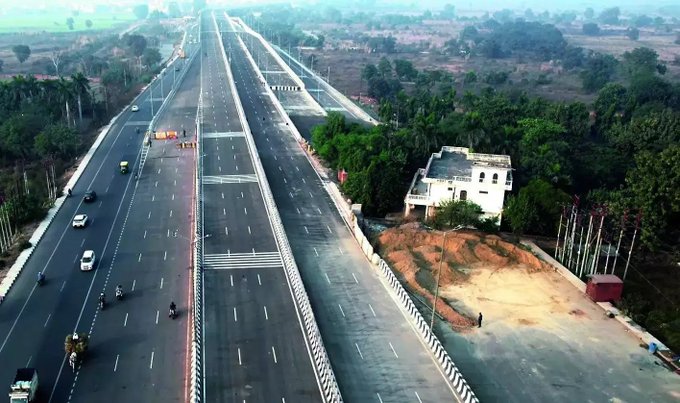
How Delhi-Dehradun Expressway Faces Delay Due to Legal Battle Over One House in Mandola
Delhi-Dehradun Expressway’s Final Stages Hindered by Legal Roadblock in Mandola
The much-anticipated Delhi-Dehradun Expressway is set to improve connectivity between Delhi and Uttarakhand, offering travelers a faster, more efficient route. Spanning an impressive 212 kilometers, the expressway’s construction is nearly complete and expected to open by June 2025. However, one major obstacle continues to delay the project: a single house in Mandola, a rural locality near the Delhi-Ghaziabad border.
This legal roadblock dates back to the 1990s when the Uttar Pradesh Housing Board issued a notification for land acquisition in Mandola as part of the Mandola Housing Scheme. One house, built by Veersen Saroha, remains the central issue preventing the completion of the expressway.
The Historical Background of the Mandola Housing Scheme
In 1998, the Uttar Pradesh Housing Board sought to acquire 2,614 acres of land across six villages in Mandola for a housing project. Most landowners in the area accepted the compensation offered by the Housing Board. However, Veersen Saroha, whose property covered a 1,600-square-meter plot, refused to sell. Veersen believed the compensation was inadequate and fought back by taking the matter to the Allahabad High Court.
In 2007, Veersen approached the court seeking a higher payout. However, the case dragged on for years, and despite protests, no resolution was reached. As time passed, the Mandola Housing Scheme itself faced delays, and the land acquisition stalled, leaving Veersen’s property untouched while other parts of the scheme remained incomplete.
Saroha’s House Becomes a Roadblock for the Expressway
In 2020, as part of its expansion efforts, the National Highways Authority of India (NHAI) began looking for land near Mandola to construct a ramp for the Delhi-Dehradun Expressway. The Uttar Pradesh Housing Board transferred the acquired land to NHAI, including Veersen Saroha’s house, without addressing the legal complications. At that point, Veersen’s grandson, Lakshyaveer, took legal action, questioning the transfer of the land to NHAI.
Lakshyaveer argued that the Housing Board did not have the authority to transfer his late grandfather’s property to the expressway authorities, given that the legal case was still unresolved. In 2024, Lakshyaveer filed a petition with the Supreme Court, demanding that the land transfer be nullified.
The Supreme Court’s Intervention
The case quickly gained attention due to the larger public interest involved in the Delhi-Dehradun Expressway project. The expressway is a crucial infrastructure initiative that promises to significantly reduce travel time between Delhi and Uttarakhand. The Supreme Court has acknowledged the urgency of resolving the matter and directed that it be expedited.
In February 2024, the court transferred the case to the Lucknow bench of the Allahabad High Court, which is scheduled to hear the matter on April 16, 2025. The Supreme Court has urged that the case be resolved swiftly to prevent any further delays to the expressway’s completion.
Compensation Disputes and Political Tensions
One of the core issues surrounding this dispute is the compensation offered by the Housing Board. In the late 1990s, the authorities offered Rs 1,100 per square meter to those whose lands were acquired for the housing scheme. Most landowners accepted the offer, but Veersen Saroha and a few others felt that the compensation was inadequate for the value of their properties.
Neeraj Tyagi, a local activist, has been vocal about the unfair compensation given to Veersen and other affected families. Tyagi has consistently advocated for higher compensation rates, especially given the economic development in the region over the past few decades.
In addition to the financial dispute, the complex legal history, procedural delays, and political factors have all played a part in stalling progress. Despite the Housing Board’s efforts to move forward with its land acquisition, the mandate of fair compensation has continued to hinder the project’s progress.
The Delayed Future of the Delhi-Dehradun Expressway
The legal entanglement over the Mandola property remains a critical roadblock for the completion of the Delhi-Dehradun Expressway. With the expressway almost ready for use, the single house in Mandola holds up one of the most vital infrastructure projects in India’s northern region.
The Supreme Court’s direction for an expedited hearing is a step toward resolving the matter, but the clock is ticking. The April 16 hearing will be pivotal, as any further delays could affect the expressway’s projected opening in June 2025.
What’s Next for Mandola and the Expressway Project?
As the case proceeds, Lakshyaveer Saroha continues to assert his family’s legal rights over the disputed property. However, the public interest in completing the expressway cannot be overstated. The Delhi-Dehradun Expressway promises to be a transformative project, boosting trade, tourism, and daily commuting between the national capital and Uttarakhand.
If the court’s ruling comes in favor of the Housing Board’s land transfer to NHAI, the last remaining roadblock will be cleared, ensuring that the expressway can open on schedule. However, should the case drag on, further delays could disrupt the expected timeline for completion.