
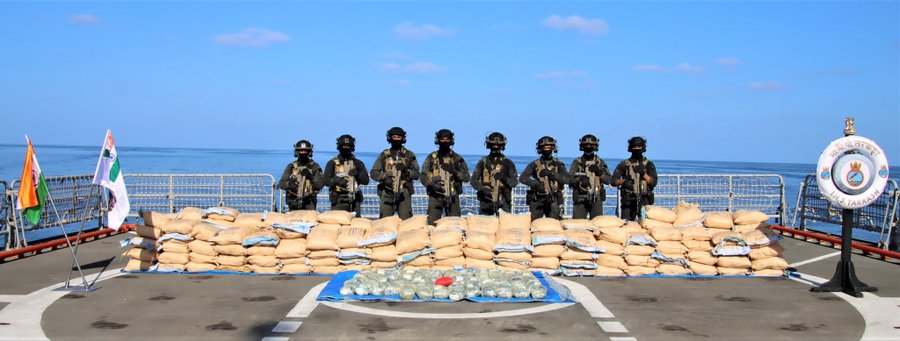
Indian Navy Seizes Over 2,500 kg of Narcotics in Major Ocean Bust
INS Tarkash Seizes Over 2,500 kg of Narcotics in Strategic Operation
In a significant blow to drug trafficking in the Indian Ocean, the Indian Navy’s INS Tarkash, operating under the Western Naval Command, intercepted and seized more than 2,500 kg of narcotics on March 31. The successful operation underscores the Navy’s commitment to ensuring maritime security and curbing illegal activities in the region.
The seizure, which included a large haul of hashish and heroin, marks another critical step in the Indian Navy’s ongoing efforts to monitor and combat illicit drug smuggling activities in international waters. This operation is part of India’s broader strategy to strengthen security in the Indian Ocean and protect the region from transnational threats.
Intelligence-Driven Operation Leads to Major Drug Bust
The operation began after the Indian Navy’s P8I maritime reconnaissance aircraft relayed critical intelligence regarding suspicious vessels operating in the Indian Ocean. These vessels were suspected of being involved in illicit activities, including drug trafficking. Acting swiftly, INS Tarkash altered its course to investigate the vessels.
The Navy intercepted multiple vessels before targeting a dhow, a traditional sailing vessel commonly used for transport in the region. A team, including Indian Navy Marine Commandos, boarded the vessel for a detailed inspection. Upon searching, they discovered sealed packets containing narcotics. The inspection revealed a staggering 2,507 kg of drugs—comprising 2,386 kg of hashish and 121 kg of heroin.
The Seized Drugs: A Look at the Narcotics Haul
The drug seizure is among the largest in recent years in the Indian Ocean, further highlighting the region’s growing vulnerability to drug trafficking. Of the total haul, the bulk of the drugs was hashish, a cannabis resin commonly trafficked through maritime routes, while the heroin seized is believed to be destined for various global markets.
This major bust is not only a victory for the Indian Navy but also for the broader international community, which continues to grapple with the challenges of illicit narcotics trafficking. The operation underscores the Navy’s readiness to tackle transnational crimes on the high seas and its role in regional maritime security.
Cracking Down on Transnational Drug Networks
The crew of the intercepted dhow was detained and questioned regarding possible links to broader drug smuggling operations. While the identities of the suspects and their affiliations have not been disclosed, the Indian Navy is working in collaboration with regional and international agencies to identify potential connections to larger drug syndicates operating across the Indian Ocean.
The interception of this particular dhow is part of India’s broader maritime security strategy to curtail illegal activities, including narcotics trafficking, piracy, and illegal fishing. With international waters often being used as a conduit for such crimes, the Indian Navy’s vigilance and intelligence-sharing efforts are crucial in addressing these threats.
INS Tarkash: A Key Asset in Maritime Security Operations
INS Tarkash, a Talwar-class frigate, is one of the key assets of the Indian Navy’s Western Naval Command, primarily tasked with safeguarding India’s maritime interests and ensuring the security of shipping lanes in the Indian Ocean. The frigate is well-equipped for multi-role operations, including anti-submarine warfare, surface warfare, and surveillance, making it an ideal platform for intercepting and tackling illicit activities on the high seas.
The operation highlights the Indian Navy’s growing role in regional maritime security, particularly in an era where drug trafficking and other illegal activities in international waters pose serious challenges to global trade and security. India’s strategic location in the Indian Ocean makes it a key player in maintaining security and stability in one of the world’s busiest and most vital maritime trade routes.
Impact of the Seizure on Regional Security Efforts
This latest narcotics seizure highlights the persistent challenges posed by illicit activities in the Indian Ocean, particularly the trafficking of drugs, weapons, and other contraband. While the operation was a success, it also underscores the need for continuous vigilance and international cooperation in combating such crimes.
In response to the growing threat of drug trafficking and organized crime in the region, India has been ramping up its maritime security initiatives. These efforts include enhancing surveillance capabilities, increasing the deployment of naval assets, and improving intelligence-sharing with neighboring countries and global maritime agencies.
A Call for Continued Maritime Collaboration
As drug trafficking and other illegal activities continue to proliferate in international waters, this operation serves as a reminder of the importance of continued collaboration between nations. Maritime security cannot be achieved by any one country alone; it requires robust partnerships and shared resources to effectively tackle transnational threats.
India’s role in maintaining the security of the Indian Ocean, combined with its ongoing maritime operations, positions it as a critical partner in the global fight against illicit trade and organized crime.