
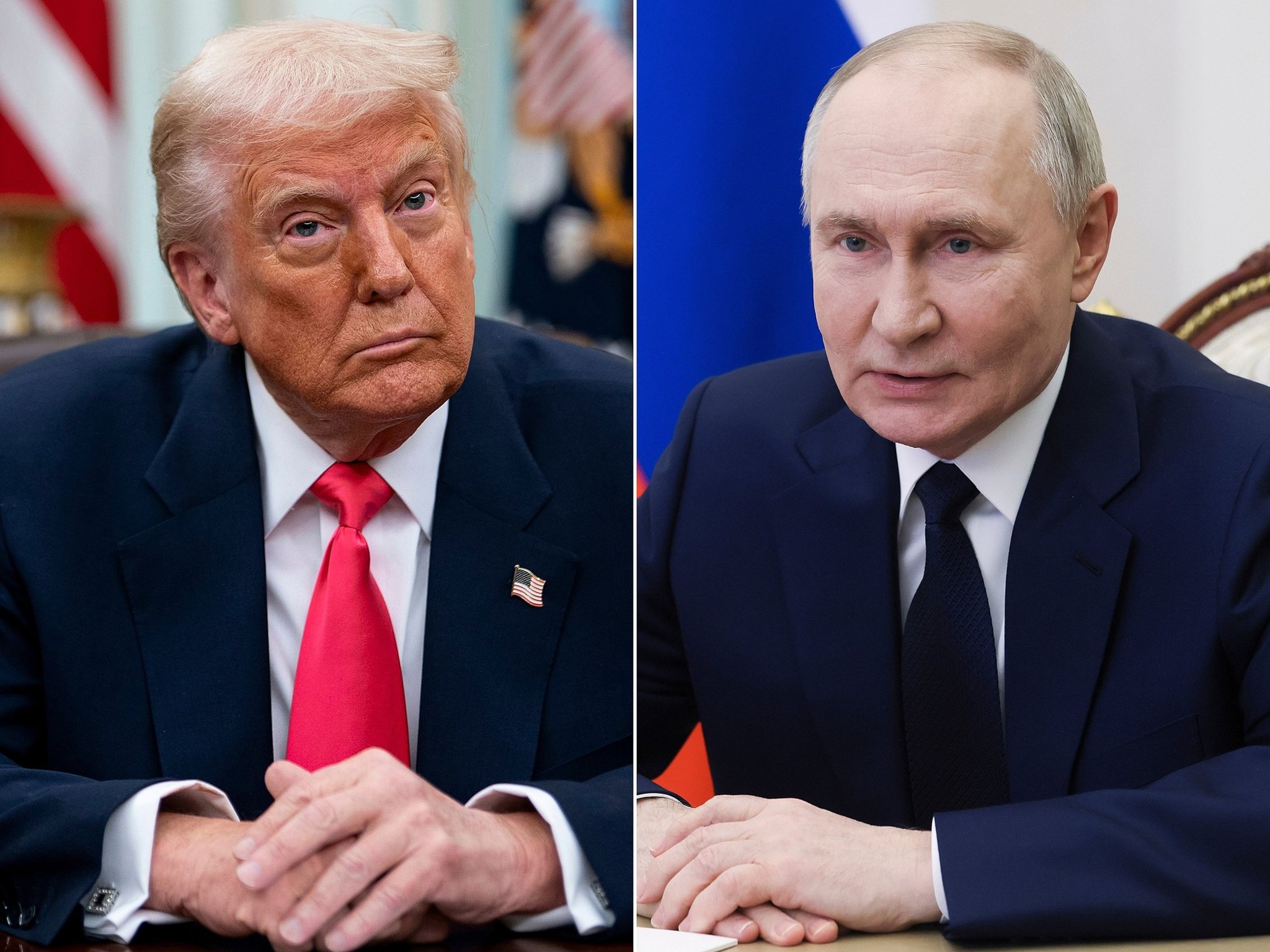
Russia’s Warning to Trump: Strike on Iran’s Nuclear Sites Could Have Catastrophic Consequences
Putin’s Administration Warns Trump Against Striking Iran’s Nuclear Facilities
In an escalation of rhetoric on the global stage, Russian President Vladimir Putin’s administration has issued a stark warning to U.S. President Donald Trump over the latter’s threats to strike Iranian nuclear sites. This warning marks a significant shift in Russian foreign policy and could signal a deeper rift in US-Russia relations, particularly in light of recent efforts by Putin to repair ties with Washington.
The warning came after President Trump issued a series of chilling threats to Tehran, declaring that the U.S. would resort to “bombing the likes of which they have never seen before” if Iran refuses to strike a deal over its nuclear program. The sharp retort from Russia’s Deputy Foreign Minister Sergei Ryabkov comes at a time of heightened tensions in the Middle East, with global powers jockeying to influence the future of Iran’s nuclear ambitions.
Russian Response: ‘Catastrophic Consequences’ of Nuclear Strike on Iran
Speaking to Russian journal International Affairs, Sergei Ryabkov condemned Trump’s threatening language, particularly regarding the possible bombing of Iran’s nuclear infrastructure. “We consider such methods inappropriate, we condemn them, and we see them as an attempt by the U.S. to impose its own will on Iran,” Ryabkov stated.
The deputy minister underscored the potentially catastrophic consequences of any military action aimed at Iran’s nuclear facilities. “The consequences of such strikes, especially if they target nuclear infrastructure, could be catastrophic for the entire region,” Ryabkov warned. His statement was a clear indication that Russia would not stand idly by if the U.S. were to escalate tensions further, underlining the fragility of the delicate balance in the Middle East.
Ryabkov also suggested that diplomacy should be the primary avenue to resolve the issue, stating, “While there is still time, we need to redouble our efforts to reach an agreement on a reasonable basis. Russia is ready to offer its good services to Washington, Tehran, and everyone who is interested in this.”
Trump’s Ultimatum to Iran: ‘Bombing’ or Secondary Tariffs
On March 30, President Donald Trump sent a clear message to Tehran, issuing an ultimatum: either Iran agrees to a new nuclear deal with the U.S., or it faces military retaliation. “If they don’t make a deal, there will be bombing. It will be bombing the likes of which they have never seen before,” Trump declared. His remarks were seen as an aggressive posturing, meant to pressure Iran into restarting nuclear negotiations that have stalled under his administration.
In addition to military threats, Trump hinted at reintroducing secondary tariffs on Iran, similar to the sanctions regime imposed during his previous term. “There’s a chance that if they don’t make a deal, I will do secondary tariffs on them like I did four years ago,” he warned, signaling his readiness to employ economic pressure in tandem with military threats.
The ultimatum came after Iran rejected Trump’s offer for direct talks on its nuclear program, citing concerns over the U.S.’s approach to sanctions and non-compliance with previous international agreements. Iran maintains that its nuclear activities are solely for energy purposes, but the international community has long suspected that Tehran is working toward developing nuclear weapons.
Iran’s Response: Military Threats and Regional Tensions
While the U.S. and Russia exchanged heated words, Iran responded by issuing its own threats. Iranian military leaders have warned that if the U.S. were to attack its nuclear infrastructure, Iran would not hesitate to retaliate against American and allied forces in the region. A high-ranking Iranian military official, speaking to The Telegraph, issued a chilling warning: “There will be no distinction in targeting British or American forces if Iran is attacked from any base in the region or within the range of Iranian missiles.”
The unnamed official further clarified that “When the time comes, it won’t matter whether you’re an American, British, or Turkish soldier – you will be targeted if your base is used by Americans.” This statement underscores the growing tensions in the region and the possibility of a broader military conflict if diplomatic efforts fail.
Global Reactions and Diplomatic Efforts
The war of words between the U.S. and Russia is not just a bilateral issue but has significant implications for the broader geopolitical landscape. As the United States ramps up its pressure on Iran, Russia has signaled its willingness to mediate between the two sides, trying to keep diplomatic channels open. Moscow’s efforts to maintain stability in the region are clear, but Ryabkov’s comments reveal a broader desire to ensure that Russia’s role as a power broker in the Middle East remains intact.
While Russia has been a staunch ally of Iran, particularly in the Syrian conflict, it is also aware of the fragile peace in the Middle East. The involvement of Russia and its relationship with Tehran will be crucial in shaping any future resolution. Both Moscow and Washington are aware that military escalation could destabilize the region even further, particularly with global allies like the U.K. and France also concerned about the growing tensions.
What’s Next for US-Iran Relations and the Global Order?
The escalating rhetoric between the U.S. and Iran, compounded by Russia’s stern warning, suggests that the path ahead is fraught with uncertainty. Whether the U.S. will follow through on its military threats remains to be seen, but the growing diplomatic pressure from Russia and other global powers suggests that the situation may not devolve into immediate conflict.
The need for continued diplomatic dialogue is critical. With both the U.S. and Iran sitting at a crossroads, the possibility of a catastrophic war looms large, while the prospect of peace and a renewed nuclear deal offers hope. The international community will be watching closely as this high-stakes standoff unfolds.