
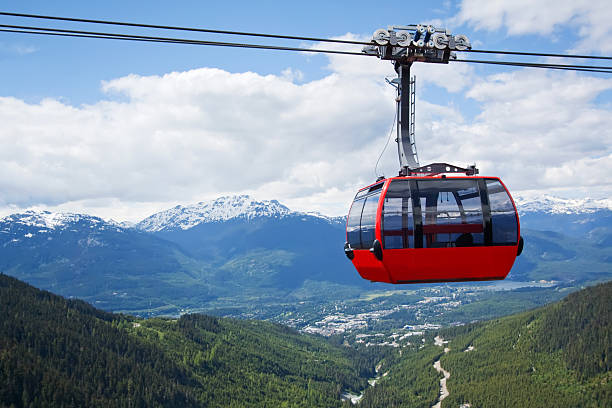
Shimla’s 13.79 km Tara Devi Ropeway: Asia’s Longest to Alleviate Traffic, Boost Tourism
Shimla to Construct Asia’s Longest Ropeway, Easing Traffic and Boosting Tourism
In a groundbreaking initiative that promises to transform Shimla’s transport and tourism landscape, the Himachal Pradesh government has begun work on Asia’s longest ropeway system. Set to stretch an impressive 13.79 kilometers, the Tara Devi-Shimla Ropeway will not only ease traffic congestion but also serve as a major draw for eco-conscious travelers seeking an alternative to traditional road transport.
This colossal infrastructure project, which is expected to cost Rs 1,734.40 crore, is being implemented under the Public-Private Partnership (PPP) model. The project is a collaboration between the state government and the Ropeway and Rapid Transport System Development Corporation. Upon completion, it will be the second-largest ropeway in the world, surpassed only by Bolivia’s Mi Teleférico, which covers a staggering 32 kilometers.
A New Era for Shimla’s Transportation Network
The Tara Devi-Shimla Ropeway is designed to address two major challenges: traffic congestion and the growing demand for sustainable tourism in the region. With an estimated capacity to carry 2,000 passengers per hour in both directions, this ropeway will significantly reduce road traffic, which is a constant issue in Shimla, especially during peak tourist seasons. By providing a fast and eco-friendly alternative to traditional road transport, it aims to enhance the visitor experience and alleviate the strain on the town’s aging infrastructure.
The ropeway will connect key locations in Shimla, with 15 stations along its route, linking vital areas like the Maa Tara Devi Temple, Sanjauli, and major transportation hubs such as the Old Bus Stand, Railway Station, and ISBT (Inter-State Bus Terminal). This system promises to make daily commutes faster and more convenient for both residents and tourists.
Eco-Friendly Features and Sustainability Goals
What sets the Tara Devi-Shimla Ropeway apart is its emphasis on environmental sustainability. The project incorporates several eco-friendly features that align with Shimla’s push to become a greener destination. The ropeway’s cabins will be equipped with solar panels, ensuring that a significant portion of the system’s energy demand is met through renewable sources.
Additionally, the installation of 90 charging stations at various boarding points will provide easy access to electric vehicles, further enhancing the system’s commitment to reducing carbon emissions. By integrating solar power and promoting electric vehicle use, the ropeway will not only contribute to a cleaner environment but also support Shimla’s overall tourism goals, positioning it as a destination that values sustainability.
Key Station Points and Strategic Benefits
The Tara Devi-Shimla Ropeway will traverse an extensive area of approximately 60 kilometers, making it one of the most comprehensive ropeway systems in the region. It will feature 660 cabins, each designed to carry 8 to 10 passengers. With cabins arriving every 2 to 3 minutes, passengers can expect a smooth, efficient ride with minimal wait times. Some of the key stations on the route include:
- Maa Tara Devi: The starting point of the ropeway, an important religious site.
- Court Complex (Chakkar): A vital administrative area.
- Tutikandi Parking Area: A major parking zone for tourists.
- ISBT and Railway Station: Key transportation hubs.
- Old Bus Stand: Another important commuter station.
- IGMC Hospital: Serving medical needs along the route.
- Victory Tunnel, Lakkar Bazaar, and more: Prominent Shimla landmarks.
Impact on Shimla’s Economy and Tourism
With its strategic connectivity, the Tara Devi-Shimla Ropeway is poised to boost Shimla’s tourism economy significantly. Shimla, one of India’s most popular hill stations, attracts millions of tourists annually. However, the growing influx of visitors has put a considerable strain on its road infrastructure. The ropeway’s ability to move large numbers of passengers quickly and efficiently will allow for a more fluid flow of traffic, enhancing the overall tourist experience.
Moreover, the project is expected to bring numerous socio-economic benefits to Shimla and the surrounding areas. By creating new jobs, boosting local businesses, and generating tourism-related revenue, the Tara Devi-Shimla Ropeway promises to be a catalyst for long-term growth. The eco-friendly aspect of the project also aligns with global trends towards sustainable tourism, making it an attractive proposition for travelers seeking green alternatives.
The Road Ahead: Timeline and Completion
Construction of the Tara Devi-Shimla Ropeway is already underway, and the project is expected to be completed in the coming years. Once finished, it will significantly alter the transport dynamics in Shimla, offering both residents and tourists a seamless, enjoyable, and sustainable mode of travel.