
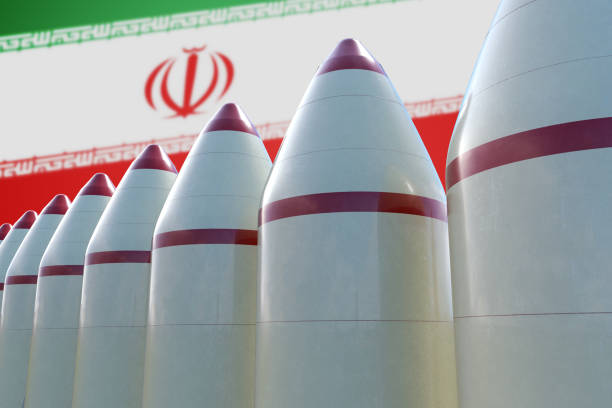
Iran’s Missile Systems Loaded: 60,000 U.S. Troops on High Alert as Tensions Escalate
In a dramatic escalation of tensions between Iran and the United States, reports from Tehran Times have confirmed that Iran has loaded its missiles onto launchers stationed across its underground missile cities. The preparedness of these missile systems, coupled with recent threats, has put 60,000 U.S. troops on high alert, signaling that the region is on the brink of a potential military confrontation.
Iran’s Strategic Missile Preparation: A Warning to the U.S. and Allies
The preparation of Iran’s missile arsenal is a clear signal to both the United States and its allies in the region. As geopolitical tensions continue to rise, Iran’s action of loading missiles onto launchers raises concerns over a potential strike against U.S. interests in the Middle East. According to sources close to the Iranian government, the missile systems are strategically positioned in underground facilities, which are designed to be difficult to detect and target.
This move comes amid a backdrop of heightened military rhetoric between Washington and Tehran, following several provocative incidents in the region, including the military standoff in the Strait of Hormuz, and recent attacks on U.S. military assets. While many analysts speculate about Iran’s motivations, the latest developments indicate a critical shift in Iran’s military readiness, highlighting a heightened risk of conflict.
Escalating Military Tensions: What This Means for U.S. Forces
The presence of 60,000 U.S. troops in the region is a major concern for military strategists. These troops are stationed across various bases in countries like Iraq, Kuwait, and Qatar, all within striking distance of Iran’s missile systems. If tensions escalate into open conflict, the U.S. could be caught in a dangerous standoff, facing the possibility of missile strikes aimed at military installations and strategic targets.
As U.S. forces remain on high alert, there has been an increase in surveillance and defensive operations in the region. U.S. Central Command has issued statements emphasizing the readiness of American forces, while also urging diplomacy to de-escalate the situation. However, the prospect of an armed conflict with Iran seems increasingly likely, with both sides standing firm in their positions.
Iran’s Underground Missile Cities: A Strategic Advantage
Iran’s underground missile facilities, often referred to as “missile cities”, are a significant aspect of its military strategy. These cities are hidden deep within mountains and fortified bunkers, making them less vulnerable to airstrikes. Iran has invested heavily in these systems over the years, with reports indicating that they are capable of housing a wide array of missiles, ranging from short-range projectiles to longer-range strategic missiles.
These underground sites are part of a broader military strategy to deter foreign intervention and project power within the region. By keeping missiles loaded and ready to launch at a moment’s notice, Iran can effectively demonstrate its readiness for conflict and its ability to retaliate swiftly against any perceived threat.
The U.S. Response: Diplomatic or Military Action?
While diplomatic channels remain open, the U.S. has expressed increasing concerns over Iran’s missile developments and the growing likelihood of military action. The U.S. has already deployed additional Patriot missile defense systems in the region to protect its personnel and assets. There is also talk of increasing intelligence-sharing with allies to track Iranian movements and ensure that any potential missile launch is detected and mitigated.
However, some experts fear that the U.S. military’s presence in the region may inadvertently provoke further escalation. Iran’s leadership has repeatedly stated that any military action by the U.S. will be met with severe consequences, not just in terms of direct military retaliation, but also through proxy wars and destabilizing actions in the Middle East.
Global Implications: Impact on Regional and Global Security
The potential for a military conflict between Iran and the United States has far-reaching implications, not just for the Middle East, but for global security. The region is home to vital energy resources, with the Strait of Hormuz being one of the world’s most important oil shipping routes. Any escalation could disrupt global oil supplies, leading to economic instability and increased energy prices worldwide.
Moreover, a conflict between Iran and the U.S. could spark a broader regional conflict, involving countries such as Saudi Arabia, Israel, and Turkey. With both sides prepared for confrontation, there are fears that the conflict could spiral into an all-out war with devastating consequences for civilians and the broader geopolitical landscape.
What’s Next for Iran-U.S. Relations?
While the current situation remains tense, there is still hope that diplomatic measures can de-escalate the crisis. International powers such as Russia, China, and the European Union have urged both sides to engage in dialogue to prevent conflict. However, given the stakes and the recent developments, the window for peaceful negotiation is rapidly closing.
The question now is whether the diplomatic community can intervene in time to prevent an all-out war. As of now, all eyes are on Tehran and Washington, as both sides prepare for the possibility of an imminent confrontation.