
Official Confirmation of Ongoing Frontier Face-Offs
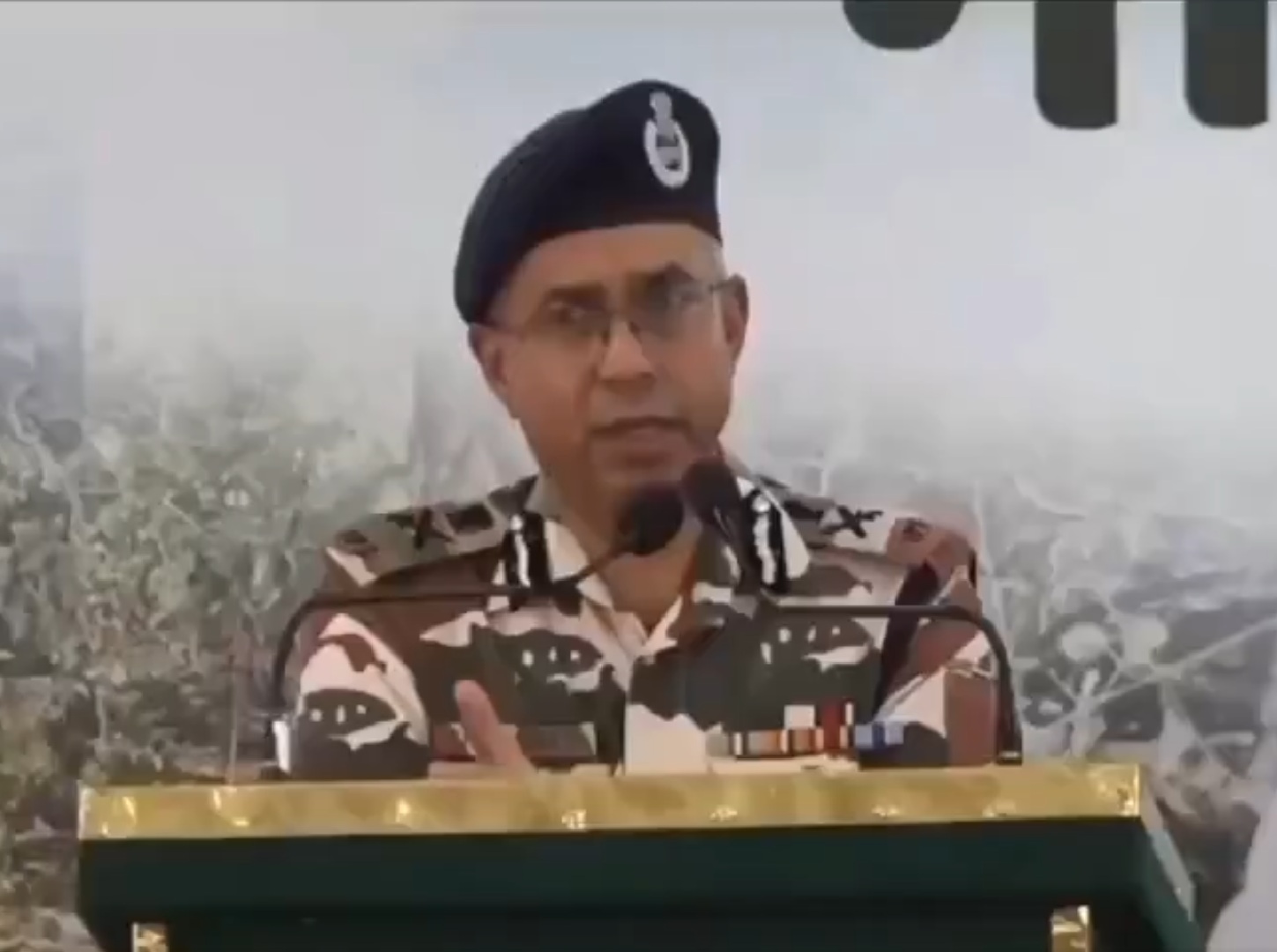
The official announcement where the ITBP Chief Confirms Chinese Incursions In Arunachal Pradesh has brought heightened attention to frontier defense along India’s northern borders. Indo-Tibetan Border Police Director General Shatrujeet Kapur publicly acknowledged active standoff situations between Indian and Chinese military forces across multiple sectors.
The confrontations involve units of the Chinese People’s Liberation Army pitching temporary encampments within 6 to 7 kilometers of India’s perceived Line of Actual Control. These remote positions are situated near the highly sensitive Asaphila sector in Upper Subansiri district.
ITBP Chief Confirms Chinese Incursions In Arunachal! 🚨
High-altitude border readiness in focus! ITBP Director General Shatrujeet Kapur confirms active standoff points near Asaphila as elite commandos move to forward bases.
#ITBPChiefConfirmsChineseIncursionsInArunachal #IndianArmedForces #BorderDefense #NationalSecurity #BreakingNews #Indiathisweek
— India This Week (@indiathisweekk) October 23, 2026
Speaking to security personnel during an investiture event ahead of the force’s 65th Raising Day on October 24, Director General Kapur outlined major tactical responses. He explicitly designated China as India’s primary strategic adversary along mountain borders.
The director general emphasized that the ongoing border situation requires constant alertness, rigorous tactical training, and robust forward logistical infrastructure. He noted that maintaining absolute territorial integrity along high-altitude mountain passes remains the top operational mandate for all units stationed in the eastern sector.
Deployment of Specialized Shaurya Commando Units
Following statements where the ITBP Chief Confirms Chinese Incursions In Arunachal, details regarding frontline troop counter-deployments emerged. Border guarding authorities confirmed that tactical standoff points have remained active continuously since July.
In response, specialized Shaurya Commando platoons were dispatched to high-altitude outposts to maintain firm forward positioning. These elite units were raised specifically for high-elevation combat, rapid-reaction operations, and specialized mountain warfare.
The military friction continued directly through major diplomatic engagements, including the mid-September BRICS Summit held in New Delhi, which was attended by foreign leaders. The ongoing standoff also coincided with historic anniversaries of strategic 1962 Sino-Indian War battles fought across identical mountain terrain.
Field commanders report that frontline commando teams maintain round-the-clock physical surveillance and tactical patrols along key ridges. Their persistent presence ensures that opposition forces cannot advance further or establish permanent concrete positions beyond established patrol lines.
Aggressive Defensive Upgrades and Underground Infrastructure
As the ITBP Chief Confirms Chinese Incursions In Arunachal, border forces are accelerating comprehensive defensive infrastructure overhauls across all forward bases. Complete strike training for all operating personnel will be finalized before late 2027.
Essential tactical gear and specialized non-lethal equipment are being distributed across forward border outposts to manage physical face-offs effectively. Both border police battalions and Indian Army divisions maintain closely coordinated vigilance across active flashpoints.
High-intensity combat drills now run alongside the construction of heavily reinforced underground shelters and subsurface bunkers. These specialized structures protect stationed troops against potential heavy artillery shelling, aerial bombardment, and severe high-altitude winter weather conditions.
Engineering wings are constructing reinforced underground facilities on a massive scale along the frontlines to withstand modern warfare contingencies. These subterranean installations will store emergency supplies, communications hardware, and medical facilities, ensuring operational continuity even during extended isolation during harsh winter blockades.
Political Debate Surrounding Frontier Management
The public revelation where the ITBP Chief Confirms Chinese Incursions In Arunachal prompted swift reactions across national political channels. Opposition leaders raised sharp questions regarding government border policies, trade engagements, and national security transparency.
Congress General Secretary Jairam Ramesh criticized the central administration’s handling of border security and international trade relations. Writing on social media, he accused top leadership of maintaining silence on active developments along the Line of Actual Control.
While the self-styled Vishwaguru’s calibrated concessions to China continue, the DG, ITBP, has lauded—and rightly so—its performance in recent face-offs with the PLA in Arunachal Pradesh, on which there has been a deafening silence from the PM and his establishment.
Corps commander talks were held at Wacha and Damai in Arunachal Pradesh last month after the Taksing face-off. Locals had reported that patrolling points had been lost once again, as in Ladakh. China continues to rename our towns in Arunachal Pradesh and is building a 60,000-MW dam that threatens our ecological and water security.
India’s trade deficit with China zoomed even further to a record $112 billion in 2025–26, up from $99 billion the previous year. This has simply crushed our MSMEs in many industries. Make in India has become Import from China. This staggering trade deficit is in itself a very significant threat to our economic security.
India has been paying the price for the PM’s infamous clean chit to China on June 19, 2020, when he said, after 20 of our brave jawans had been martyred: “ना कोई वहाँ हमारी सीमा में घुस आया है और न ही कोई घुसा हुआ है, न ही हमारी कोई पोस्ट किसी दूसरे के कब्ज़े में है।” The retired Chief of Army Staff, Gen. Naravane, has revealed that the only instructions he received while at the helm, when Chinese incursions took place in Ladakh, were: “जो उचित समझो वो करो।”
On July 4, 2025, the Deputy Chief of Army Staff, Lt. Gen. Rahul Singh, had spoken publicly on China’s both intensively and extensively embedded role in Pakistan’s military campaign during our Operation Sindoor. Yet, on August 25, 2026, the retired Chief of Defence Staff, Gen. Anil Chauhan, publicly contradicted Lt. Gen. Rahul Singh’s revelations and, soon thereafter, took over a think tank that is a key part of the RSS/BJP ecosystem.
— Jairam Ramesh (@Jairam_Ramesh) October 23, 2026
Political commentators expressed serious concern over reports suggesting potential alterations to traditional patrolling access points. They also highlighted geographic name revisions issued by foreign authorities for locations inside Arunachal Pradesh, alongside large-scale dam construction projects along the upper Brahmaputra River.
Defense analysts stress that domestic political alignment on national security remains vital when managing prolonged border standoffs. Clear communication between military leaders and civilian administrators helps maintain national focus while supporting troops stationed in remote, hostile environments.
Comprehensive Frontier Security and Long-Term Readiness
Military leadership maintains that long-term border security requires continuous modernization across intelligence, surveillance, target acquisition, and reconnaissance networks. Advanced drones, satellite tracking, thermal imaging arrays, and high-altitude logistics hubs support ground troops stationed across forward outposts.
As news spreads that the ITBP Chief Confirms Chinese Incursions In Arunachal, security forces confirm that operational readiness along the Line of Actual Control remains at peak levels. High-altitude command structures continue daily evaluations to guarantee complete territorial defense.
Combined security efforts ensure that every forward post possesses adequate winter stocking, advanced cold-weather gear, and reliable tactical communications. Border guarding forces remain fully prepared to respond decisively to any attempts to alter the status quo unilaterally.
Continuous inter-agency coordination between the border police, armed forces, and local civil administrations ensures smooth intelligence sharing. This unified defense posture reinforces India’s long-term commitment to safeguarding its sovereign boundaries across the northeastern frontier.