
Indigenous Turbofan Hits Major Performance Benchmark in Moscow
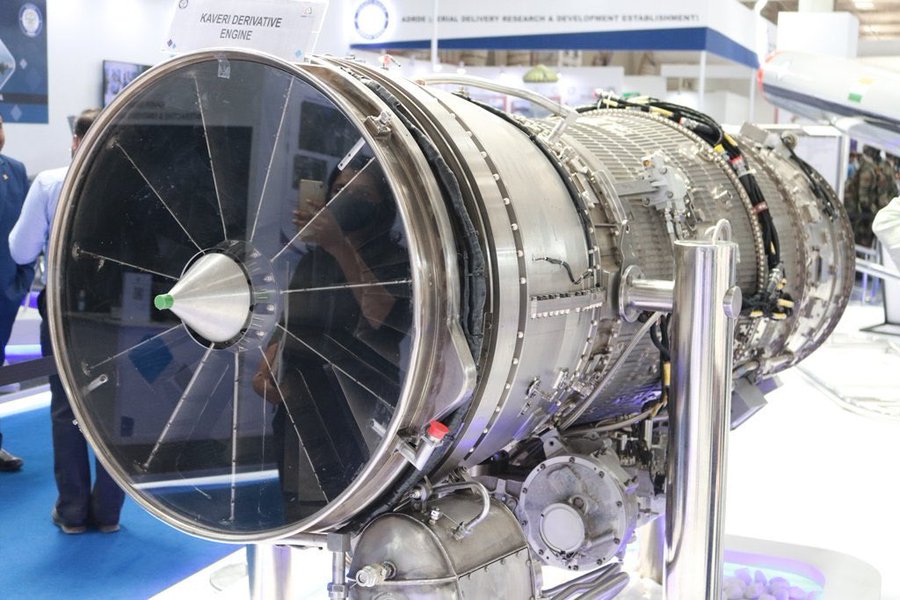
In a historic breakthrough for Indian military aviation, the homegrown Kaveri dry engine has successfully completed its high-altitude and airborne flight trials in Russia. Developed by the Gas Turbine Research Establishment (GTRE), an arm of the Defence Research and Development Organisation (DRDO), the engine surpassed operational expectations by delivering a peak dry thrust of 48.5 kilonewtons (kN).
Initial design projections targeted a maximum output of 46 kN during high-altitude testing. The successful tests confirm that the Kaveri Engine Clears Russia Flight Trials, opening the door for its official airworthiness certification and integration into Ghatak, India’s stealth Unmanned Combat Aerial Vehicle (UCAV).
Rigorous High-Altitude Testing at Premier Russian Aviation Institutes
The testing regimen took place across two facilities in Russia: the Central Institute of Aviation Motors (CIAM) and the Gromov Flight Research Institute in Moscow. Engineers mounted the Kaveri derivative engine onto an Ilyushin Il-76 flying testbed aircraft to evaluate throttle response, fuel consumption, and air pressure dynamics across various flight profiles.
The engine demonstrated stable combustion and mechanical integrity. The trial results show that the Kaveri Engine Clears Russia Flight Trials under severe atmospheric stress, proving that the power plant remains operational at high altitudes and low ambient temperatures.
Technical Roadmap to Certification and IAF Operational Induction
With the Russian flight trials completed, all telemetry data has moved to the Centre for Military Airworthiness and Certification (CEMILAC) in Bengaluru. CEMILAC specialists will audit the performance logs. Once they grant final airworthiness clearance, DRDO will integrate the dry engine directly onto the full-scale Ghatak airframe for ground runs and flight trials.
Defense officials anticipate that full flight trials alongside the Indian Air Force (IAF) will require approximately two to three years. Following those trials, the engine-drone combination will enter service as a core component of India’s autonomous deep-strike arsenal.
Repurposing the Kaveri: From LCA Tejas to Stealth Unmanned Combat
The Kaveri project started in the late 1980s as an ambitious endeavor to power the Light Combat Aircraft (LCA) Tejas. However, the initial prototype fell short of the thrust-to-weight ratio required for supersonic fighter jets. Designers faced weight management challenges, leading to the decision to uncouple the engine from the production-variant Tejas.
Also Read : https://indiathisweek.in/world/us-china-competition-global-realignment-s-jaishankar-de-risk-diversify/
Instead of abandoning the technology, GTRE engineers redesigned the unit into a non-afterburning “dry” engine variant, known as the Kaveri Derivative Engine (KDE). By removing the afterburner module, GTRE lowered total engine weight while optimizing fuel efficiency and reliability for subsonic stealth platforms. This structural change set the stage for success, as the Kaveri Engine Clears Russia Flight Trials as a power plant for autonomous combat drones.
Architectural Design and Stealth Capabilities of Ghatak UCAV
The Ghatak UCAV is an autonomous flying-wing combat drone designed for deep-strike missions into heavily defended airspace. Its tailless flying-wing configuration, curved serpentine air intakes, and internal exhaust routing reduce its radar cross-section (RCS).
The airframe uses 80% to 90% carbon-fiber prepreg composite materials. These materials lower overall weight while absorbing incoming radar waves. To preserve its low-observable stealth profile, Ghatak houses all missiles, precision-guided bombs, and munitions inside internal weapons bays.
Strategic Impact on National Security and Aerospace Autonomy
Confirmation that the Kaveri Engine Clears Russia Flight Trials strengthens India’s defense manufacturing capabilities. Relying on foreign suppliers for critical military hardware presents supply chain risks during international crises. Developing a domestic jet engine gives Indian defense planners complete control over future production, maintenance, and software updates.
Ghatak drones will execute high-risk missions, including suppressing enemy air defenses (SEAD) and destroying command centers. Operating alongside manned fighters like the Tejas Mk2 and the Advanced Medium Combat Aircraft (AMCA), the Ghatak platform will serve as an autonomous force multiplier for the IAF.