
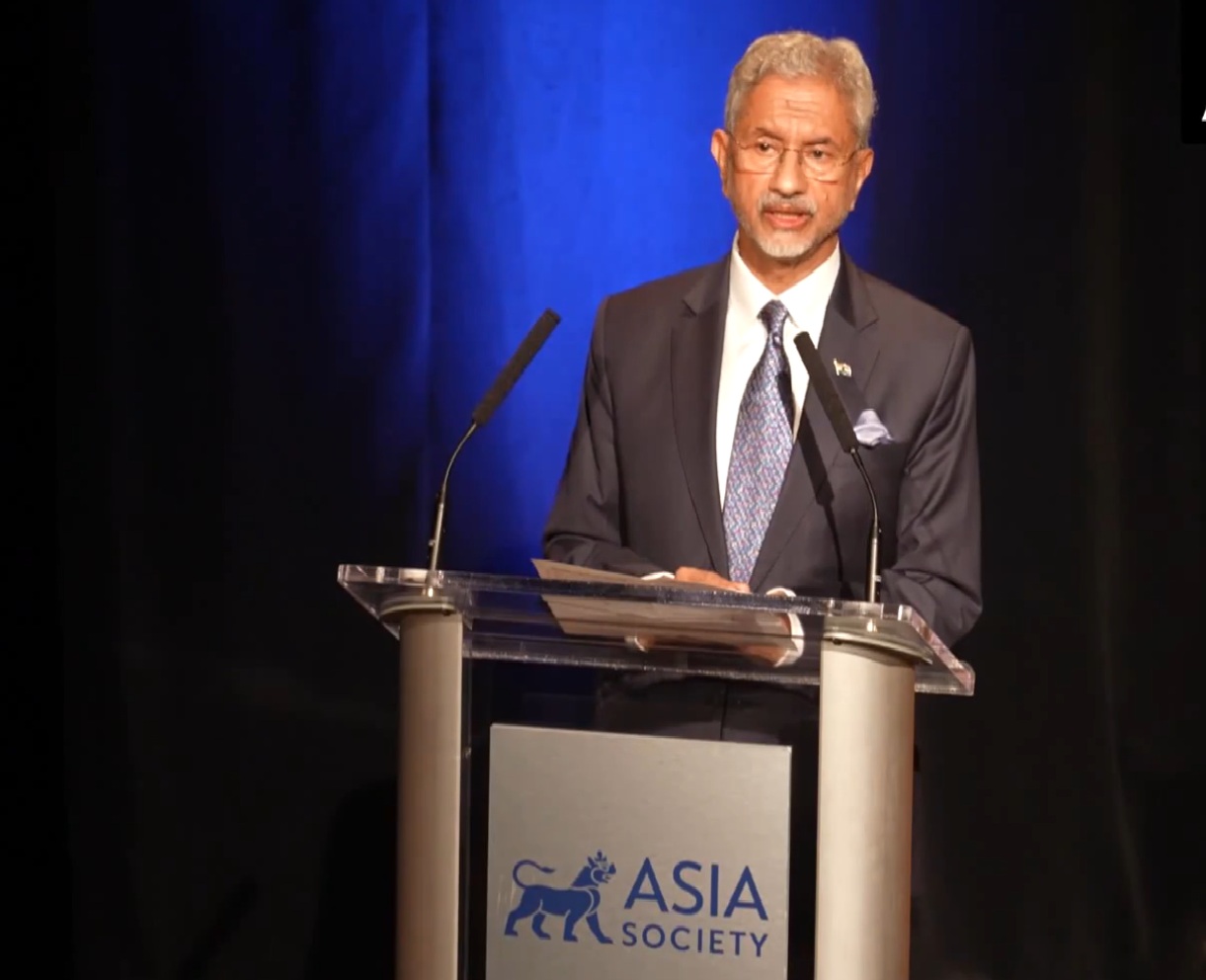
Speaking at the Asia Society Policy Institute in New York following the United Nations General Assembly week, India’s External Affairs Minister S. Jaishankar addressed global strategic shifts. He observed that the United States and China operate in an increasingly competitive mode. Consequently, third-party nations must actively de-risk and diversify their international partnerships to safeguard core sovereign interests.
His observations followed a major bilateral summit between US President Donald Trump and Chinese President Xi Jinping in Washington. Jaishankar noted that while the world’s two largest economies share specific operational convergences, structural rivalry defines their broader relationship. This dynamic forces middle powers and emerging economies to engineer independent diplomatic frameworks.
Strategic Implications of the US-China Power Dynamic
The Minister explained that structural competition between Washington and Beijing creates definite limits on bilateral agreements affecting the broader international order. Global actors must respond by calculating new accommodations, assessing risk exposures, and identifying emerging bilateral alliances.
Navigating a shifting global balance requires nations to constantly evaluate existing partnerships while securing added value across economic sectors. The evolving international order reflects these pragmatic recalibrations across multilateral forums.
| Strategic Parameter | Superpower Dynamics (US-China) | Middle Powers & Emerging Markets Response |
| Primary Interaction Mode | Structural Competition with Select Convergence | De-risking and Strategic Diversification |
| Economic Priority | Market Dominance & Bilateral Trade Terms | Supply Chain Resilience & Value Maximization |
| Alliance Architecture | Bilateral Power Balancing | Multi-alignment & Flexible Regional Alliances |
| Diplomatic Objective | Preserving Regional & Global Influence | Securing Sovereign Economic & Security Interests |
India-US Trade Negotiations Near Final Consensus
Addressing bilateral economic relations with the United States, Jaishankar revealed that negotiators have established a broad shared understanding on a long-pending trade agreement. He acknowledged that complex structural differences between the two economies required extended patience and detailed discussions.
India functions as a society supported by millions of small agricultural producers and small-scale manufacturing units. This demographic structure contrasts with the high per-capita capital model of the United States. Initial expectations of rapid trade progress faced practical economic realities, leading to a deliberate negotiation process aimed at protecting vulnerable domestic sectors.
Empathy Gap on Cross-Border Terrorism Concerns
The Minister emphasized that persistent cross-border terrorism originating from Pakistan remains a central national security priority for New Delhi. Decades of state-sponsored proxy violence have made India one of the most impacted nations globally.
Jaishankar stressed that strategic partnerships require genuine mutual appreciation of primary security vulnerabilities. A lack of adequate empathy or structural understanding regarding state-sponsored terrorism creates friction within bilateral relationships. Sustained strategic alignment depends on strategic partners addressing India’s core security considerations.
Navigating a Changing International Order
The diplomatic discussions in New York highlight a clear shift toward multi-alignment in global governance. As superpower rivalry shapes global politics, nations prioritize economic resilience, diversified supply chains, and pragmatic security arrangements.
India’s strategy combines steady trade negotiations with clear security boundaries, establishing a model for navigating international volatility.