
Fresh Deep Depression Forms Over the Andaman Sea
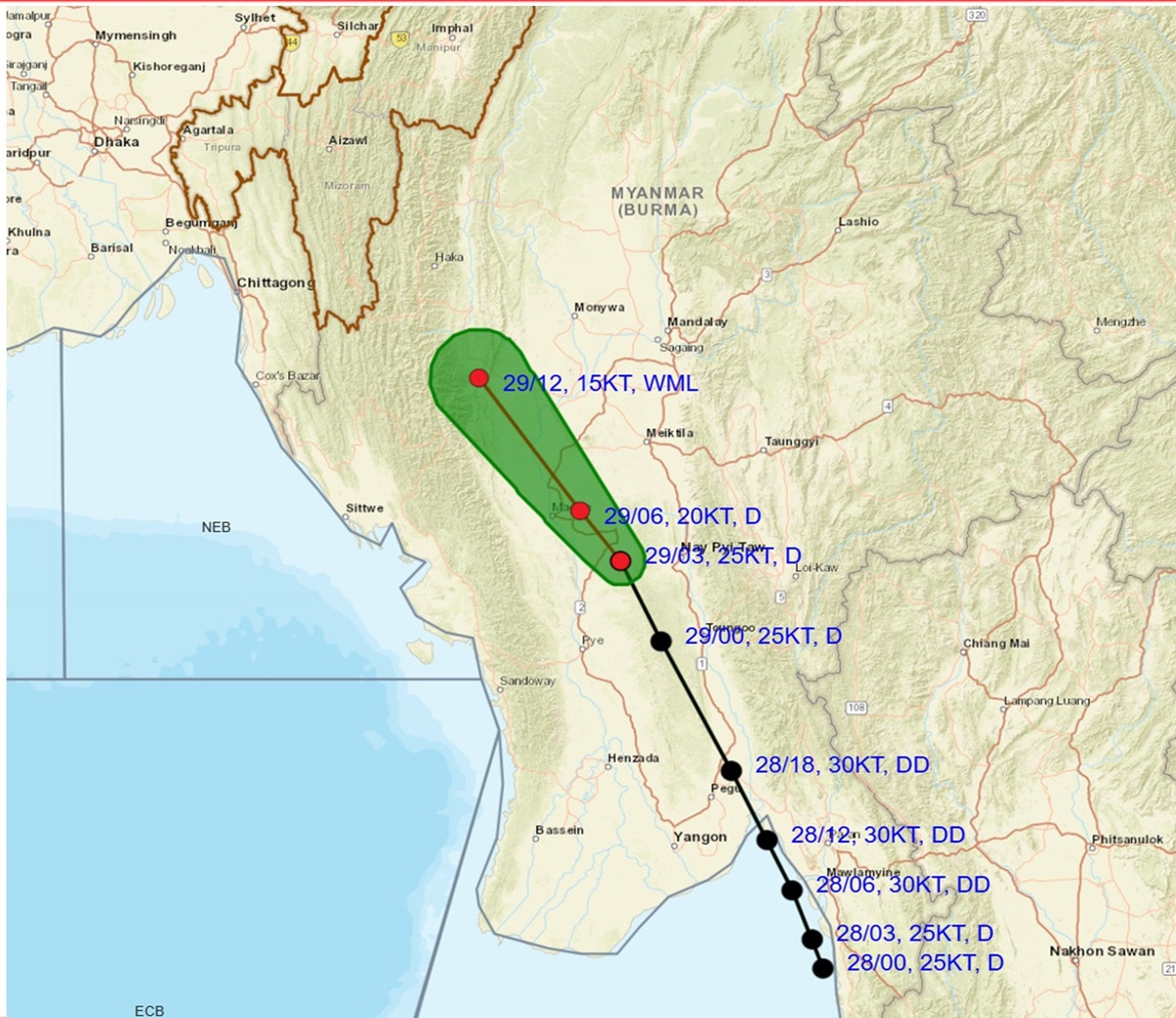
A new deep depression formed over the north Andaman Sea and adjoining Myanmar coast shortly after the threat of Cyclone Arnab subsided. The India Meteorological Department (IMD) confirmed that the weather system intensified near latitude 16.4°N and longitude 97.3°E.
The system moved steadily north-northwestwards at a rapid speed. It was located approximately 40 km west-southwest of Mawlamyine and 130 km east-southeast of Yangon. Additionally, the system remained roughly 610 km northeast of Mayabunder in the Andaman Islands. Weather officials stated that the deep depression crossed the Myanmar coast near Yangon and Kyaikto.
The Depression over coastal Myanmar and adjoining Eastcentral & Northeast Bay of Bengal moved very fast north-northwestwards with a speed of 32 kmph during past 6 hours and lay centred at 0300 UTC of today, the 29th September 2026 over coastal Myanmar and adjoining Eastcentral &… pic.twitter.com/BfOJs23z17
— India Meteorological Department (@Indiametdept) September 29, 2026
The system is now tracking across coastal Myanmar, the east-central Bay of Bengal, and southeast Bangladesh. meteorologists clarified that the system is not expected to intensify into a full-scale cyclonic storm.
Cyclone Arnab Threat Averted Across Eastern India
The arrival of this new weather system follows days of intense rainfall triggered by the previous deep depression, widely monitored as potential Cyclone Arnab. That system made landfall near Kalingapatnam before gradually weakening into a low-pressure area.
While the immediate cyclone threat passed, heavy downpours lashed coastal regions of Odisha, West Bengal, and Andhra Pradesh. Authorities in Andhra Pradesh issued orange alerts, while several districts in Odisha remained under high warning levels for consecutive days.
Also Read : https://indiathisweek.in/business/tata-trusts-proposes-major-restructuring-tata-sons-avoid-listing/
| Affected Region | Total Population Impacted | Damaged Houses | Critical Status & Impact |
| Mayurbhanj District (Odisha) | 20,475 people | Severe residential damage | 144 villages inundated across 20 blocks. |
| Total Odisha State | 73,000+ people | 721 houses damaged | 4,480 hectares of cropland flooded. |
| Uttar Pradesh | State-wide impact | 1,000+ houses destroyed | 50+ storm-related fatalities reported. |
Over 100,000 residents across Odisha were evacuated to safety. Emergency responders operated more than 500 relief centers to provide food, shelter, and medical care to displaced families.
Severe Inundation Impact Across Odisha Communities
Government assessment reports highlight extensive destruction caused by the prolonged spell of rain. In Odisha alone, waterlogging disrupted life across 80 blocks, 325 gram panchayats, and 1,071 villages.
Sixteen villages remain cut off due to persistent floodwaters. Agricultural fields suffered major losses, with standing paddy crops submerged under water. Relief teams continue clearing debris and restoring essential services to normal.
Flood-Like Situation Escalates in Uttar Pradesh
Uttar Pradesh continues to battle flood-like conditions caused by heavy rains over several consecutive days. More than 50 people died in storm-related incidents across the state.
The depression over Uttar Pradesh has now weakened into a well-marked low-pressure area. However, major rivers remain swollen, and strong winds uprooted trees and power infrastructure.
Relief crews are executing rescue operations using inflatable boats in flooded towns. State disaster response teams are focused on distributing food packets and preventing disease outbreaks in temporary relief shelters.
IMD Weather Forecast and Safety Guidelines
The IMD advises fishermen to avoid navigating the east-central Bay of Bengal and Andaman Sea until conditions stabilize. Coastal communities should remain alert for localized squalls and high ocean waves.
Local administrations across eastern India maintain high readiness. Citizens are encouraged to follow official weather bulletins and strictly avoid flooded roads or weak structures.