
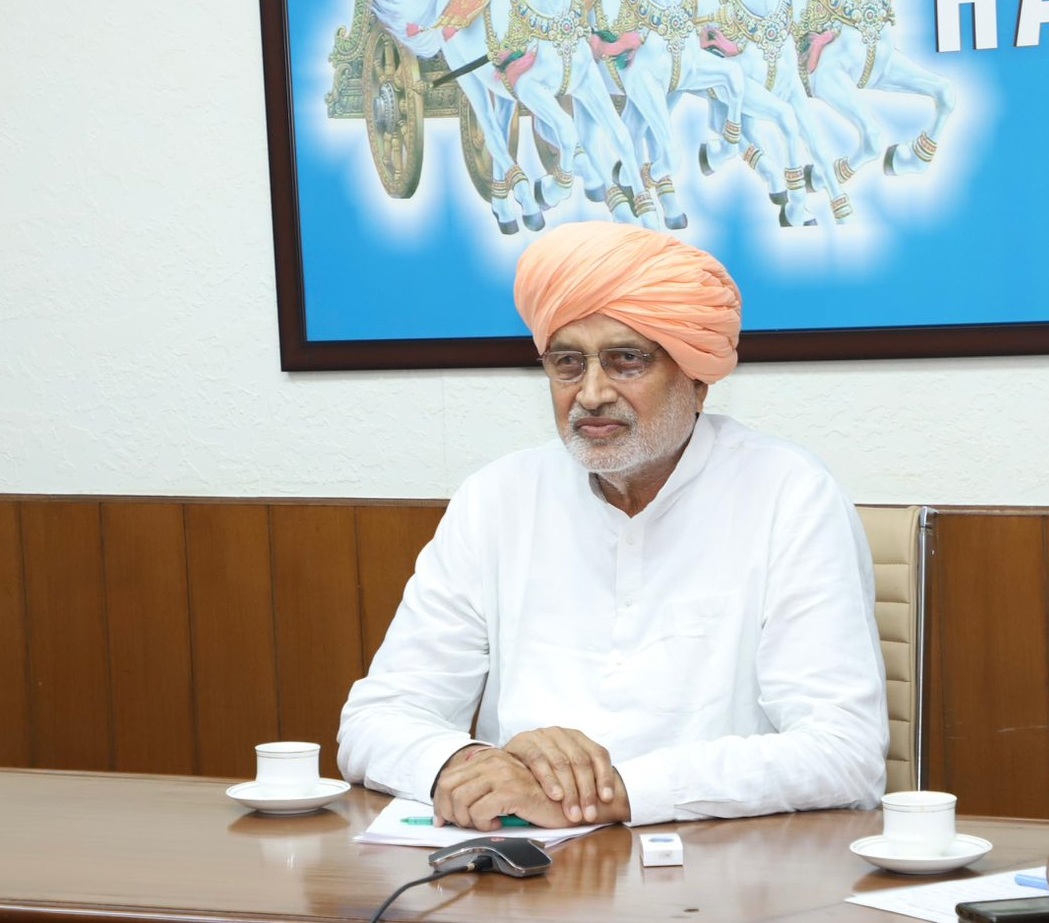
To build long-term climate resilience and secure irrigation resources, the state administration announced a landmark environmental project. Specifically, Agriculture and Farmers Welfare Minister Shyam Singh Rana confirmed that the Water Secure Haryana program will be implemented across the state over six years from 2026 to 2032. This strategic initiative carries a total estimated outlay of ₹5,714.80 crore.
The project relies heavily on international development partnership. Specifically, the World Bank will provide 70 percent of total project funding, equal to ₹4,000.36 crore as financial assistance. Meanwhile, the state government will cover the remaining 30 percent share, amounting to ₹1,714.44 crore from state resources. Consequently, this multi-departmental program aims to transform water governance and agricultural water efficiency across the state.
Structural Overhaul of Irrigation Infrastructure
The new initiative delivers structural changes to state irrigation systems. State authorities divided targeted regions into 15 designated clusters, encompassing roughly 48.94 lakh acres of cultivable land. Additionally, the program combines physical canal rehabilitation with data-driven digital management systems. This strategy guarantees reliable water delivery to smallholder farms.
According to infrastructure plans from the Irrigation and Water Resources Department, the budget funds the overhaul of 678 main canals. Furthermore, engineers will modernize 620 minor water channels through the Micro Irrigation and Command Area Development Authority. These structural improvements prevent seepage losses and expand network coverage to remote agrarian zones.
- Canal Rehabilitation: Upgrading 678 major and minor canals using World Bank and state funding.
- Watercourse Upgrades: Modernizing 620 localized water channels to serve 3.18 lakh acres.
- Micro-Irrigation: Installing 120 canal-based micro-irrigation systems covering 56,830 acres.
- Reclamation: Treating and reclaiming nearly two lakh acres of waterlogged agricultural land.
Also Read : Haryana Investment Possibilities: CM Nayab Saini Holds Investor Roundtable in Mumbai
Promoting Sustainable Farming Practices Across Districts
Beyond civil engineering, the initiative promotes crop diversification and water-saving agricultural methods. State extension teams encourage farmers to adopt Direct Seeded Rice practices across five lakh acres. This technique reduces field flooding requirements without sacrificing crop yields.
Additionally, the government is incentivizing crop diversification over 1.12 lakh acres. Agricultural officers guide farmers toward low-water demand crops like pulses, oilseeds, and millets. As reported by the Policy Edge, these measures protect depleting aquifers while improving soil health across agricultural districts.
Groundwater Recharge and Wastewater Reuse
To replenish declining water tables, the state plan incorporates ecological restoration elements. Project engineers will develop and deepen 147 natural water bodies across seven water-stressed districts. These ponds store monsoon runoff and accelerate natural groundwater recharge.
Furthermore, the project includes urban-rural water integration. The state is spending ₹282.13 crore to build treated wastewater delivery pipelines from major sewage treatment plants in Jind, Kaithal, and Gurugram. Recycled water will irrigate nearly 28,000 acres, freeing freshwater reserves for drinking and domestic use.
Long-Term Vision for State Water Self-Reliance
The state government views this project as a fundamental step toward long-term water independence. Chief Minister Nayab Singh Saini directed key departments to coordinate execution through village-level water user associations. Consequently, local community committees will oversee ongoing canal maintenance and allocation schedules.
By pairing international financing with local agricultural reforms, the state establishes a comprehensive blueprint for climate adaptation. Through strict digital monitoring and community participation, the project protects vital water supplies for upcoming generations.