
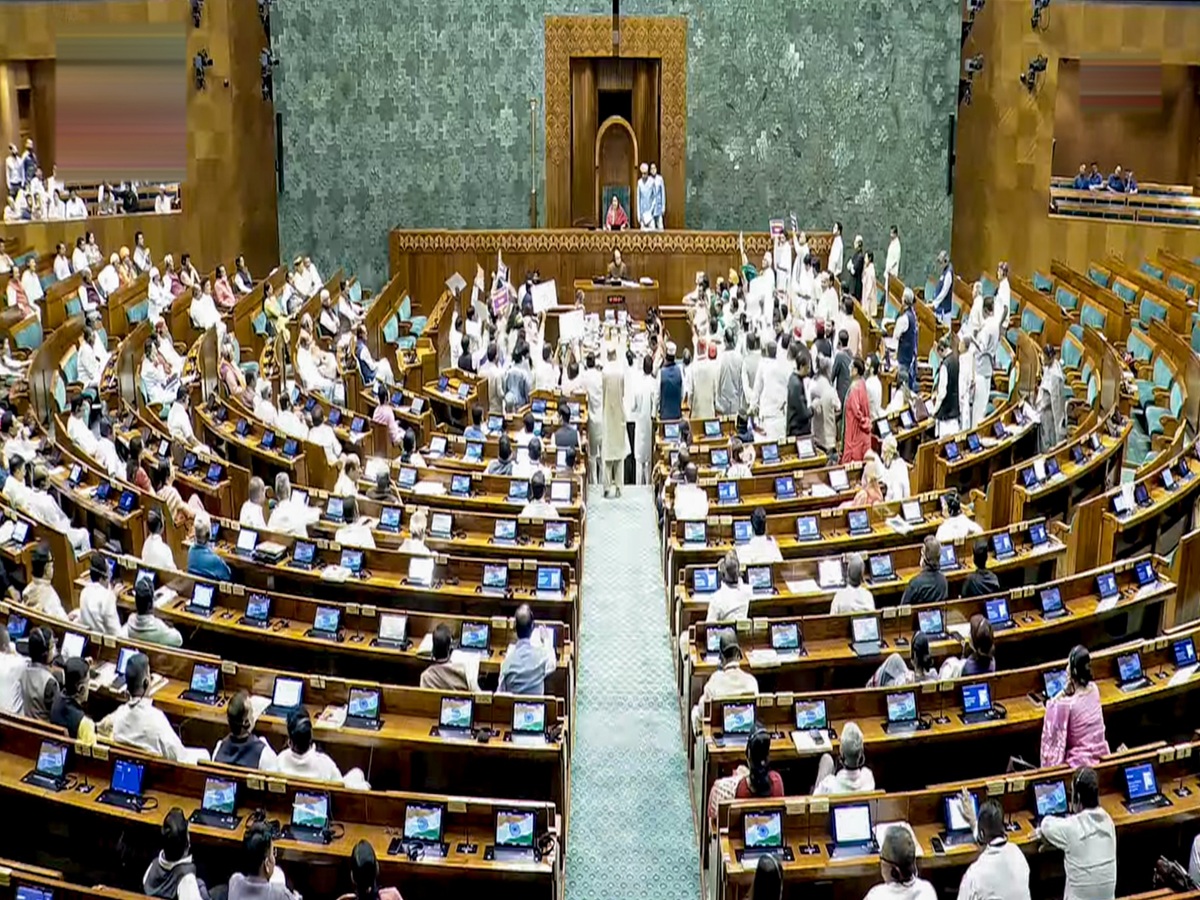
NEW DELHI : Indian commercial banks completed substantial balance sheet cleanups during the last twelve financial years. Consequently, total bank loan write-offs reached ₹9,95,000 crore for large corporate and service accounts. The Ministry of Finance shared these Reserve Bank of India statistics in Parliament. Furthermore, annual write-offs peaked at ₹1,48,753 crore during financial year 2018-19. However, the annual figure dropped sharply to ₹20,485 crore in financial year 2025-26. Meanwhile, outstanding loans to large industries and services grew significantly from ₹63,19,057 crore in FY25 to ₹69,21,734 crore in FY26.
Overall, these metrics highlight how financial institutions clean their books while sustaining credit expansion. Therefore, policymakers continue monitoring these financial trends to ensure long-term stability. Moreover, the steep decline in recent annual bank loan write-offs reflects improved asset quality across commercial banks. In addition, credit growth in primary industrial sectors remains steady despite global market headwinds. Thus, official data demonstrates resilient performance in national credit management.
Technical Procedures Governance Under Regulatory Frameworks
Importantly, a debt write-off is purely an accounting procedure. Therefore, it does not provide financial relief to defaulting borrowers. In fact, borrowers remain legally liable to repay every single rupee. Furthermore, commercial banks actively pursue recovery actions against defaulted accounts through established legal channels. Specifically, the Reserve Bank of India issued the Resolution of Stressed Assets Directions 2025 for commercial banks. As a result, banks use technical and prudential write-offs to adjust balance sheets without waiving liabilities.
Read More : Proposed MDR for UPI Transactions Will Be Minimal, Says Government
Additionally, the Master Direction on Resolution of Stressed Assets 2025 offers clear operational guidelines for financial restructuring. Updated as of July 1, 2026, this regulatory framework gives lenders key discretion. Consequently, bank boards can restructure stressed loans based on approved policies and regulatory norms. Therefore, distressed borrowers can access structured relief without extinguishing underlying debt obligations. Ultimately, these regulations ensure that bank loan write-offs remain strict accounting exercises rather than debt forgiveness schemes.
Fiscal Consolidation Drives Capital Expenditure Growth
Simultaneously, the central government remains fully committed to maintaining strong fiscal discipline. Consequently, the fiscal deficit dropped significantly from 9.2 percent of GDP in 2020-21 to 4.4 percent in 2025-26. Furthermore, total outstanding liabilities moderated from 61.5 percent to 58.2 percent of GDP during the same period. Meanwhile, capital expenditure grew impressively from ₹4.3 lakh crore in 2020-21 to ₹10.7 lakh crore in 2025-26. Therefore, public investments continue to build critical infrastructure across the country.
Moreover, domestic consumer demand showed robust momentum across all major market segments. Specifically, real Private Final Consumption Expenditure growth accelerated to 7.7 percent in 2025-26 from 5.8 percent in 2024-25. In addition, price stability improved as retail inflation averaged 2.1 percent in 2025-26. Notably, this represents the lowest inflation rate recorded since 2014-15. Thus, strong macroeconomic fundamentals continue supporting national economic growth.
Employment Gains and Cyber Security Measures
Similarly, national employment indicators showed steady progress according to official survey results. The Periodic Labour Force Survey revealed that unemployment among individuals aged 15 and above declined to 3.1 percent in 2025. In contrast, the unemployment rate stood at 6 percent back in 2017-18. Therefore, expanding economic activities are generating consistent employment opportunities nationwide.
However, rising digital transactions have also introduced emerging cybersecurity challenges. Official figures revealed 5,85,751 digital payment fraud cases over the last five financial years. Consequently, these cyber frauds involved financial losses totaling ₹3,590.70 crore. In response, the government, RBI, and NPCI implemented advanced security measures. Furthermore, authorities upgraded fraud detection systems and consumer awareness programs to protect digital payments.
Sustainable External Debt and Import Substitution Policy
Meanwhile, India’s external debt reached USD 762.8 billion by the end of March 2026. Furthermore, the external debt to GDP ratio remained stable at 20.8 percent. Additionally, foreign exchange reserves covered 90.6 percent of total external debt. Short-term debt accounted for 19.6 percent of total external obligations. Moreover, short-term debt to GDP stood at just 4.1 percent. Crucially, the debt service ratio declined from 6.6 percent in end-March 2025 to 5.8 percent in end-March 2026.
To enhance economic independence, the government is actively promoting domestic capacity creation in critical sectors. Specifically, authorities are encouraging domestic technology adoption across key industries. In addition, officials are diversifying import sources for crude oil, fertilizers, and critical minerals. Furthermore, accelerated investments in renewable energy support long-term energy security. Therefore, these combined initiatives reinforce external sector stability. Meanwhile, statutory bank loan write-offs decreased even as overall credit growth remained robust across the nation.
Comprehensive Macroeconomic Indicators Summary
The following table outlines the key financial, fiscal, and economic indicators reported in Parliament:
| Economic Metric | Historical Base Value | Updated FY26 Value | Policy Impact |
| Annual Loan Write-Offs | ₹1,48,753 Crore (FY19 Peak) | ₹20,485 Crore (FY26) | Reflects sharp drop in annual balance sheet adjustments |
| Central Fiscal Deficit | 9.2% of GDP (FY21) | 4.4% of GDP (FY26) | Demonstrates successful long-term fiscal consolidation |
| Capital Outlay Allocation | ₹4.3 Lakh Crore (FY21) | ₹10.7 Lakh Crore (FY26) | Powers public infrastructure and economic expansion |
| Retail Inflation Average | 5.8% (PFCE FY25) | 2.1% (FY26) | Marks lowest retail inflation level since FY15 |
| External Debt Ratio | Stable Benchmark | 20.8% of GDP | Maintains strong foreign exchange debt coverage |
Furthermore, these combined indicators confirm that Indian financial institutions continue fortifying their asset quality. As statutory debt recoveries progress through regulatory frameworks, public sector balance sheets continue to stabilize across the country.