
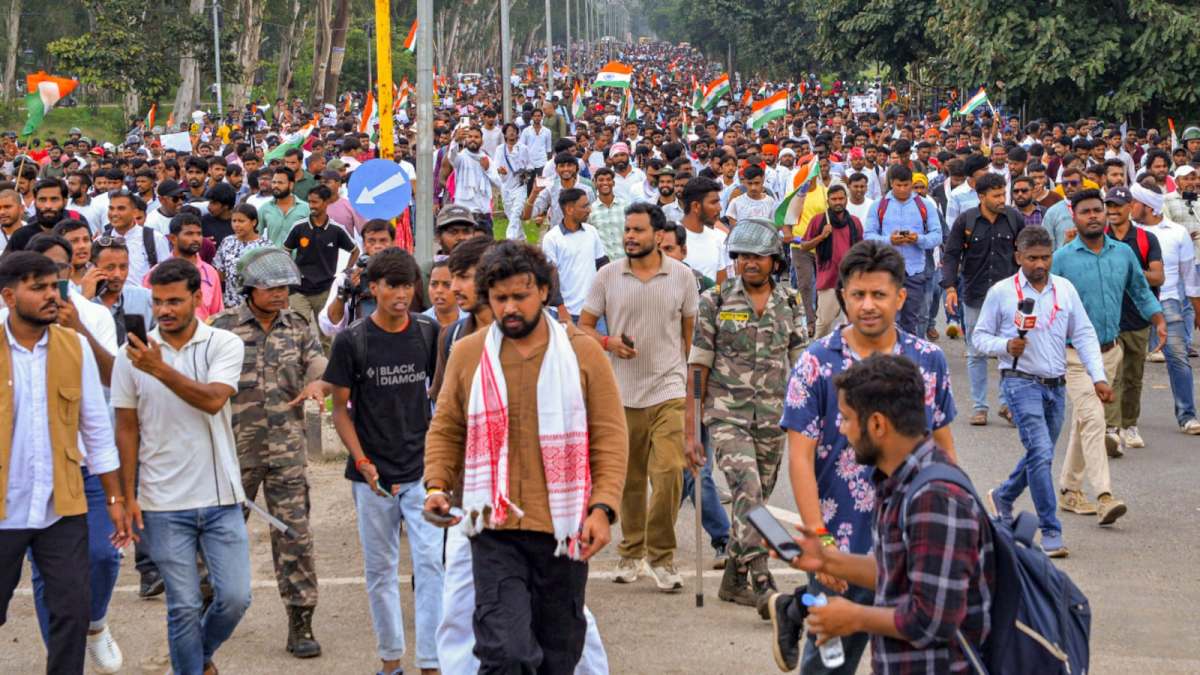
Thousands of Job Aspirants March to the Assembly as the Former JPSC Chief Faces Arrest
RANCHI : The ongoing Jharkhand student protest reached a boiling point in Ranchi today. Thousands of job aspirants marched toward the state assembly to demand justice. However, security forces used water cannons, tear gas, and lathicharge to stop them. Consequently, several demonstrators sustained injuries during the chaotic clashes near the venue. Moreover, a section of protesters breached barricades and briefly entered the premises. As a result, the state assembly was adjourned early for the day.
Meanwhile, significant legal developments unfolded simultaneously across the state capital. The Criminal Investigation Department arrested former JPSC chairperson L Khiangte today. Furthermore, investigators cited clear evidence of bribery linked to exam vendor selection. Specifically, officials empanelled blacklisted firm TDPL to conduct civil services exams. Notably, Khiangte had resigned on July 22 to allow an impartial probe. Additionally, three JPSC board members submitted their resignations just one day earlier.
Mass Assembly March Disrupts Normal Operations in Ranchi
Students arrived in Ranchi by trains and buses from across Jharkhand. They carried the national flag alongside placards demanding immediate exam cancellations. Protesters chanted strong slogans against systemic corruption in recruitment tests. Additionally, they demanded an independent investigation by the Central Bureau of Investigation. However, police forces erected heavy barbed-wire barricades along the four-kilometer route. Over 1,500 security personnel were deployed to maintain strict public order.
Tensions escalated rapidly when demonstrators reached the final barricade near Jagannathpur Temple. Security personnel fired tear gas shells in multiple rounds into the air. Furthermore, officers resorted to baton charges as crowds pushed through the gates. Injured students accused the administration of using excessive physical force against peaceful youth. Nevertheless, the Jharkhand student protest continued to gain momentum despite police resistance. Protesters insisted that physical injuries would not crush their determination for systemic reform.
Student Leader Joins Protest on Stretcher Amid Growing Health Concerns
Notably, student leader Devendra Nath Mahto joined the march in an ambulance. Mahto had been on an indefinite hunger strike for nine consecutive days. Consequently, supporters carried him on a stretcher as he addressed the crowd. He criticized the government for erecting barricades instead of resolving core issues. Furthermore, he warned that this agitation had transformed into a mass movement. He stressed that unfulfilled student demands could destabilize the current state leadership.
The JPSC-JSSC Reforms Manch deployed 500 volunteers to maintain peaceful discipline. Volunteers worked constantly to prevent anti-social elements from disrupting the student rally. Moreover, the group reiterated that their movement remains strictly focused on recruitment transparency. They insisted that paper leaks have ruined the futures of thousands of hardworking candidates.
CID Arrest of Former JPSC Chief Exposes Blacklisted Vendor Link
Meanwhile, the arrest of L Khiangte marked a dramatic turn in the scandal. The 1988-batch retired IAS officer previously served as Jharkhand Chief Secretary. However, serious allegations emerged regarding the 14th JPSC Combined Civil Services Examination. CID officers questioned Khiangte four times before executing the official arrest. Consequently, officials confirmed that twenty suspects have now been arrested in this case.
Investigators revealed that blacklisted firm TSR Data Processing Private Limited was hired illegally. Allegations include bribery, question paper leaks, and widespread manipulation of OMR evaluation sheets. Moreover, the state government recently agreed to cancel three controversial examinations. Additionally, authorities agreed to initiate an Enforcement Directorate probe into financial irregularities. However, protesting students demand the complete cancellation of all thirteen disputed recruitment tests.
Political Flashpoint Triggers Sharp Opposition Criticism and National Debate
Naturally, the Jharkhand student protest has sparked intense political debate across the nation. Leader of Opposition Babulal Marandi sharply criticized Chief Minister Hemant Soren. Marandi accused the state administration of failing to protect student interests and rights. Furthermore, he urged the central government to order an immediate CBI probe. Similarly, Congress leader Rahul Gandhi publicly condemned the police lathicharge on social media. Gandhi emphasized that peaceful student concerns must be addressed through constructive dialogue.
On the other hand, Chief Minister Hemant Soren promised strict action against corruption. Soren maintained that dialogue, not batons, should resolve student grievances effectively. However, government officials noted that cancelling certain tests requires judicial alignment. Consequently, the deadlock between student leaders and state representatives remains unresolved.
Comprehensive Breakdown of Exam Controversies and Key Official Actions
Below is an overview of the ongoing investigation and official measures taken:
| Parameter / Milestone | Details and Status | Impact on Aspirants |
| Primary Focus Keyword | Jharkhand student protest | Unites thousands of job seekers state-wide |
| Main Recruitment Agencies | JPSC and JSSC Commissions | Subject to state-wide fraud allegations |
| Vendor Involvement | Blacklisted firm TDPL | Prompted CID bribery and corruption arrest |
| Key Arrest Made | Ex-JPSC Chief L Khiangte | Marks 20th arrest in ongoing probe |
| Resignations Submitted | Three JPSC Board Members | Leaves commission structure vacant |
| Government Response | Cancelled 3 out of 13 exams | Fails to satisfy protesting students fully |
Furthermore, the persistent Jharkhand student protest highlights widespread systemic flaws in state recruitment. Thousands of candidates from districts like Dhanbad, Bokaro, and Hazaribagh continue their agitation. They demand complete accountability, anti-leak legislation, and transparent merit-based selection. Therefore, public pressure on state authorities continues to mount with each passing day. Ultimately, the resolution of this crisis will shape the future of governance in Jharkhand.