
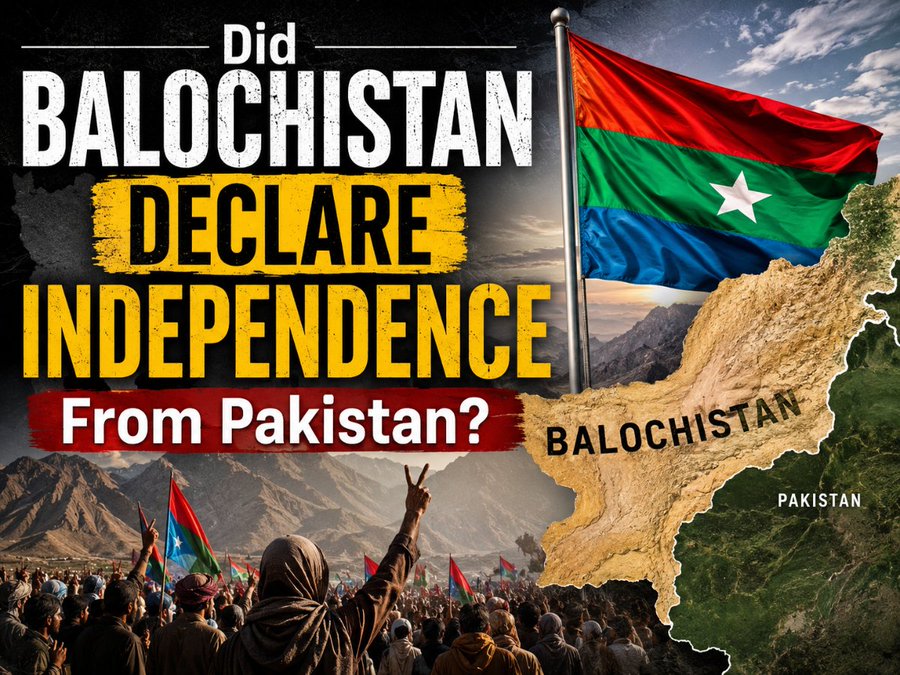
The declaration of independence by Baloch activists has recently sparked intense global debate. On July 13, 2026, activist Mir Yar Baloch announced the formation of the “Republic of Balochistan.” This statement claims control over 85 percent of the province’s territory, introduces a new currency, and presents a national anthem. However, experts clarify that this remains a unilateral political act rather than a recognized state. Pakistan continues to exercise full administrative and constitutional authority over the region.
The vision of sovereignty and development for the Republic of Balochistan
15 July, 2026
Balochistan belongs one hundred percent to the Baloch people. Every mountain, every desert, every sea, every forest, and every mineral resource of Balochistan is the historical, legal, and… pic.twitter.com/N2Qtu2xWw0
— Mir Yar Baloch (@miryar_baloch) July 14, 2026
Despite the lack of international recognition, the move draws attention to the sensitive future of the China-Pakistan Economic Corridor (CPEC). As one of Beijing’s primary Belt and Road Initiative projects, CPEC represents a multibillion-dollar investment. Observers are now questioning how separatist rhetoric might influence this massive economic undertaking.
The Strategic Importance of Gwadar Port in 2026
At the heart of the debate lies the Gwadar Port. This deep-sea facility serves as the southern gateway for CPEC. While the port has seen increased cargo traffic in 2026 due to regional shipping shifts, it also faces significant operational hurdles.
The port operates under a concession agreement with the China Overseas Ports Holding Company (COPHC). International law dictates that territorial sovereignty remains with the recognized state—in this case, Pakistan. Therefore, even if independence claims gain momentum, existing commercial contracts remain legally binding under current international frameworks.
Read More : Strait of Hormuz Shipping Crisis: The Shocking Truth Behind the Rumors of a Sunken U.S. Warship
However, the security environment in the province remains a primary concern for investors. Recent incidents of militancy and infrastructure attacks have already forced some international partners to extend timelines for projects like the Reko Diq mine.
CPEC and the Future of Chinese Investment
CPEC has entered a phase of strategic maturity in 2026, focusing on energy security and connectivity. The project has already added thousands of megawatts to Pakistan’s power grid, which is essential for industrial growth.
If the security situation continues to deteriorate, it could increase operational costs for Chinese companies. Furthermore, insurance premiums and security expenditures may rise if instability persists. Beijing likely views these challenges as primarily a security risk rather than a threat to legal ownership.
Meanwhile, the Pakistani government continues to promote development projects to address local grievances. Federal authorities emphasize that initiatives like Special Economic Zones (SEZs) are designed to provide employment and long-term integration for the local population.
Understanding the Reality on the Ground
While the July 13 declaration has gone viral on social media, the ground reality remains unchanged. Pakistan’s military and civilian administrations continue to manage the province. No sovereign nation or international organization has acknowledged the “Republic of Balochistan”.
The claims of controlling 85 percent of the territory are currently unverified by independent sources. Consequently, the global diplomatic community has largely ignored the proclamation. Analysts suggest that the movement is attempting to leverage international attention to highlight longstanding socio-economic grievances.
For investors and regional stakeholders, the focus remains on economic stability. Projects like Gwadar Port and the broader CPEC network are vital for Pakistan’s economic outlook. Whether these projects can withstand political friction depends heavily on the government’s ability to ensure security and inclusive development.
Ultimately, while the independence narrative creates noise, the operational reality of CPEC projects proceeds under the authority of the Pakistani state. Maintaining a stable environment is the single most important factor for the long-term success of these strategic assets.