
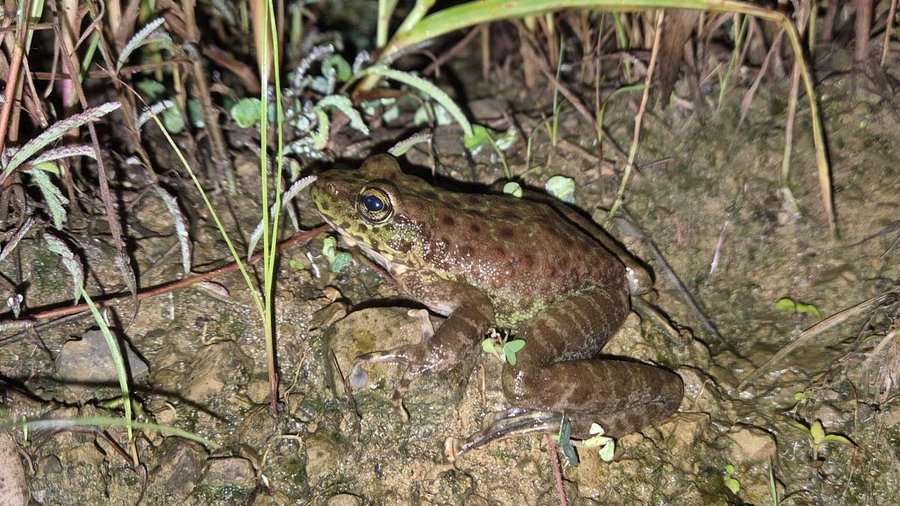
KOHIMA : Northeast India continues to surprise the scientific world with its incredible ecological secrets. In a major breakthrough, a dedicated team of Indian scientists recently identified a fascinating new amphibian in the state of Nagaland. This remarkable find shines a much-needed spotlight on the rich, hidden wildlife thriving within the remote corners of the region.
The groundbreaking discovery took place in Singrep village, located within Nagaland’s rugged Kiphire district. During extensive field surveys, specialists from the Zoological Survey of India (ZSI) encountered the unique creature. It belongs to the celebrated genus Amolops, a specific group of stream-dwelling frogs. These highly specialized amphibians are famous for their ability to thrive in rapid, turbulent hill waters across Asia.
Unveiling the Microhabitat of Singrep Village
The initial field collection occurred during a comprehensive wet-season survey. Scientists waded through challenging mountain terrains to map the local fauna. Finding the new frog species discovered in Kiphire required meticulous nocturnal searches along cold, rushing mountain torrents.
Northeast India is an globally recognized biodiversity hotspot. However, many of its high-altitude ecosystems remain poorly documented due to dense vegetation and tough terrain. The pristine waters around Singrep village offer the exact microhabitat that these cascade-dwelling creatures require. These frogs possess unique evolutionary adaptations, such as specialized digital discs. These toe pads allow them to cling tightly to slippery rocks amidst crashing waterfalls without being swept away by strong currents.
A Fitting Tribute to an Indian Zoologist
The newly identified creature has been officially named Amolops kamal in scientific literature. This specific moniker serves as a deeply personal tribute to the late Dr. Kamal Choudhury. He was an esteemed zoologist who dedicated his life to teaching and mentoring the next generation of Indian wildlife researchers.
The research team chose this name to honor his enduring legacy and contributions to regional taxonomy. By linking his name to this resilient stream-dweller, the authors ensure his passion for Indian biodiversity lives on. The formal description of the species relies on an integrated taxonomic approach. This modern methodology combines detailed physical measurements with advanced mitochondrial DNA sequencing. This thorough process helps confirm that the frog is indeed entirely new to global science.
Why the New Frog Species Discovered in Kiphire Matters
Amphibians are widely recognized by ecologists as vital environmental indicators. Because they possess highly permeable skin, they are exceptionally sensitive to minor changes in water quality and climate. Therefore, the presence of a healthy population of Amolops kamal indicates an ecosystem that remains largely unpolluted.
Unfortunately, these fragile habitats face escalating threats across Asia. Rapid infrastructure growth, shifting agricultural practices, and changing weather patterns pose significant risks. Deforestation near mountain springs can cause critical streams to dry up. This loss of habitat directly threatens specialized species that cannot survive anywhere else. Consequently, documenting these animals is the crucial first step toward establishing effective local conservation zones.
Expanding the Amphibian Map of India
This exciting discovery adds to a growing list of recent amphibian finds across Northeast India. Over the past few years, collaborative efforts by the ZSI have revealed dozens of hidden species. These include cryptic bush frogs, unique litter frogs, and various torrent-dwelling species. Each new find reshapes our understanding of how wildlife evolved across the unique Indo-Burma landscape.
Furthermore, this discovery emphasizes the immense value of supporting long-term field taxonomy. Large areas of Nagaland’s high-altitude forests remain virtually unexplored by modern biologists. Scientists strongly believe that many more undocumented species are waiting to be found in these remote valleys. Securing the future of these forests preserves clean drinking water for local communities while safeguarding irreplaceable evolutionary history.