
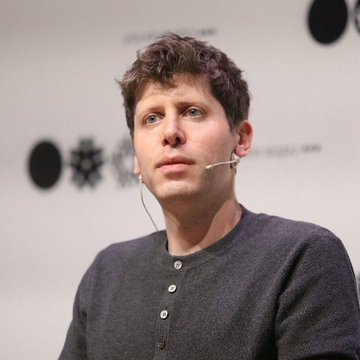
SAN FRANCISCO — The race toward Artificial General Intelligence (AGI) has reached a fever pitch. Consequently, OpenAI CEO Sam Altman losing sleep has become a literal reality for the tech mogul. In a series of recent posts on X, Altman revealed he is switching to a “polyphasic sleep” schedule. This involves sleeping in short, multiple bursts throughout the day rather than a single long stretch. Altman claims that the latest progress in GPT-5.5 in Codex is simply too significant to “miss out” on by sleeping normally. However, his personal excitement stands in stark contrast to his grim warnings. He recently predicted that a post-AGI world could trigger a total economic collapse due to mass unemployment.
“post-AGI, no one is going to work and the economy is going to collapse”
“i am switching to polyphasic sleep because GPT-5.5 in codex is so good that i can’t afford to be sleeping for such long stretches and miss out on working”
— Sam Altman (@sama) April 26, 2026
Altman’s statements highlight a fascinating irony in the current tech landscape. While he advocates for the technology that might render human labor obsolete, he is working harder than ever. He believes that once AGI matches human cognitive abilities, traditional work structures will fail. “Post-AGI, no one is going to work,” Altman noted in his social media update. This dual narrative of doomsday economic fears and personal obsession with the tech is fueling new debates. Industry experts are now questioning whether the drive for AGI is a path toward progress or a recipe for systemic instability.
GPT-5.5 Launch: The Catalyst for Altman’s New Schedule
The primary reason for Sam Altman losing sleep is the official rollout of GPT-5.5. OpenAI recently launched this model with a focus on advanced reasoning, coding, and scientific research. GPT-5.5 builds upon its predecessor, GPT-5.4, by introducing enhanced multi-step planning and self-correction. Specifically, the model has achieved a record 82.7% accuracy on Terminal-Bench 2.0. This score outperforms major rivals like Claude Opus 4.7 and Gemini 3.1 Pro. Developers have noted that the model handles complex debugging tasks with human-like intuition. This efficiency makes it more cost-effective for large enterprises.
Additionally, the new model uses fewer tokens per task while maintaining high speeds. This technical leap is what Altman describes as a “can’t afford to sleep” moment. Moreover, GPT-5.5 integrates better tool-use capabilities, allowing it to execute tasks across various software environments. As businesses rush to integrate these capabilities, the fear of displacement grows. While Altman is personally invigorated by these breakthroughs, the broader workforce remains anxious. The tension between technical achievement and social welfare is now at the forefront of the global AI conversation.
Industry Skepticism: Is AGI a Practical Goal?
Despite Altman’s intense focus, not all tech leaders share his vision of a generalized intelligence by 2030. For instance, Moltbot creator Peter Steinberger has recently voiced significant skepticism. Speaking on the Y Combinator podcast, Steinberger argued that the industry should focus on “specialized intelligence.” He believes that AGI ignores how human success actually works through deep specialization. Furthermore, Anthropic President Daniela Amodei has called the current conceptualization of AGI “outdated.” Similarly, Google DeepMind’s leadership insists that AGI cannot be achieved without more robust “world models” that understand physical reality.
Furthermore, the economic implications of Altman’s predictions are under scrutiny by global economists. If AGI leads to a collapse in the labor market, the current financial systems will need a total overhaul. Altman has previously discussed Universal Basic Income (UBI) as a potential solution. However, the logistical transition to such a model remains unclear. As Sam Altman losing sleep continues to trend, it serves as a reminder of the high stakes involved. The man leading the charge is already living in a world where the lines between work, technology, and basic human needs are blurring.
Conclusion: A Tense Future for Global Labor
Ultimately, the story of Sam Altman losing sleep is a metaphor for the entire AI industry. The frantic pace of development is outstripping our ability to plan for the social consequences. While GPT-5.5 marks a triumph for OpenAI, the predicted economic fallout remains a dark cloud on the horizon. Whether AGI arrives by 2030 or later, the conversation has moved from “if” to “how” we will survive the transition. For now, Altman remains awake, working on the very tools that might change the definition of “work” forever.