
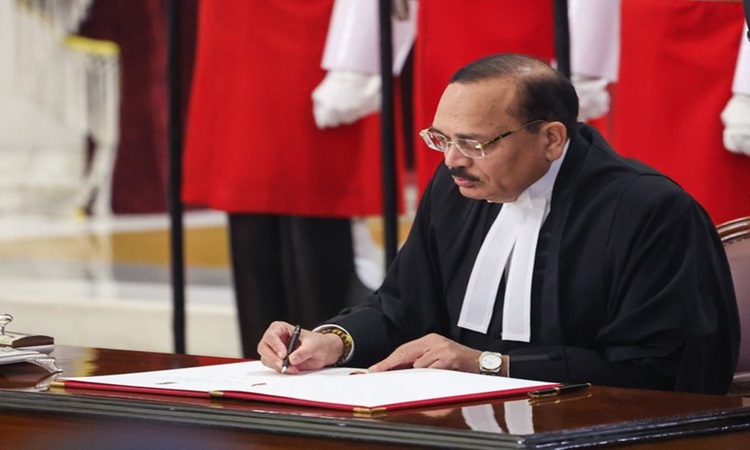
Supreme Court Flags Rising Concerns Over Courtroom Safety
The Supreme Court has raised serious concerns over courtroom safety after a lawyer alleged a violent assault inside a Delhi district court. The incident has renewed focus on gunda raj in courts, a phrase increasingly linked to rising disorder and intimidation within judicial spaces.
The issue surfaced during proceedings before a bench led by Chief Justice of India Surya Kant, alongside Justices Joymalya Bagchi and N V Anjaria. The lawyer sought urgent intervention, claiming the incident occurred inside the Tis Hazari Courts complex earlier this month.
The alleged assault reportedly took place while judicial proceedings were underway. According to the submission, a group associated with the opposing side entered the courtroom and attacked the lawyer in the presence of court staff and judicial officers. The matter has raised alarms within the legal fraternity, especially over the ability of courts to ensure safety during hearings.
Administrative Route Emphasised Over Oral Appeals
During the hearing, the Supreme Court stressed that allegations of courtroom violence require structured administrative handling. The bench indicated that oral appeals were not the appropriate mechanism for resolving such issues, especially when institutional processes exist.
The court advised the lawyer to formally approach the Delhi High Court, which exercises supervisory authority over district courts. The Chief Justice emphasised that the matter should be examined through official channels to ensure accountability and corrective action.
The bench also highlighted that incidents of violence within court premises directly undermine public trust in the justice delivery system. Such acts, the court observed, strike at the foundation of the rule of law and cannot be normalised under any circumstances.
Also Read :Kanpur Lamborghini Crash Injures Six; Driver Shivam Mishra Taken Into Police Custody
Moreover, the Supreme Court made it clear that administrative oversight remains the most effective way to address safety lapses, coordinate with law enforcement, and prevent recurrence.
Broader Implications for the Justice System
Legal experts note that allegations of gunda raj in courts reflect deeper structural challenges. These include overcrowded court complexes, limited security deployment, and delayed responses to complaints. Additionally, tensions between litigating parties often spill into physical confrontations, especially in high-stakes criminal cases.
In recent years, multiple reports have flagged incidents of scuffles, intimidation, and disruptions across lower courts in metropolitan cities. However, many cases remain under-reported due to fear of professional backlash or prolonged legal processes.
The Supreme Court’s intervention signals a growing judicial awareness of these risks. By directing the issue to the jurisdictional high court, the apex court has reinforced institutional responsibility while maintaining procedural discipline.
Observers believe that sustained monitoring, improved access control, and stricter enforcement of courtroom conduct rules will be essential to restore confidence. Furthermore, coordination between court administrations and police authorities remains critical.
As the legal process unfolds, the case is expected to test how effectively existing safeguards respond to allegations that threaten judicial independence and safety.