
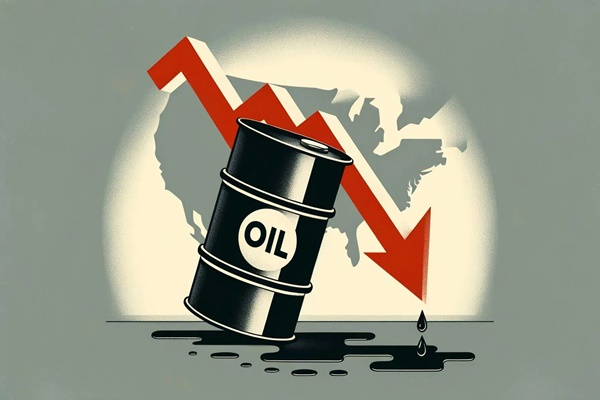
Oil prices drop as Venezuela may boost crude output after Maduro arrest, adding to global supply concerns and weak 2026 demand forecasts.
Tuesday saw a slight decline in oil prices as markets responded to the increasing likelihood of Venezuela producing more crude, a development that has heightened worries about an excess of supply worldwide at a time when demand is still tentative.
The immediate catalyst was the apprehension of Venezuelan President Nicolas Maduro by US authorities, which traders think may lead to a partial relaxation of US sanctions and a resurgence of oil output in the sanctioned country. Prices have been affected by the possibility of more barrels into a market that is already well-supplied, despite the ongoing geopolitical unpredictability.
Oil declines as supply issues resurface
In early Asian trading, Brent crude futures down 0.2% to $61.62 a barrel, while Reuters data showed that US West Texas Intermediate (WTI) crude was down 0.3% to $58.15 a barrel.
The little decrease came after prices had increased by more than 1% during the previous session as investors first processed the shocking events in Venezuela and remarks made by US officials about imposing control over the nation.
However, market sentiment swiftly returned to the fundamentals. The ramifications of a possible rise in Venezuelan production were reevaluated by traders, contributing to the oversupply narrative that has dominated oil markets in recent months.
With Maduro’s detention, Venezuela is once again in the spotlight.
With over 303 billion barrels of proven oil reserves, Venezuela, a founding member of the Organization of the Petroleum Exporting Countries (OPEC), has the greatest oil reserves in the world. Nevertheless, because of years of poor management, underinvestment, and widespread US sanctions, its oil industry has seen a protracted downturn.
Venezuela’s daily average oil production last year was only 1.1 million barrels, a small portion of its historical potential. That number might significantly alter if political circumstances stabilize and sanctions are loosened.
Ed Meir, an analyst at Marex, stated that Venezuelan crude oil production might rise if the Trump strategy is substantially implemented. “If it rises, an already oversupplied market will be under additional pressure.”
Maduro entered a not guilty plea to drug-related charges on Monday, which has further clouded the nation’s political and economic prospects.
US actions raise hopes for increased output.
The news agency stated that US President Donald Trump’s administration is scheduled to meet with US oil CEOs this week to discuss methods to increase Venezuelan oil production, adding to the pessimistic mood.
Market hopes that Washington may aggressively promote investment and output growth in Venezuela have been strengthened by these talks.
ALSO READ: FAIFA Appeals for Revenue-Neutral Tobacco Tax, Warns Against Smuggling Risks
According to oil specialists, Venezuela’s crude production might increase by up to 500,000 barrels per day over the next two years if certain criteria are met. In a market that is already having difficulty absorbing current supplies, any increase of that magnitude would be noteworthy.
Prices are impacted by weak demand and the 2026 prognosis.
Venezuela is not the only country under pressure on oil prices. According to a December Reuters survey, market players already anticipated that a combination of growing supply and muted demand would keep crude prices under pressure in 2026.
Consumption growth has been slowed, especially in major nations, by economic uncertainty, weaker global growth, and factors related to the energy transition. Because of this, even little increases in supply can have a significant effect on prices.
Citi highlighted the structural downside risks confronting crude in a client note, stating that the US administration’s declared desire to increase Venezuelan oil supplies is likely to provide the market a net bearish impetus in the long run.
One important variable is still the OPEC+ response.
OPEC and its allies, referred to as OPEC+, have so far chosen to exercise caution despite the intensified emphasis on surplus. The group decided to keep output at current levels after a brief meeting on Sunday, indicating a wait-and-watch strategy.
According to analysts, OPEC+, which is headed by Saudi Arabia, still has the authority to step in if inventories spike. In order to protect Brent prices in the $55–60 per barrel level over the medium term, Citi pointed out that the producer group would probably react to any sizable stock build-up by reducing output, which should provide an upside surprise.