
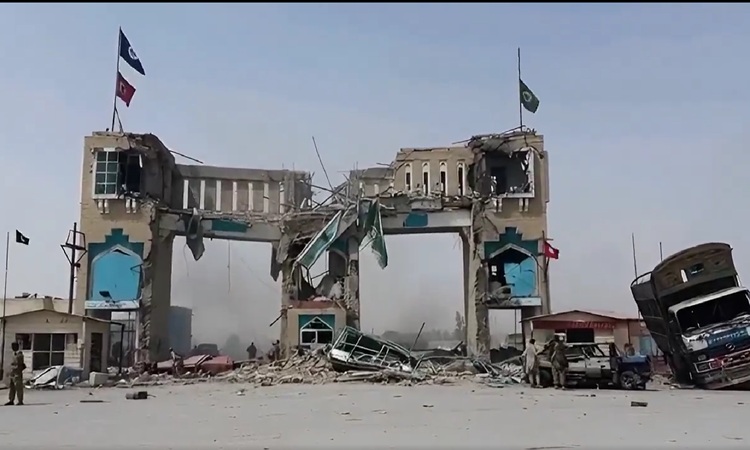
Pakistan-Afghanistan Border : Fresh Pakistan Afghanistan border tensions erupted late Friday night after heavy gunfire broke out near key frontier regions. The exchange occurred along the volatile Chaman and Spin Boldak sectors. Although no casualties were reported, both countries accused each other of violating a fragile ceasefire.
The ceasefire had remained in force for nearly two months. However, renewed firing has raised fears of broader instability. The latest clash also came a day after Pakistan agreed to allow UN relief supplies into Afghanistan.
Fresh Gunfire Near Chaman and Spin Boldak Sparks Alarm
The incident unfolded close to the Chaman border crossing. Pakistani security officials claimed Afghan forces opened fire first. Mohammad Sadiq, a local police officer, said Pakistani troops only retaliated after sustained firing from the Afghan side.
Meanwhile, the Afghan Taliban government strongly rejected that version. Zabihullah Mujahid said Pakistani forces initiated the firing. He added that Afghanistan remains committed to the ceasefire agreement.
Additionally, Afghan border police spokesman Abidullah Farooqi alleged that Pakistani soldiers threw a hand grenade near the Spin Boldak area. He said Afghan forces responded only after the explosion.
Despite these claims, neither side has confirmed injuries or damage. However, tension remains high along the already sensitive border.
Pakistan Responds, Asserts Defense of Territorial Integrity
In Islamabad, the response from Shehbaz Sharif’s office arrived swiftly. Government spokesman Musharraf Zaidi posted on X that the Afghan Taliban fired without provocation. He stressed that Pakistan would defend its territory at all costs.
Zaidi also said the Pakistani army remains fully alert. Moreover, he underlined the government’s commitment to protect civilians near the border.
The firing has once again highlighted the fragile nature of the Pakistan Afghanistan border tensions. Trust between the two sides remains limited despite earlier diplomatic contacts.
Humanitarian Aid Decision Overshadowed by Fresh Violence
Just hours before the exchange, Pakistan announced a major humanitarian step. Authorities said they would allow the United Nations to resume relief supplies into Afghanistan. Aid will pass through the Chaman and Torkham crossings.
Both routes had remained shut for nearly two months due to heightened tensions. The reopening was expected to ease pressure on Afghan civilians facing severe shortages.
However, the latest firing has cast doubt on the smooth movement of relief material. Aid agencies now fear fresh restrictions if clashes continue.
Ceasefire Efforts and the Failed Peace Talks
The ceasefire currently under strain was brokered by Qatar in October. It followed deadly clashes between Pakistani and Afghan forces earlier that month. The truce had largely held until now.
Subsequent talks between Afghanistan and Pakistan took place in November. Those talks aimed to defuse border tensions. However, negotiators failed to reach a lasting de-escalation framework.
Later peace discussions in Istanbul also collapsed without agreement. Since then, both sides have maintained a cautious military posture along the frontier.
Background of the Conflict Since October
Pakistan Afghanistan border tensions escalated sharply after violent incidents in October. At that time, dozens of soldiers and civilians died on both sides. Hundreds more suffered injuries.
The violence followed blasts in Kabul on October 9. The Taliban government accused Pakistan of involvement and vowed retaliation. Pakistan strongly denied the accusations.
Those clashes marked the worst deterioration in ties between the neighbors in recent years. Although the Qatar-mediated ceasefire reduced large-scale combat, low-level skirmishes never fully stopped.
Strategic and Regional Implications of the Fresh Clash
The renewed clash carries major regional implications. Pakistan and Afghanistan share over 2,600 kilometers of porous border. Militant movement, refugee flows, and smuggling complicate security management.
Additionally, strained ties affect regional trade and humanitarian access. The shutdown of border crossings earlier this year disrupted supplies of food, fuel, and medicine.
Security analysts warn that repeated ceasefire violations could destabilize western Pakistan and southern Afghanistan. Moreover, prolonged instability risks drawing in larger regional actors.
What Lies Ahead as Diplomacy Faces Another Test
Diplomatic channels remain open for now. However, confidence between both governments remains weak. Each new clash erodes the gains made through earlier mediation.
Observers say stricter communication mechanisms are needed at the military level. Without them, accidental escalations may spiral into direct conflict.
For civilians living near the frontier, fear continues to dominate daily life. Many residents have already faced displacement during previous clashes.
The latest Pakistan Afghanistan border tensions serve as a reminder that peace remains fragile. Without sustained dialogue and restraint, the risk of a wider confrontation remains very real.