
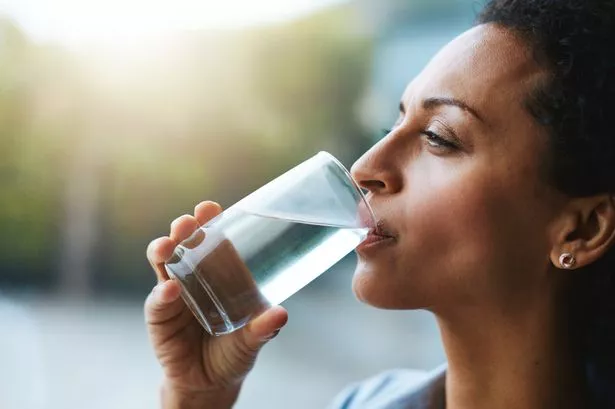
Even daily water can harm your liver if contaminated. Learn the risks of heavy metals, viruses, and bacteria, and how to protect your health
Most people believe that drinking water is the simplest way to stay healthy, but very few realize that drinking a glass of water every day could be secretly damaging to their liver. Numerous medical research demonstrate that our bodies’ responses to water are significantly influenced by its quality and storage manner. Even substances that are invisible to the human eye, like heavy metals, herbicides, or microplastics, can enter the body and progressively accumulate, taxing the liver’s ability to detoxify. Doctors and specialists say that the issue is not hydration per such, but rather what lurks in seemingly clear water, turning a necessary habit into a health hazard.
Doctors now warn that hazardous or chemically treated water has the opposite effect of hydration, which helps with digestion, increases metabolism, and gets rid of toxins. Hepatitis A and E are two of the most deadly illnesses linked to contaminated water. These viruses cause the liver to enlarge after invading it. People often experience fatigue, dark urine, yellowing of the eyes, and sometimes abdominal enlargement due to fluid buildup. Because it can regenerate, the liver recovers along with the rest of the body in most people. But in other people, the infection is so severe that it kills large liver cells. If this happens, it may result in abrupt liver failure, which might be lethal. Dr. Sanjeev Rohatgi, Consultant in Surgical Gastroenterology HPB & Liver Transplant Surgery at Manipal Hospital in Whitefield, Bangalore, discusses how water pollution exacerbates liver damage in an interview with The Daily Jagran.
Additional Waterborne Hazards
In addition to viral infections, waterborne illnesses such as amoebiasis can cause abscesses that affect the liver. “Bacterial infections like E. coli, Salmonella, and typhoid are also prevalent in dirty water,” says Dr. Sanjeev Rohatgi. They may not always result in total liver failure, but they nonetheless put the liver under stress and increase its burden.
The Unspoken Risk of Heavy Metals

Heavy metal contamination is another danger that is all too common but is by no means trivial. Factory waste frequently leaks into waterways, contaminating them with lead, arsenic, and mercury. “The liver can be gradually harmed by consuming these metals through the water,” explains Dr. Sanjeev Rohatgi. A small number of exposed patients have developed chronic liver damage or even liver failure.
Also read: Margashirsha Amavasya 2025 Date, Time & Pitru Dosh Remedy
Safe Water for Health Protection
Although the liver is quite resilient, it cannot withstand continuous damage. Chronic inflammation, poisoning, and infection can overwhelm it beyond healing. The consequences of hepatic failure are severe and sometimes irreversible.
The message is clear: protecting water quality is protecting human health. Drinking water that is safe and clean must be considered an absolute necessity. It keeps infections at bay, safeguards the liver, and preserves life. Since every glass of safe water is an investment in long-term health, all communities and families must demand clean water.