
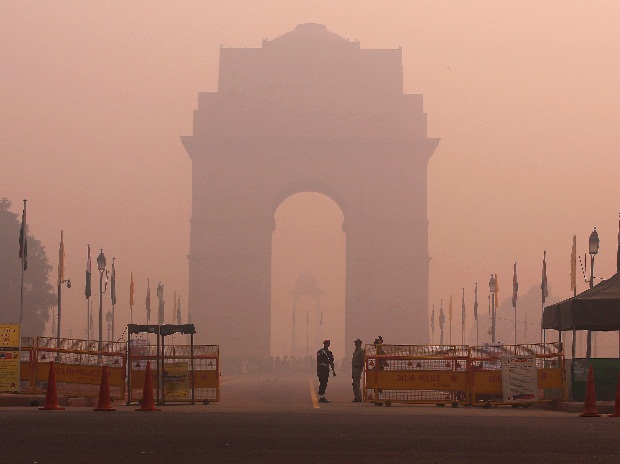
Stubble Burning Drives Pollution as Delhi AQI Nears ‘Very Poor’ Zone
Delhi’s air quality is expected to deteriorate further as stubble burning in neighbouring states significantly increases its share in PM2.5 pollution. According to data from the Central Pollution Control Board (CPCB), the Air Quality Index (AQI) in the national capital stood at 278 on Thursday morning, falling in the ‘poor’ category. However, forecasts suggest it will enter the ‘very poor’ category from November 6 to 8.
The CPCB bulletin highlighted that Thursday began with a light haze. Meteorologists warn that the city’s pollution levels will likely worsen due to a combination of crop residue burning, calm wind speeds, and falling temperatures.
Sharp Rise in Stubble Burning Contribution to PM2.5
Scientists reported a dramatic surge in the share of stubble burning to Delhi’s PM2.5 levels. The estimated contributions are:
- Thursday: 21.5%
- Friday: 36.9%
- Saturday: 32.4%
This marks a sharp rise from just 1.2% on Wednesday.
On Wednesday, 94 stubble burning incidents were recorded in Punjab, 13 in Haryana, and 74 in Uttar Pradesh. These fires emit fine particulate matter that travels to Delhi with north-westerly winds, worsening air quality.
After stubble burning, vehicle emissions are expected to be the second-largest contributor to pollution, with transport accounting for:
- 16.2% on Thursday
- 11.2% on Friday
- 12.3% on Saturday
Experts say that farm fires and vehicle emissions together pose a major challenge during this season.
Weather Conditions Likely to Trap Pollutants
The CPCB report states that wind speeds will gradually increase to around 15 km/h by Thursday afternoon. However, by evening, the speed may drop below 10 km/h, reducing pollutant dispersion.
The skies are expected to remain mostly clear with occasional haze or fog. Lower temperatures and calm conditions at night could trap pollutants close to the ground, making air quality worse.
Delhi’s air remained in the ‘poor’ category for the past two days, with AQI levels below 300 on November 4 and 5. Earlier this month, the city had been in the ‘very poor’ zone with AQI levels consistently above 300.
Authorities Issue Warnings, Citizens Advised to Stay Safe
Environmental officials have raised alarms over the worsening situation. Health experts recommend residents, especially children, senior citizens, and those with respiratory illnesses, to limit outdoor activities.
Authorities may enforce measures under the Graded Response Action Plan (GRAP), including curbs on construction dust, industrial emissions, and vehicular traffic if pollution levels continue to climb.