
Millions Celebrate Chhath Puja Across India and Abroad
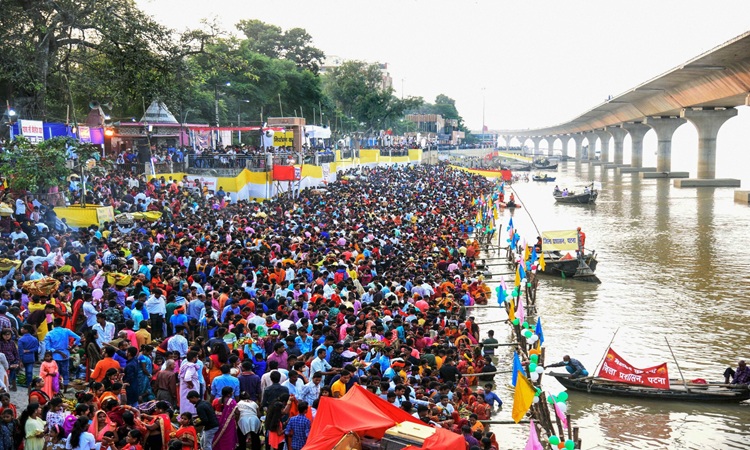
India observed Chhath Puja 2025 with deep devotion, as millions of devotees offered prayers to the Sun God and Chhathi Maiya for prosperity, purity, and good health. From the ghats of Bihar and Uttar Pradesh to the banks of the Yamuna in Delhi, the four-day festival witnessed large gatherings of worshippers performing age-old rituals amid chants and hymns.
Prime Minister Narendra Modi, President Droupadi Murmu, and several chief ministers, including Mamata Banerjee and Rekha Gupta, extended greetings and participated in celebrations. The festival was marked by vibrant scenes of faith, unity, and traditional rituals symbolizing gratitude for life and nature.
In Delhi, over 1,000 ghats were prepared along the Yamuna River, drawing thousands of devotees. Authorities ensured safety arrangements, lighting, and cleanliness across major ghats such as Kalindi Kunj, Vasudev Ghat, and Wazirabad. However, even as devotees gathered for worship, a political storm brewed over the state of the river’s water.
Yamuna Cleanup Sparks Political Debate in the Capital
The sacred atmosphere in Delhi was overshadowed by political allegations between the Bharatiya Janata Party (BJP) and the Aam Aadmi Party (AAP) over the condition of the Yamuna. The BJP-led Delhi administration showcased progress in river cleaning, claiming improved water quality and upgraded ghats for devotees.
However, AAP and Congress leaders accused the government of diverting clean, filtered water to specific Chhath sites, creating what they described as an “artificially clean Yamuna.” According to AAP spokespersons, only a few ghats received treated water for high-profile visits, while the rest remained polluted with untreated sewage and toxic foam.
Delhi Congress leaders joined the criticism, alleging that the Yamuna rejuvenation claims were cosmetic efforts meant for photo opportunities during Prime Minister Modi’s participation in Chhath Puja. They pointed out that despite multiple “Yamuna Action Plans,” large parts of the river remain unfit for ritual use.
The BJP dismissed these accusations as “political theatrics,” asserting that the city government had carried out extensive cleanup drives before the festival. Delhi BJP chief Virendra Sachdeva stated that the administration’s focus was on ensuring a safe and hygienic environment for devotees, not politics.
Devotion, Tradition, and Environmental Concerns
Despite the controversy, the spirit of Chhath Puja remained undeterred across India. In Bihar, devotees thronged ghats along the Ganga River, offering arghya (evening prayers) to the setting sun. Cities like Patna, Varanasi, and Lucknow witnessed well-organized celebrations with enhanced security and waste management efforts.
In Mumbai and other metropolitan cities, migrants from eastern Uttar Pradesh and Bihar gathered at makeshift ghats on beaches and lakes. Temples and community groups organized collective puja arrangements, reinforcing the festival’s unifying essence.
Environmentalists, however, highlighted the recurring problem of river pollution during the festival. Experts from the Centre for Science and Environment (CSE) noted that while Chhath symbolizes harmony with nature, India’s major rivers continue to suffer from industrial effluents and untreated waste. They urged governments to adopt long-term water management measures rather than short-term cleanups during festivals.
Moreover, civic bodies in Delhi and Bihar deployed volunteers and drones to monitor pollution and crowd management. Thousands of sanitation workers were on duty to maintain hygiene across ghats during and after the rituals.
Political Messaging and Cultural Identity
Chhath Puja, observed predominantly by Purvanchali communities, has become both a cultural identity marker and a political flashpoint in states like Delhi and Bihar. The BJP’s emphasis on improved facilities at Yamuna ghats is seen by analysts as an outreach to the large migrant population from eastern India residing in the capital.
Meanwhile, AAP and Congress have positioned themselves as defenders of environmental justice, demanding transparency on river-cleaning expenditures and real progress reports. The issue has, therefore, moved beyond religion, becoming a reflection of governance, accountability, and the politics of symbolism.
Political observers believe that while elections in Delhi are not imminent, such cultural events are increasingly shaping public sentiment. With Bihar Assembly elections expected in 2026, both parties are keen on consolidating Purvanchali support.
Nevertheless, for millions of devotees, Chhath Puja remains a celebration of faith and resilience. As chants of “Chhathi Maiya ki Jai” echoed along the Yamuna and beyond, the festival once again highlighted India’s deep-rooted connection between spirituality and nature.