
The 4G stack would be implemented in about 98,000 locations across the nation, according to Jyotiraditya Scindia.
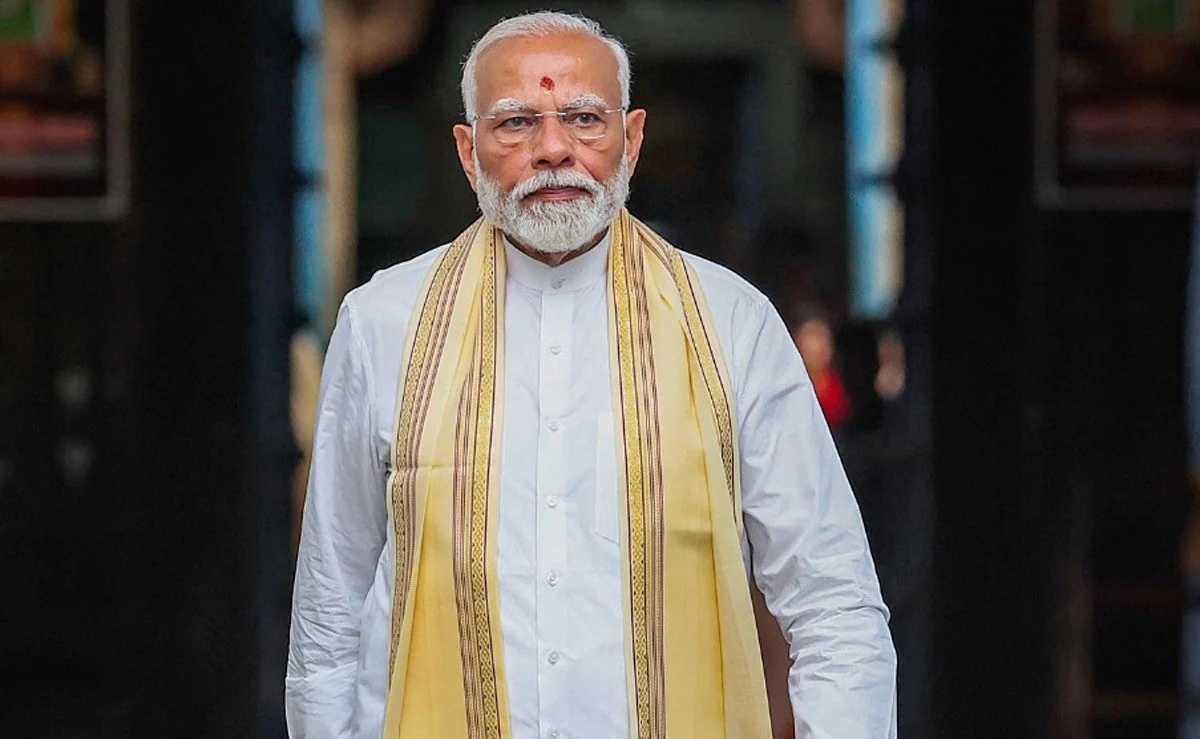
PM Modi will unveil two historic projects on September 27: the nation’s 100% 4G saturation project under the Digital Bharat Nidhi scheme and BSNL’s in-house 4G stack, according to Union Minister of Communications Jyotiraditya Scindia on Friday.
According to a recent announcement from Scindia, the 4G stack would be installed in about 98,000 locations across the nation. 22 million clients are currently being served by our 4G towers and BTSs throughout India. It is entirely software-driven, cloud-based, and prepared for the future. Most significantly, he stated, “it will smoothly transition to 5G.” The government has entrusted BSNL with ambitious projects like the 4G Saturation Scheme, which aim to cover underserved and rural areas as well as uncovered countryside settlements.
He emphasized that the government is working to build India’s telecom manufacturing ecosystem in addition to connectivity. Global companies are increasingly collaborating with Indian manufacturing, Scindia noted, highlighting the advancements.
“Today’s world is seriously investing in Indian manufacturing. In Jabil, Cisco has partnerships with Flex, Ericsson, and VVDN, and Dixon is growing. India is gradually becoming a major manufacturing hub for telecom equipment. In addition to providing services, we also manufacture equipment,” he continued.
Also read : Indian Govt Signs Deal for 97 Tejas Jets Worth ₹62,370 Cr
Along with highlighting C-DOT’s expanding importance, the minister pointed out that it has partnered with Tejas Networks to produce Radio Access Network (RAN) equipment in addition to core technology. “The market for this equipment is large, particularly in the Global South. These companies will be in charge of packaging the solution, like they have done with BSNL,” he clarified.
In reference to BSNL’s future expansion, Scindia said that a capital investment plan has been established to modernize infrastructure and expand sites, with money anticipated from federal support, land monetization, and free cash flows. He did not, however, reveal any further information until everything was finalized.
The minister stated that pricing will continue to be the responsibility of individual operators in response to questions about tariffs. “The world’s most affordable telecom services are found in India. Compared to $2.49 per gigabyte worldwide, the average cost of data here is only 11 cents. He stated, “I don’t see any need for regulation because setting ARPUs and packages is a company’s domain in a highly competitive market.”
Additionally, Scindia noted that BSNL had made money in two quarters, but advised stakeholders to evaluate the company’s performance using operational profits and EBITDA because depreciation had a major negative impact on its finances after a record-breaking ₹25,000 crore capital investment in FY24–25.
“These initiatives will not only expand digital access across every village in India but will also mark a new chapter in India’s journey towards becoming a global telecom manufacturing leader,” Scindia stated.