
China Exits from CPEC Flagship Project
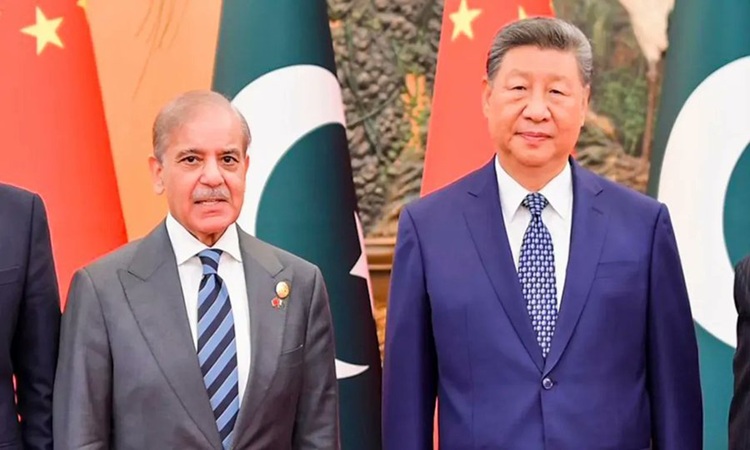
Islamabad, 6 September 2025 — In a major geopolitical setback, China has pulled out of Pakistan’s Main Line-1 (ML-1) railway upgrade, the most ambitious project under the $60 billion China–Pakistan Economic Corridor (CPEC). The move followed Prime Minister Shehbaz Sharif’s recent visit to Beijing, where he failed to secure fresh funding or headline projects under CPEC’s second phase.
Instead, Pakistan returned with MoUs worth $8.5 billion, mainly in agriculture, solar power, electric vehicles, health, and steel manufacturing. However, none matched the scale of the ML-1 railway plan that was once billed as the crown jewel of CPEC.
The withdrawal signals a sharp slowdown in momentum for a project once positioned as the centerpiece of China’s Belt and Road Initiative (BRI) in South Asia.
Why CPEC Matters to Pakistan
Launched in 2015, the China–Pakistan Economic Corridor spans nearly 3,000 km, connecting China’s Xinjiang region to Pakistan’s Gwadar port. It includes highways, pipelines, power plants, and railways designed to boost trade, ease Chinese energy imports, and stimulate Pakistan’s economic growth.
The ML-1 project aimed to modernize the 1,800-km Karachi–Peshawar railway line, with an initial investment of around $6.8 billion. At full scale, CPEC was expected to exceed $60 billion in investments.
Despite its promise, progress has slowed. After an early surge of projects between 2015 and 2019, delays, unpaid dues, and Pakistan’s worsening economic crisis strained the partnership.
ADB Steps In as China Steps Back
Following Beijing’s withdrawal, Pakistan has approached the Asian Development Bank (ADB) for a $2 billion loan to finance the Karachi–Rohri section of the ML-1 route. According to government sources, Pakistan informed China of its decision in advance to maintain transparency in the partnership.
This marks the first time a multilateral lender has taken the lead on what was originally envisioned as a flagship BRI project. The ADB has already committed $410 million toward infrastructure upgrades linked to the Reko Diq copper and gold mine in Balochistan, strengthening its foothold in Pakistan’s long-term export strategy.
The shift underscores Pakistan’s new balancing act — leaning on global financial institutions while keeping diplomatic ties with Beijing intact.
Why Beijing Pulled Back
China’s decision reflects a broader recalibration of its overseas financing. With economic pressures at home and growing debt concerns among partner nations, Beijing has scaled down high-risk infrastructure commitments.
Pakistan’s repeated IMF bailouts, rising arrears to Chinese power producers, and security risks for Chinese nationals have further discouraged new funding. During his trip, Sharif admitted to Chinese investors that Pakistan’s security environment posed challenges, though he pledged stricter protection measures and reduced bureaucratic hurdles.
Yet, his unilateral declaration of the “formal launch” of CPEC 2.0, without Chinese endorsement, only highlighted the lack of alignment between Islamabad and Beijing.
The Reko Diq and Washington Factor
Analysts suggest another factor driving Pakistan’s urgency is the Reko Diq copper and gold mine in Balochistan, being developed by Canada’s Barrick Gold. The site is expected to generate major export revenues, but its success depends on modern railway infrastructure capable of transporting heavy cargo.
Washington has shown interest in Reko Diq’s potential, raising speculation that U.S. strategic involvement could influence Pakistan’s infrastructure priorities. The ADB’s growing role reinforces this possibility, given its links to U.S. and allied donor funding.
Army Chief General Asim Munir summed up Pakistan’s stance, saying, “We will not sacrifice one friend for the other.” Islamabad aims to diversify partnerships without undermining its ties with China, even as U.S.–China rivalry intensifies and India strengthens relations with Beijing and Moscow.
What It Means for CPEC
China’s pullback from ML-1 does not end CPEC, but it signals a loss of momentum for what was once touted as a transformational project. Analysts believe CPEC will continue with smaller-scale ventures, but its original scale may no longer be realistic.
For Pakistan, the development highlights the risks of over-reliance on a single partner. Turning to the ADB opens new doors for financing but also reflects Islamabad’s precarious economic situation. As the country navigates its fiscal crisis, the challenge lies in balancing ties with China, the U.S., and multilateral lenders while keeping its infrastructure dreams alive.