
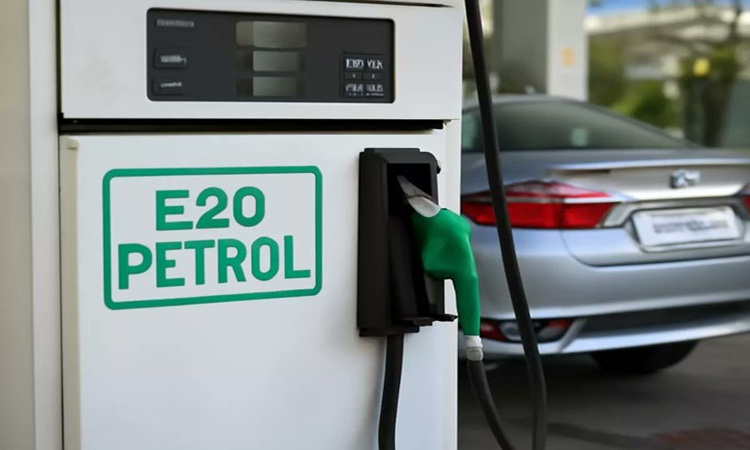
Supreme Court Rejects Plea on E20 Petrol Option
New Delhi, September 1: The Supreme Court of India on Monday dismissed a Public Interest Litigation (PIL) challenging the government’s E20 ethanol blending plan, which mandates that all petrol sold in the country contain 20% ethanol by 2025–26.
A bench comprising Chief Justice B.R. Gavai and Justice K. Vinod Chandran struck down the petition after Attorney General R. Venkataramani highlighted that the petitioner, an outsider from England, could not dictate India’s fuel policies.
During the hearing, senior advocate Shadan Farasat, representing the petitioner, cited a 2021 NITI Aayog report warning that older vehicles—specifically those manufactured before 2023—may experience a 6% reduction in fuel efficiency with E20 petrol.
The petitioner clarified he was not against E20, but requested an ethanol-free option (E10) for older cars. He said, “We are not contesting higher blends, only the non-availability of E10 petrol for pre-2023 vehicles.”
Government Highlights Benefits of E20
Attorney General Venkataramani countered that the PIL was driven by vested interests. He emphasized that E20 benefits sugarcane farmers, saves foreign exchange, and reduces greenhouse gas emissions.
“Will people outside the country dictate what kind of fuel India should use?” Venkataramani remarked, underlining India’s sovereign authority in energy policy.
The Ministry of Petroleum and Natural Gas has repeatedly highlighted that E20 improves ride quality and acceleration while reducing reliance on imported crude oil. A NITI Aayog study revealed that greenhouse gas emissions for sugarcane and maize-based ethanol are 65% and 50% lower, respectively, than those of petrol.
Concerns from Vehicle Owners and Auto Enthusiasts
Despite government assurances, some car owners and auto enthusiasts remain skeptical. Concerns include:
- Reduced engine performance and mileage
- Increased mechanical issues in older vehicles
- Potential shortening of vehicle lifespan
However, the government insists the policy is a logical progression in India’s fuel roadmap, aiming for sustainable energy use and economic benefits for rural farmers.
Transformative Impact on Farmers and Rural Economy
The E20 initiative is expected to provide a boost to the rural economy, particularly for sugarcane growers. By enhancing farmer incomes, the scheme is also indirectly contributing to a reduction in farmer suicides in key agricultural regions.
Officials maintain that the long-term benefits outweigh temporary concerns, as E20 will gradually replace conventional petrol blends, ensuring environmental and economic gains.