
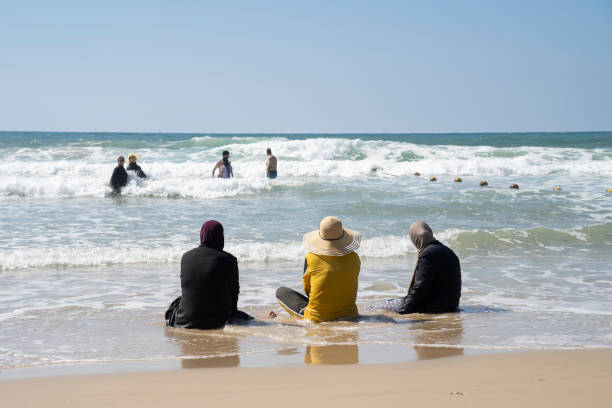
Syria Bans Bikinis only Burkinis at Public Beaches, Sparks Debate on Modesty and Freedom
In a move sparking widespread discussion, the Syrian Tourism Ministry has officially banned bikinis and other revealing swimwear at public beaches, urging citizens and tourists to adhere to a more “modest and culturally appropriate” dress code. The mandate comes just months after Islamist-led forces toppled the regime of Bashar al-Assad, ushering in a more conservative governance structure.
New Rules Mandate Full-Body Swimwear
Announced via Facebook by Tourism Minister Mazen al-Salhani, the new guidelines require women to wear full-body swimsuits—such as burkinis—at public beaches and pools. Men are no longer permitted to go shirtless in public beach areas.
“Visitors to public beaches and pools, whether tourists or locals, are required to wear appropriate swimwear that takes into account public taste and the sensibilities of various segments of society,” the minister wrote.
He emphasized that public beachgoers must behave in a way that “respects public taste and decency.”
Guidelines Extend Beyond Beaches
The policy also impacts how Syrians dress in public beyond the beaches. The ministry recommended that all citizens “wear loose clothing, cover the shoulders and knees, and avoid tight or transparent garments.” Women are further instructed to use beach cover-ups or loose-fitting robes when moving between beach areas and other locations.
Private Venues Exempted from the Ban
While the dress code is binding for public beaches and pools, private beach clubs and luxury venues have been given discretionary authority. These establishments are permitted to allow Western-style swimwear, including bikinis, as long as it remains within the limits of “general morals.”
The ministry stated,
“Western swimsuits are allowed in private establishments within the limits of public decency and morality.”
This exemption has led to confusion over how enforcement will be handled, as the ministry did not clarify specific penalties or the mechanism for monitoring compliance.
Cultural Shift After Political Transition
This policy reflects the broader cultural and political changes underway in Syria following the December power shift, which saw Islamist-led factions come to power. The new administration has emphasized a return to traditional values and religious norms, particularly in public life and attire.
Observers note that the move may be intended to align the tourism industry with the country’s new cultural direction, even at the risk of reducing its appeal to international tourists seeking liberal beach environments.
Public Reactions Mixed on Social Media
The announcement has ignited passionate debate on social media platforms, with users split between support and concern.
A Facebook user named Yahya Qabisho endorsed the rules, stating:
“There’s a duty to respect the culture of Syrian society.”
However, others criticized the move, citing freedom of expression and personal liberty. One user commented,
“Syria is a moderate and open country. The ministry should reconsider its decision.”
Critics argue that the decision could limit tourism growth and reinforce restrictive norms, particularly on women, in a country long known for its religious diversity and more secular past.
International Perspective and Implications
The new rules place Syria among a growing list of countries enforcing modesty laws in public spaces, particularly in regions with Islamic leadership. While such policies are common in nations like Iran and parts of the Gulf, Syria’s shift toward stricter dress codes marks a notable departure from its previously more liberal image, especially in urban centers like Damascus and Latakia.
The tourism industry—which has been attempting a fragile recovery post-conflict—may experience repercussions as international travelers weigh cultural restrictions against vacation options.