
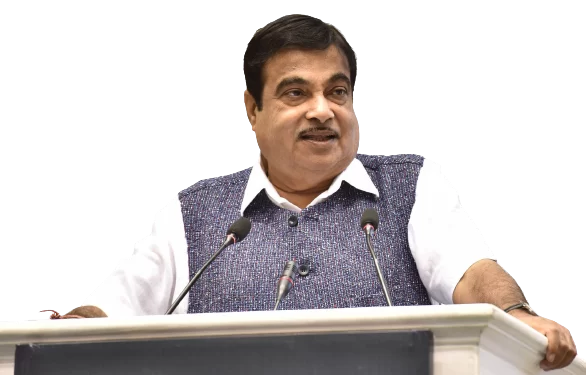
Nitin Gadkari Announces Air Pod System and Flash-Charging E-Buses for Indian Cities
Nitin Gadkari Unveils Futuristic Air Pod Transit and Flash-Charging Electric Buses for Indian Cities
New Delhi | June 10, 2025 — In a bold leap toward transforming India’s urban mobility landscape, Union Minister for Road Transport and Highways, Nitin Gadkari, has announced the government’s ambitious plans to introduce air pod transportation systems and flash-charging electric buses in major Indian cities. These developments aim to ease traffic congestion, lower travel costs, and reduce environmental impact.
Gadkari revealed that a pod-based transport system is being planned between Dhaula Kuan and Manesar, a corridor often choked by traffic snarls. Simultaneously, ultra-modern electric buses are being tested in Nagpur and will soon connect major metro cities, offering a cost-effective and high-speed commuting alternative.
Pod Transport to Ease Congestion in Delhi-NCR
Gadkari stated that the Dhaula Kuan-Manesar route—a major traffic bottleneck—has been chosen for the pilot air pod system, which could revolutionize last-mile connectivity.
“We want to start a pod system in the air from Dhaula Kuan to Manesar because there is a lot of traffic on this road,” Gadkari said.
The system, currently under feasibility assessment, would serve as an on-demand, driverless electric vehicle network, operating on elevated tracks. This futuristic model could drastically cut commute times and minimize urban sprawl-related challenges, especially for office-goers in Delhi and Gurgaon.
A similar study is underway in Bengaluru, another city notorious for gridlocked roads—especially during rainfall.
What Is a Pod System?
The pod-based system consists of small, automated electric vehicles that travel along elevated tracks, either suspended or mounted. Functioning like on-demand taxis, these pods can accommodate 5 to 6 passengers, offer point-to-point travel, and eliminate the need for multiple stops or transfers.
This type of system is already in limited use in cities like London and Dubai, and its introduction in India signals a major modernization of public transport infrastructure.
Flash-Charging E-Buses to Redefine Intercity Travel
In addition to the pod system, Gadkari highlighted the rollout of flash-charging double-decker electric buses, which are undergoing trials in Nagpur. These 135-seater executive-class buses can reach speeds of 120 km/h and are designed for intercity travel.
“The bus will stop for just 30 seconds every 40 kilometres. During this time, it will get charged, and passengers will board or deboard,” Gadkari explained.
The flash-charging technology enables ultra-fast energy top-ups, reducing the need for large battery banks and making the buses lighter, more efficient, and less expensive. Notably, the ticket prices will be 30% cheaper than those on conventional diesel buses.
Planned Routes for E-Bus Expansion
Upon successful trials in Nagpur, the government plans to deploy the flash-charging e-buses on high-demand routes such as:
- Delhi to Jaipur
- Delhi to Dehradun
- Bengaluru to Chennai
- Mumbai to Nashik and Pune
These routes have been selected based on traffic volume, commute time, and infrastructure readiness. The buses will feature modern amenities, including TVs, plush seating, and enhanced passenger safety features, appealing to both regular commuters and long-distance travelers.
Future-Ready Mobility for a Growing Nation
Gadkari’s announcement reflects a clear shift towards sustainable and smart urban transport. With India’s urban population expanding rapidly, the demand for eco-friendly, high-capacity, and time-efficient commuting options is at an all-time high.
The initiatives also align with the government’s broader goals under the National Electric Mobility Mission Plan (NEMMP) and contribute to India’s climate commitments by reducing the dependence on fossil fuels.