
Facial Recognition System Deployed on Amarnath Route After Pahalgam Terror Attack
Srinagar | June 10, 2025 — In a decisive move to enhance the security of pilgrims, facial recognition systems (FRS) have been installed along the Pahalgam route of the Amarnath Yatra. The initiative follows the April 22 terror attack in Baisaran, where 26 civilians were killed by Pakistan-based terrorists. Security officials have said that the new system is part of a broader strategy to deter and neutralize threats to one of India’s most revered pilgrimages.
With the annual Amarnath Yatra set to commence on July 3, the Jammu and Kashmir Police and other central security agencies have ramped up surveillance efforts, citing the persistent threat posed by cross-border terrorism.
Facial Recognition for Real-Time Threat Detection
The facial recognition system works by capturing facial features from CCTV footage or still images and comparing them with a pre-fed database of wanted terrorists, suspected overground workers, and blacklisted individuals. If a match is detected, the system sends an immediate alert to security personnel manning surveillance centers.
“As soon as any of the blacklisted persons walks into the frame, a hooter will go off at the surveillance center so that swift action can be taken,” an official told PTI.
The deployment of FRS is currently focused on the Pahalgam route, while similar installations are planned along the Baltal route in the coming days.
Strategic Response to Rising Threats
The decision to roll out advanced surveillance systems follows the devastating April attack, in which India responded by destroying terror camps at nine locations across Pakistan and Pakistan-occupied Jammu and Kashmir (PoJK). The attack underscored the vulnerability of pilgrim routes and led to calls for a fool-proof security framework.
Historically, the Amarnath Yatra has been targeted multiple times:
- In 2000, 32 people, including 24 pilgrims, were killed at Nunwan base camp.
- In 2001, 13 died in an attack at Sheshnag base.
- In 2002, 11 pilgrims lost their lives at Chandanwari.
- The 2017 Kulgam attack claimed eight lives aboard a pilgrim bus.
These repeated tragedies have made technology-led surveillance a cornerstone of current security planning.
Other Security Measures in Place
In addition to facial recognition:
- Radio Frequency Identification (RFID) tags are being used to track all registered pilgrims and vehicles.
- The entire route from Jammu to the holy cave is under CCTV surveillance.
- Quick Response Teams (QRTs) and heavily armed convoys will accompany pilgrim groups.
Over 300,000 pilgrims have already registered for this year’s yatra, reflecting strong faith despite past incidents.
What Is the Amarnath Yatra?
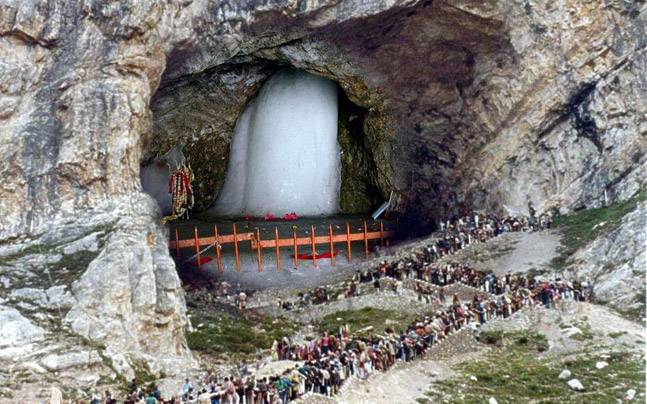
The Amarnath Yatra is an annual Hindu pilgrimage to the Amarnath cave shrine, located at an altitude of 3,888 meters in south Kashmir Himalayas. Inside the cave, a naturally formed ice Shiva Lingam is worshipped by devotees. The pilgrimage this year will run from July 3 to August 9, coinciding with Raksha Bandhan. This year’s yatra has been shortened to 38 days, down from 52 days in 2024.
How Facial Recognition Works
FRS uses artificial intelligence and biometric technology to identify individuals by analyzing key facial features such as:
- Distance between eyes
- Jawline structure
- Nose width
- Forehead shape
These features are compared against a government-maintained watchlist database, making the system especially useful in crowded or high-risk areas like pilgrimage routes.