
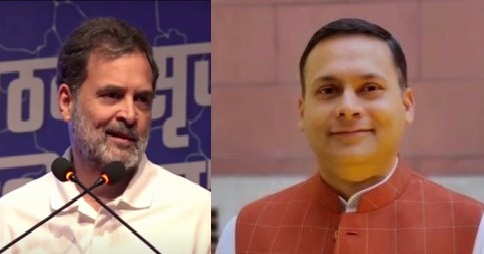
Amit Malviya Slams Rahul Gandhi Over Maharashtra Poll Rigging Claims, Cites ‘Soros Playbook’
BJP Leader Accuses Congress of Undermining Democratic Institutions as EC Rejects Rigging Claims
NEW DELHI, June 7, 2025 — Bharatiya Janata Party (BJP) IT cell head Amit Malviya launched a sharp counterattack against Rahul Gandhi, leader of the opposition in the Lok Sabha, for alleging electoral fraud during the 2024 Maharashtra Assembly Elections. In a scathing post on social media platform X (formerly Twitter), Malviya accused Gandhi of employing tactics “straight out of George Soros’ playbook” to erode public trust in Indian democratic institutions.
Malviya’s remarks followed a detailed social media post by Rahul Gandhi earlier in the day, where the Congress leader reiterated claims of election rigging in Maharashtra and warned of similar threats in upcoming elections in Bihar.
Rahul Gandhi’s Fresh Allegations on Maharashtra Elections
Rahul Gandhi posted a step-by-step guide titled “How to Steal an Election?”, which he claimed illustrated how the BJP allegedly manipulated the 2024 Maharashtra Assembly elections. According to Gandhi, the process began with “rigging the panel that appoints the Election Commission,” suggesting the central government had compromised the neutrality of key constitutional institutions.
“Maharashtra Assembly Elections in 2024 were a blueprint for rigging democracy,” Gandhi wrote, accusing the ruling party of systematic subversion of electoral fairness.
He also cautioned that Bihar could be the next target, indirectly warning regional parties and the electorate of similar alleged manipulation.
Malviya’s Response: “It’s Not Clarity, It’s Chaos”
In response, Amit Malviya lashed out at Gandhi’s post, stating that the real intention behind such allegations is to create public mistrust and chaos.
“This is straight out of George Soros’ playbook — systematically erode people’s faith in their own institutions so they can be cracked open from within for political gains,” Malviya wrote on X.
Malviya further claimed that Gandhi understands the electoral process well, but his goal is disruption, not clarity. He also pointed out the double standards of the Congress, noting that the party raised no concerns when it won elections in Telangana and Karnataka under the same Election Commission framework.
“When Congress wins, the process is fair. When it loses, it’s rigged. This hypocrisy is undermining our institutions,” he added.
Election Commission Responds to Allegations
The Election Commission of India (ECI) also stepped into the debate, issuing a strong rebuttal to the Congress leader’s claims. In an official statement, the EC termed the accusations as “baseless” and said they “create unnecessary and avoidable doubts and anxiety in the mind of the public.”
“These accusations, coming from a national party of high standing, are not just unfounded but dangerous. All data is publicly available and shared transparently with all stakeholders,” the EC said.
The commission emphasized that all constitutional appointments and electoral procedures were conducted as per established laws and norms, and any challenge to its integrity must be substantiated with evidence.
Political Implications Ahead of Bihar Elections
Rahul Gandhi’s allegations and Malviya’s response come at a critical juncture with Bihar elections on the horizon. The exchange reflects an escalating war of narratives between the two national parties as they jostle for political influence.
Analysts believe such rhetorical battles could deepen political polarization and erode trust in democratic institutions unless addressed with transparency and bipartisan dialogue.