
Pakistan Army Chief’s ‘Jugular Vein’ Remark Linked to Pahalgam Terror Attack During JD Vance’s Visit
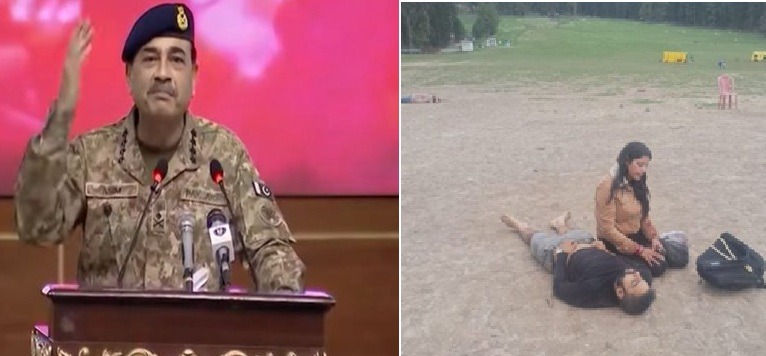
New Delhi, India – A recent statement by Pakistan’s Army Chief, General Asim Munir, referring to Kashmir as Pakistan’s “jugular vein,” is being scrutinized by Indian intelligence agencies for its potential role in inciting the Lashkar-e-Taiba (LeT) and its proxy group, The Resistance Front (TRF), to carry out a terror attack in Pahalgam. The attack coincided with the visit of U.S. Vice President JD Vance, raising concerns about the timing and motivations behind the strike.
General Asim Munir’s Controversial Statement
General Munir’s remark, made during a recent address, emphasized Pakistan’s claim over Kashmir and criticized the differential treatment of Muslims and Hindus in the region. While the statement was widely reported, its implications are now under closer examination. Intelligence sources suggest that the provocative nature of the speech may have emboldened TRF operatives to plan a high-profile attack to coincide with the U.S. Vice President’s visit, aiming to draw international attention to their cause.
The Pahalgam Attack: A Coordinated Strike
Terror attack occurred in Pahalgam, resulting in multiple casualties. Initial assessments indicate that approximately six terrorists, supported by local auxiliaries, executed the attack. The assailants reportedly arrived in the area days before the strike, conducted reconnaissance, and launched the assault when an opportunity presented itself. Victims were allegedly asked to recite the ‘kalma’ (Islamic declaration of faith), with those unable to do so being executed.
The TRF, a Pakistan-based militant group with links to LeT, has claimed responsibility for the attack. Intelligence agencies are investigating the involvement of LeT’s top commander, Saifullah Kasuri, alias Khalid, and two Rawalkot-based Lashkar commanders, including Abu Musa, who is suspected of orchestrating the assault.
Intelligence Agencies’ Assessment
Indian intelligence agencies have stated that there was no failure in gathering information prior to the attack. Reports from early April indicated that terrorists had conducted reconnaissance of hotels in the area, suggesting that the planning for the attack was well underway before its execution. The agencies are focusing on the timing of the strike, which coincided with Vice President Vance’s visit, as a potential indicator of the attackers’ intent to maximize the impact of their actions.
The Role of Anti-Hindu Rhetoric
In the lead-up to the attack, anti-Hindu rhetoric was reportedly used to incite violence. Abu Musa, during an event in Rawalkot, declared that “Jihad will continue, guns will rage, and beheading will continue in Kashmir,” . This inflammatory language is believed to have contributed to the radicalization of individuals and the subsequent planning of the Pahalgam attack.
LeT’s top commander Saifullah Kasuri, alias Khalid, is suspected to be one of the plotters, according to an intelligence assessment. The role of two Rawalkot-based Lashkar commanders, one of whom is Abu Musa, is also under scrutiny, sources said.
Many of the victims in Pahalgam were asked to recite the ‘kalma’ (Islamic phrase of declaration of faith), and those who could not were shot dead. 26 tourists were killed in the attack, and many were critically injured.
Regional Implications and International Concerns
The Pahalgam attack has raised concerns about the stability of the region and the potential for increased militancy. The involvement of Pakistan-based groups like LeT and TRF underscores the cross-border nature of the threat and the challenges faced by Indian security forces in combating terrorism. The timing of the attack, coinciding with a high-profile international visit, has also drawn attention to the use of terrorism as a tool for political messaging.
Moving Forward: A Call for Vigilance
In response to the attack, Indian authorities have pledged to enhance security measures in sensitive areas and increase intelligence-sharing with international partners. The government has also called for a comprehensive approach to counter-terrorism, focusing on both preventive and responsive strategies. The incident serves as a stark reminder of the persistent threat posed by militant groups and the need for continued vigilance and cooperation in addressing regional security challenges.