
Strategic Security Developments in the Gulf Security Framework
The activation of operational protocols under the Makkah Mutual Defence Agreement has drawn intense international focus across the Middle East. Following a series of ballistic missile and drone attacks launched by Yemen’s Houthi movement targeting Saudi Arabian civilian and military infrastructure, Saudi Arabia, Pakistan, and Turkey convened emergency strategic coordination sessions in Riyadh.
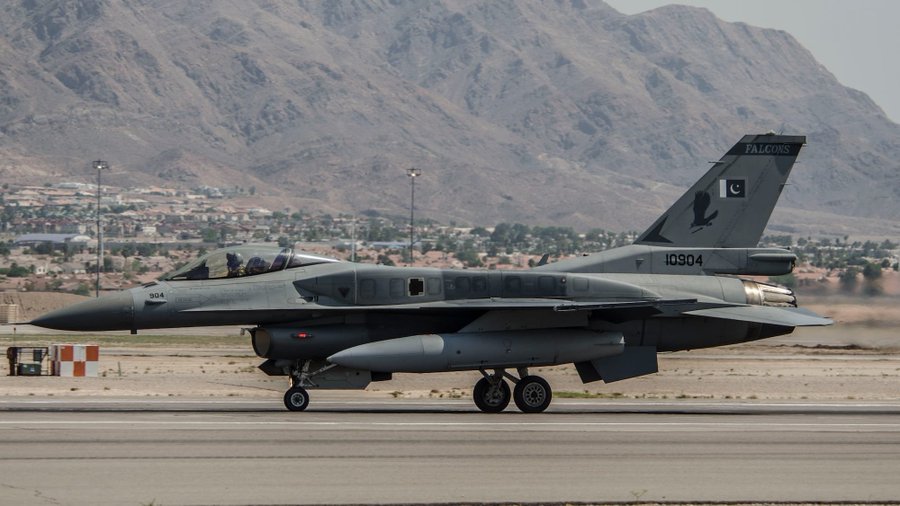
While reports cited anonymous sources alleging that Pakistan Air Force (PAF) fighter aircraft had participated in offensive strikes inside Yemen, Pakistan’s Ministry of Information and Broadcasting officially rejected these claims, categorizing them as unverified speculation. Official military spokespersons reaffirmed that Pakistan’s armed forces deployed under the trilateral alliance remain strictly dedicated to collective deterrence and defensive protection of Saudi territorial integrity.
Official Stances, Military Deployments, and Diplomatic Communications
In official briefings, Director General of Inter-Services Public Relations (ISPR) Lt Gen Ahmed Sharif Chaudhry confirmed that Pakistani military contingents are actively stationed inside the Kingdom of Saudi Arabia under established bilateral and trilateral security arrangements. The deployment includes specialized ground units, army air defence elements, and technical personnel assigned to safeguard critical infrastructure and energy installations.
Pakistan Air Force jets are striking the Houthis in Yemen, according to a senior Pakistani military official who spoke anonymously to The New York Times. Pakistan’s military declined to comment. The Times reports that Pakistan and Turkey activated the Mecca defense pact this week to support Saudi Arabia.
Col. David Smith, a former U.S. attaché in Pakistan and former Defense Intelligence Agency analyst, said analysts believe about 8,000 Pakistani troops are in Saudi Arabia, though he has no access to classified figures. A second anonymous Pakistani official said Pakistan’s role is expected to focus on air support against Houthi drones and missiles, not a ground offensive.
The pact follows Houthi strikes on two Saudi airports Tuesday and Wednesday that Saudi Arabia says killed three people and injured dozens, at Abha and Riyadh’s King Khalid International. Houthi spokesman Yahya Saree said the group attacked both airports with missiles or drones. The Saudi led coalition says it retaliated against dozens of Houthi sites. The Houthis had not responded.
Source: https://t.co/MRL0IU0p64
— OSINTdefender (@sentdefender) October 8, 2026
However, state officials strongly denied engaging in direct offensive sorties across the border into Yemeni airspace. The strategic framework focuses on air defence interception and operational support rather than offensive ground maneuver campaigns.
| Serial No. | Security Parameter | Official Government Benchmark & Specification |
| 1 | Alliance Security Framework | Makkah Mutual Defence Agreement |
| 2 | Member States Participating | Saudi Arabia, Pakistan, Turkey |
| 3 | Operational Mandate Scope | Defensive Deterrence & Infrastructure Security |
| 4 | Position on Cross-Border Air Strikes | Officially Denied & Categorized as Fabrication |
| 5 | Estimated Allied Force Footprint | 8,000 Support & Air Defence Personnel |
| 6 | Primary Defensive Task | Missile Interception & Critical Asset Protection |
Regional Escalation Mechanics and Infrastructure Impact
The diplomatic friction follows severe cross-border engagements targeting Saudi civil aviation assets. Houthi military personnel claimed responsibility for multi-vector missile and drone salvos directed against King Khalid International Airport in Riyadh and Abha International Airport in the southern region.
Saudi Arabia’s General Authority of Civil Aviation (GACA) confirmed that multi-day strikes resulted in 3 civilian fatalities and 36 injuries, alongside property damage at airport terminals. The Saudi-led coalition responded by launching precision air strikes against dozens of military positions, launch platforms, and ammunition depots inside Yemen.
| Serial No. | Impacted Strategic Site | Reported Civilian Casualties | Operational Status & Response |
| 1 | King Khalid International Airport (Riyadh) | 1 Fatality, 8 Injured | Defensive Intercepts Activated; Temporary Holds |
| 2 | Abha International Airport (Southern Region) | 2 Fatalities, 28 Injured | Emergency Medical Response & Damage Audits |
| 3 | Counter-Coalition Operations | Over 80 Targets Struck | Precision Air Sorties Against Launch Facilities |
| 4 | Displaced Civilian Populations | Nearly 200,000 Individuals | Humanitarian Relief Operations Underway |
Trilateral Military Capabilities and Defensive Responsibilities
Under the operational terms established during emergency defense meetings in Riyadh, member nations agreed to accelerate force deployments to reinforce regional air space safety. Military delegations from Turkey and Pakistan maintain joint planning committees alongside Saudi commanders to coordinate radar tracking, electronic warfare, and missile defense interception protocols.
This structured defense deployment ensures that host facilities remain protected while avoiding broader diplomatic entanglements with neighboring nations, such as Iran.
| Serial No. | Alliance Capability Sector | Delegated Operational Responsibility |
| 1 | Air Defence & Early Warning | Multi-layer Radar Integration & Threat Tracking |
| 2 | Critical Asset Protection | Safeguard Energy Infrastructure & Refineries |
| 3 | Logistics & Strategic Air Mobility | Rapid Troop Movement & Supply Chain Maintenance |
| 4 | Border Surveillance & Reconnaissance | Real-time Maritime & Airspace Monitoring |
Comparative Framework of Regional Alliance Commitments
The current deployment model highlights the operational distinction between collective defensive deterrence and direct offensive warfare within the Gulf regional security architecture.
| Serial No. | Operational Domain | Defensive Mandate Standard | Excluded Offensive Operations |
| 1 | Air Space Management | Interception of Incoming Missiles & Drones | Offensive Bombing Strikes in Neighboring Territories |
| 2 | Ground Force Logistics | Static Base Security & Asset Safeguarding | Ground Invasion or Expeditionary Maneuvers |
| 3 | Diplomatic Framing | Regional Stability & Alliance Deterrence | Direct Involvement in Foreign Civil Conflicts |
| 4 | Force Command Structure | Coordinated Joint Air Defence Commands | Independent Offensive Sorties |
Summary of Strategic Defense Indicators
The operational landscape under the Makkah Mutual Defence Agreement reflects a calculated balance between maintaining strategic commitments to Gulf partners and preventing wider regional confrontation. The table below summarizes the core strategic metrics defining the regional defense posture.
| Serial No. | Key Strategic Metric | Official Target / Current Status | Policy Impact |
| 1 | Alliance Mutual Defence Pact | Makkah Mutual Defence Agreement | Establishes formal regional security framework |
| 2 | Pakistan Force Posture | Defensive Stationing Confirmed | Provides specialized air defence capabilities |
| 3 | Cross-Border Combat Claims | Categorically Rejected | Prevents direct diplomatic breach with Tehran |
| 4 | Alliance Primary Task | Infrastructure Protection | Safeguards airports, refineries, and bases |
| 5 | Regional Threat Level | Elevated Cross-Border Strikes | Triggers active coalition air defense response |