
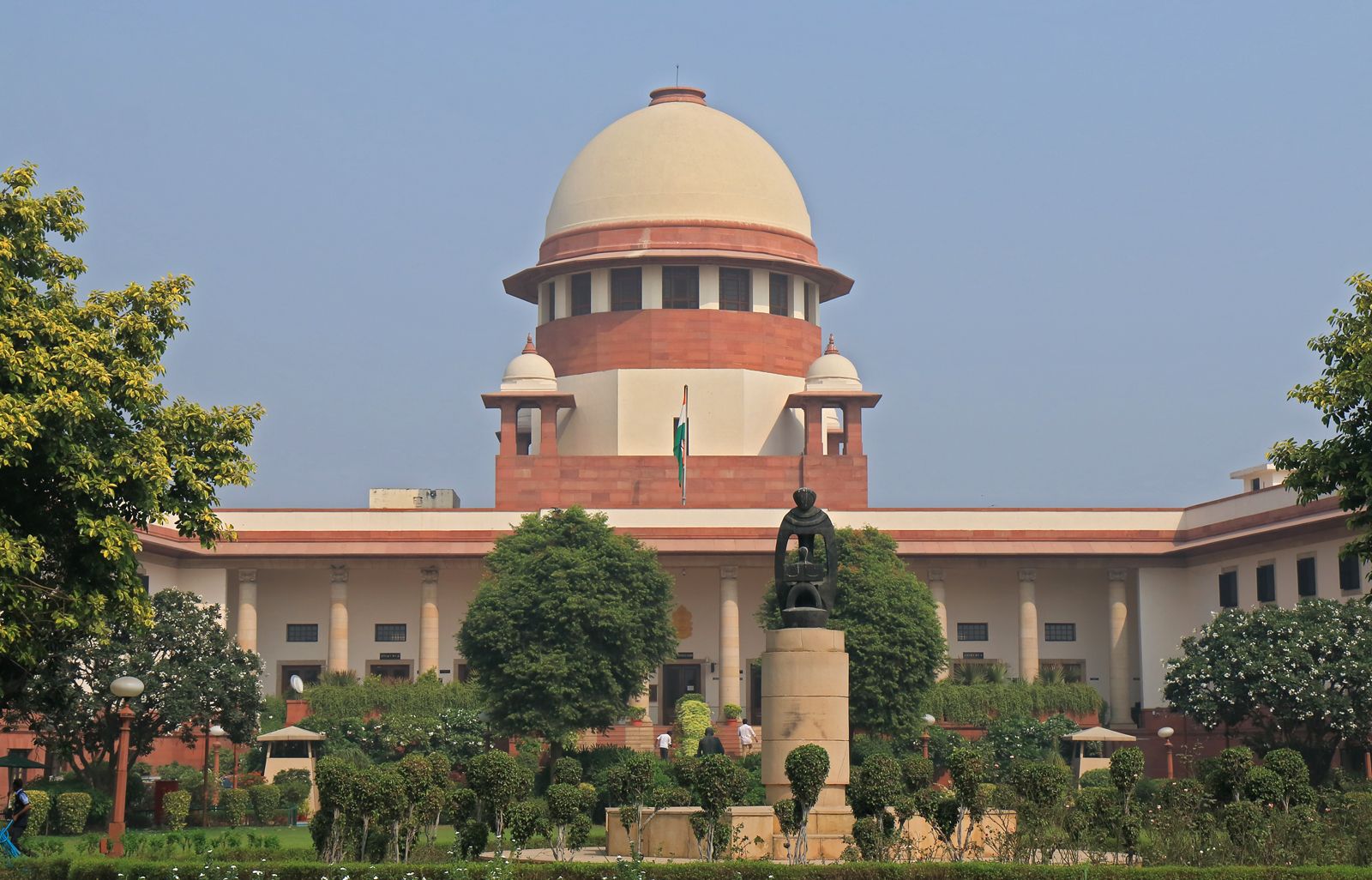
Supreme Court Invokes Proportionality Doctrine During Afternoon Session
The legal proceedings surrounding the Delhi Protest Crackdown resumed as a three-judge Supreme Court bench delivered key directions regarding capital-wide security controls. Presided over by Chief Justice of India Surya Kant alongside Justices Joymalya Bagchi and V Mohana, the court expressed serious concern over blanket administrative advisories that closed entry and exit gates across 57 metro stations and cancelled long-distance passenger trains at source.
Invoking the constitutional doctrine of proportionality, Chief Justice Surya Kant informed state authorities and law enforcement that preventive security actions must match the minimum level of restriction required to preserve public order. The bench emphasized that everyday commuters possess a fundamental right to unhindered movement, and law-enforcement measures must avoid causing a complete collapse of urban mobility.
Judicial Evaluation of Mass Transit Restrictions and Station Controls
During arguments in the Delhi Protest Crackdown matter, petitioners presented documentation detailing police requests sent to the Delhi Metro Rail Corporation (DMRC) to restrict gate access across central and regional transit lines.
Also Read : https://indiathisweek.in/state/delhi/delhi-metro-57-stations-closure-trains-cancelled-october-10-protests/
Senior advocates highlighted that placing barricades and gate controls across outer residential corridors disrupted students, workers, and hospital visitors who had no connection to the planned political demonstration. In response, government legal representatives assured the court that police authorities would dynamically monitor crowd movements and periodically open station gates.
| Serial No. | Public Infrastructure Sector | Police Security Directive Evaluated | Supreme Court Judicial Direction |
| 1 | Metro Rail Operations | Access Restrictions Across 57 Stations | Expressed Concern; Ordered Proportional Opening |
| 2 | Heavy Interstate Railways | Passenger Trains Cancelled at Origin Point | Mandated Review of Public Transit Rights |
| 3 | Capital Road Access Points | Citywide Barricading and Checkpoints Imposed | Directed Minimal Invasiveness Standards |
| 4 | Assembly Permit Reviews | Blanket Rejection of Demonstration Permits | Mandated Regulated Safety Protocols |
Complete List of 57 Metro Stations Subject to Judicial Review
The table below details all 57 metro stations subject to periodic review under the court’s proportionality mandate.
| Serial No. | Metro Station Name | Network Corridor | Monitored Status Under Apex Court Ruling |
| 1 | Janpath | Violet Line | Subject to Periodic Opening Reviews |
| 2 | Patel Chowk | Yellow Line | Subject to Periodic Opening Reviews |
| 3 | Central Secretariat | Yellow / Violet Interchange | Administrative Hub Monitoring |
| 4 | Lok Kalyan Marg | Yellow Line | Subject to Periodic Opening Reviews |
| 5 | Rajiv Chowk | Yellow / Blue Interchange | Commercial Hub Transit Priority |
| 6 | New Delhi | Yellow / Airport Express Interchange | Railway Interconnect Priority |
| 7 | Seva Teerth (Udyog Bhawan) | Yellow Line | Administrative Core Monitoring |
| 8 | Mandi House | Blue / Violet Interchange | Cultural Hub Transit Priority |
| 9 | Barakhamba Road | Blue Line | Commercial Corridor Monitoring |
| 10 | ITO | Violet Line | Civic Corridor Monitoring |
| 11 | Delhi Gate | Violet Line | Local Transit Access Maintained |
| 12 | Khan Market | Violet Line | Central Market Access Maintained |
| 13 | R.K. Ashram Marg | Blue Line | Local Area Transit Maintained |
| 14 | Jhandewalan | Blue Line | Suburban Transit Maintained |
| 15 | Supreme Court | Blue Line | Legal District Transit Maintained |
| 16 | Indraprastha | Blue Line | Administrative Corridor Maintained |
| 17 | Shivaji Stadium | Airport Express Line | Airport Transit Link Maintained |
| 18 | INA (Both Lines) | Yellow / Pink Interchange | Commercial Hub Access Maintained |
| 19 | Hauz Khas | Yellow / Magenta Interchange | Academic Hub Transit Maintained |
| 20 | Jor Bagh | Yellow Line | Residential Area Access Maintained |
| 21 | Arjangarh | Yellow Line | Border Corridor Access Maintained |
| 22 | Sarai Kale Khan–Nizamuddin | Pink Line | Bus & Rail Link Priority |
| 23 | Lajpat Nagar | Violet / Pink Interchange | Commercial Hub Access Maintained |
| 24 | Jangpura | Violet Line | Local Area Access Maintained |
| 25 | Ashram | Pink Line | High-Traffic Area Access Maintained |
| 26 | Kalindi Kunj | Magenta Line | Outer Border Access Maintained |
| 27 | Jasola | Magenta Line | Local Area Access Maintained |
| 28 | Jamia Millia Islamia | Magenta Line | Educational Zone Access Maintained |
| 29 | Okhla Vihar | Magenta Line | Local Area Access Maintained |
| 30 | Chawri Bazar | Yellow Line | Old City Transit Access Maintained |
| 31 | Jama Masjid | Violet Line | Heritage Corridor Maintained |
| 32 | Karol Bagh | Blue Line | Commercial District Access Maintained |
| 33 | Rajendra Place | Blue Line | Business Hub Access Maintained |
| 34 | Vishwavidyalaya | Yellow Line | University Zone Access Maintained |
| 35 | Vidhan Sabha | Yellow Line | Legislative Hub Monitoring |
| 36 | Civil Lines | Yellow Line | Residential Area Access Maintained |
| 37 | Kashmere Gate | Red / Yellow / Violet Interchange | Major Tri-Line Transit Priority |
| 38 | Inderlok | Red / Green Interchange | Regional Junction Priority |
| 39 | G.T.B. Nagar | Yellow Line | Student Area Access Maintained |
| 40 | Kanhaiya Nagar | Red Line | Residential Area Access Maintained |
| 41 | Netaji Subhash Palace | Red / Pink Interchange | Business District Priority |
| 42 | Azadpur | Yellow / Pink Interchange | Regional Market Access Maintained |
| 43 | Adarsh Nagar | Yellow Line | Local Transit Access Maintained |
| 44 | Jahangir Puri | Yellow Line | Outer Area Access Maintained |
| 45 | Haiderpur Badli Mor | Yellow Line | Outer Corridor Access Maintained |
| 46 | Majlis Park | Pink Line | Terminal Station Access Maintained |
| 47 | Shalimar Bagh | Pink Line | Residential Area Access Maintained |
| 48 | Seelampur | Red Line | High-Density Access Maintained |
| 49 | Maujpur | Pink Line | East District Junction Maintained |
| 50 | Jafrabad | Pink Line | Local Area Access Maintained |
| 51 | Welcome | Red / Pink Interchange | East Hub Transit Priority |
| 52 | Yamuna Vihar | Pink Line | Residential Hub Access Maintained |
| 53 | Khazuri Khas | Pink Line | Trans-Yamuna Access Maintained |
| 54 | Shahdara | Red Line | Railway Link Access Maintained |
| 55 | Rithala | Red Line | Terminal Station Access Maintained |
| 56 | Rohini East | Red Line | Outer Suburb Access Maintained |
| 57 | Rohini West | Red Line | Outer Suburb Access Maintained |
Constitutional Rights and State Security Framework
The judicial review of the Delhi Protest Crackdown reinforces strict legal boundaries regarding how executive authorities manage public demonstrations while ensuring citywide mobility. The bench confirmed that while peaceful assembly is protected under Article 19(1)(b) of the Constitution, organizers must adhere to statutory permission processes and safety conditions.
At the same time, the judges noted that state agencies cannot implement broad preventive closures that paralyze public transport infrastructure. Police must deploy targeted security measures around the designated protest site while keeping public transit channels functioning for residents.
| Serial No. | Stakeholder Group | Legal Submissions Presented | Official Bench Direction |
| 1 | Petitioner Senior Advocates | Preventive transport curbs cause citywide shutdowns | Upheld doctrine of minimal invasiveness |
| 2 | Solicitor General of India | Security measures were taken as preventive precautions | Ordered periodic review and relaxation |
| 3 | Demonstration Organizers | Sought permission for peaceful rally at Jantar Mantar | Directed to supply turnout numbers to police |
| 4 | General Commuter Public | Metro gate closures infringe on everyday mobility | Declared public entitled to transit access |
Core Cause Behind the Capital Demonstration Dispute
The political catalyst behind the Delhi Protest Crackdown case involves planned rallies by youth groups, student unions, and the Cockroach Janta Party (CJP) demanding the resignation of Chief Election Commissioner Gyanesh Kumar over alleged electoral roll revision irregularities. The Election Commission of India and state representatives have rejected all claims of administrative wrongdoing.
Following permit rejections and preventive activist detentions across state borders, organizers moved the apex court. The Supreme Court’s ruling ensures that while demonstrations remain subject to regulatory oversight at designated sites, capital transport networks cannot be shut down completely.
| Serial No. | Key Political / Legal Entity | Primary Role in Judicial Review | Status Following Ruling |
| 1 | Cockroach Janta Party (CJP) | Announced October 10 rally at Jantar Mantar | Must submit turnout metrics to police |
| 2 | Indian Youth Congress (IYC) | Challenged police permit denial orders | Directives issued under regulatory rules |
| 3 | Delhi Police Administration | Imposed metro gate controls and train cancellations | Must enforce targeted, proportional security |
| 4 | Chief Election Commissioner | Targeted by opposition resignation demands | State counsel rejected procedural allegations |
Summary of Supreme Court Action and Key Case Metrics
The court’s intervention in the Delhi Protest Crackdown establishes a binding precedent governing public order and civil liberties. The table below outlines the core metrics of the ruling.
| Serial No. | Key Metric | Final Judicial Determination | Core Impact on Capital |
| 1 | Focus Legal Keyword | Delhi Protest Crackdown | Quashes blanket transport shutdowns |
| 2 | Governing Legal Doctrine | Doctrine of Proportionality | Limits executive restrictions to minimal needs |
| 3 | Metro Operational Rule | Dynamic Gate Monitoring | Prevents complete 57-station shutdown |
| 4 | Interstate Transit Status | Review of Train Cancellations | Restores long-distance passenger travel |
| 5 | Rally Regulation Status | Regulated Permission at Designated Site | Requires headcount filings from organizers |