
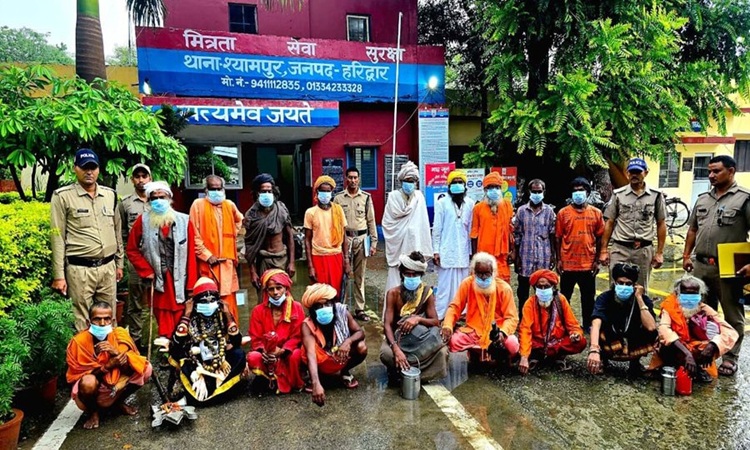
Crackdown on Fake Babas Across Uttarakhand
Dehradun – The Uttarakhand Police have arrested 14 people, including Bangladeshi nationals, under Operation Kalanemi, a state-wide campaign to identify fake ‘babas’ allegedly involved in fraud and religious conversions.
Inspector General of Police (Crime and Law and Order) Nilesh Anand Bharane confirmed the arrests during a press conference. He said more than 5,500 people have been questioned since the launch of the operation in July, with preventive action taken against 1,182 individuals.
“The operation has achieved significant results. A large number of people have been questioned, and action is being taken wherever violations are found,” Bharane said.
Haridwar and Dehradun Report Multiple Arrests
According to officials, the operation has been active in Haridwar, Dehradun, Tehri, Pauri, Almora, Nainital, and other districts. In Haridwar alone, police checked 2,704 people, arresting three. In Dehradun, 922 people were questioned, out of which five were arrested.
In August, police had reported that more than 4,000 people had been questioned and 300 arrested under the same campaign. The latest arrests highlight the continued crackdown on those misusing religious identities to exploit people.
One of the arrested individuals, a Bangladeshi national, had been living in Selaqui under the identity of a Bengali doctor named Amit Kumar for the past eight years. Police said he had been using fake documents to sustain his disguise.
Protecting the Sacred Identity of Devbhoomi
The Uttarakhand Police say the campaign’s aim is to preserve the spiritual sanctity of the state, often called Devbhoomi for its religious heritage.
IGP Bharane stressed that the misuse of spiritual identity poses a threat not only to law and order but also to the cultural and religious fabric of the state. “This operation is meant to protect the sacred image of Devbhoomi. Those who exploit faith for personal gain will not be spared,” he said.
Operation Named After Mythological Demon Kalanemi
Operation Kalanemi draws its name from Kalanemi, a demon from Hindu mythology. In the Ramayana, Kalanemi disguised himself as a sadhu in an attempt to mislead Lord Hanuman from acquiring the Sanjeevani Booti. He later reappears in the Mahabharata as Kansa, the tyrant king and uncle of Lord Krishna.
By naming the crackdown after Kalanemi, officials signal the operation’s intent to expose those who disguise themselves as religious figures while carrying out unlawful activities.
Public Reaction and Wider Concerns
Local residents and community leaders have welcomed the police action, stressing the need to maintain Uttarakhand’s religious credibility. However, concerns remain about the growing misuse of spiritual identities across India.
Security experts note that fake religious leaders often exploit vulnerable people, taking advantage of faith to gain money, power, or influence. Such incidents can weaken trust in genuine religious institutions, making strict action essential.
The arrests of Bangladeshi nationals under the campaign also raise questions about the role of fake documentation and cross-border infiltration in such activities. Authorities are expected to increase vigilance to prevent similar cases in the future.
Outlook
With more than 5,500 people already questioned and dozens arrested, Operation Kalanemi is expected to continue in the coming months. Police have indicated that the campaign will be intensified, especially in districts with a high inflow of religious tourists.
For now, the Uttarakhand government appears determined to root out fraudulent practices linked to religion. The campaign not only highlights law enforcement efforts but also reflects the state’s attempt to protect its image as India’s Devbhoomi.