
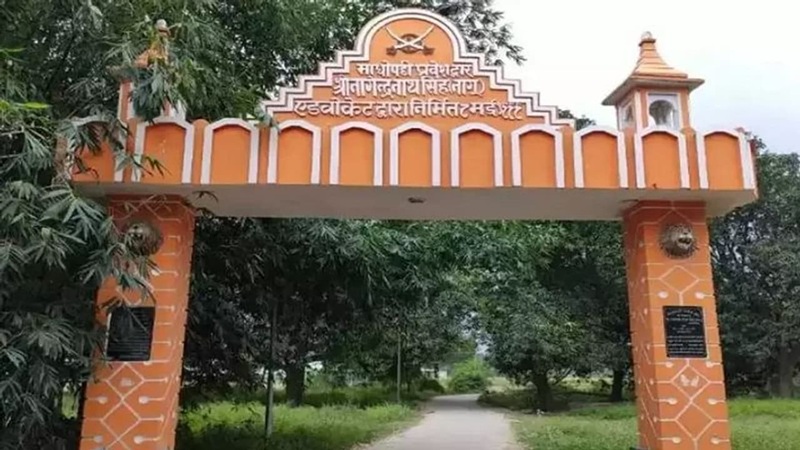
Madhopatti: Why UP’s Village is Called IAS Factory
Madhopatti, a small village in Jaunpur district of eastern Uttar Pradesh, looks like many other rural hamlets. Roads are uneven, electricity is erratic, and schools are few. Yet, this sleepy settlement has earned a unique reputation across India. Over the past century, Madhopatti has produced more than 50 civil servants, including officers of the IAS, IPS, IRS, and IFS.
This extraordinary record has earned the village the nickname “India’s IAS Factory.” For its residents, preparing for the Union Public Service Commission (UPSC) exams is less a career choice and more a family tradition.
How the IAS Legacy Began
The story dates back to 1914, when Mohammad Mustafa Hussain became the first from Madhopatti to clear the civil services under British rule. His achievement inspired an entire community to aim higher.
By the 1950s, the village had its first Indian Foreign Service officer, Dr. Indu Prakash Singh. His success was followed by others, including four Singh brothers — Vinay Kumar Singh, Chatrapal Singh, Ajay Kumar Singh, and Shashikant Singh — who went on to hold senior administrative positions.
From then on, generation after generation added their names to the list. Families encouraged siblings, cousins, and even in-laws to pursue public service. This sense of shared purpose turned Madhopatti into a breeding ground for officers.
No Coaching Hubs, Just Community Mentorship
Unlike coaching hubs in Delhi’s Mukherjee Nagar or Prayagraj’s Civil Lines, Madhopatti does not rely on commercial institutes. The system here thrives on mentorship and community support.
- Seniors who clear UPSC guide juniors with books, notes, and preparation strategies.
- Families encourage self-study, often beginning during intermediate college years.
- Aspirants use Hindi-medium schooling but gradually adapt to English for exams.
- Every success is celebrated by the whole village, reinforcing the cycle of inspiration.
As one local officer once explained, “Here, cracking the UPSC is like joining a family business, except the business is public service.”
Against the Odds
Madhopatti’s success becomes more striking when seen against its poor infrastructure. Roads remain broken, public transport is scarce, and electricity supply is unreliable. The nearest coaching center is miles away.
Yet, instead of being discouraged, aspirants developed self-reliance. Seniors passed down resources, and families provided emotional backing. This created a model of ambition that thrives without external support.
Beyond IAS and IPS
While the civil services made Madhopatti famous, its achievements go beyond IAS and IPS. Villagers have contributed to India’s top institutions such as ISRO and BARC, and some have worked with the World Bank and state information directorates. For a village of only 75 households and about 4,000 residents, this range of representation is extraordinary.
The Per Capita Miracle
The numbers may not seem large compared to India’s population, but the context is remarkable. Few Indian districts with lakhs of residents have produced as many officers as this tiny hamlet. Madhopatti’s officer-to-population ratio makes it a true outlier.
Its story is often retold in coaching classes across India as proof that determination matters more than resources. For rural aspirants, Madhopatti symbolizes possibility.
Pride and Irony
While Madhopatti’s achievements inspire the nation, villagers point out an irony. Officers from the village serve across India, but service rules prevent them from directly influencing their hometown’s development.
Rannvijay Singh, a resident, expressed both pride and regret: “Affairs of the village didn’t shine, even though our boys and girls became renowned officers. They did not get enough time to focus on the village’s development. But we are proud that Madhopatti inspires rural youth.”
The Factory With No Factory
Today, young aspirants in Madhopatti continue the tradition. They study under dim bulbs, walk on broken roads, and prepare with the same passion as their predecessors. Their success proves that an “IAS Factory” does not need elite infrastructure.
Instead, Madhopatti’s legacy shows that grit, mentorship, and collective aspiration are the most powerful tools for success.